No products in the cart.


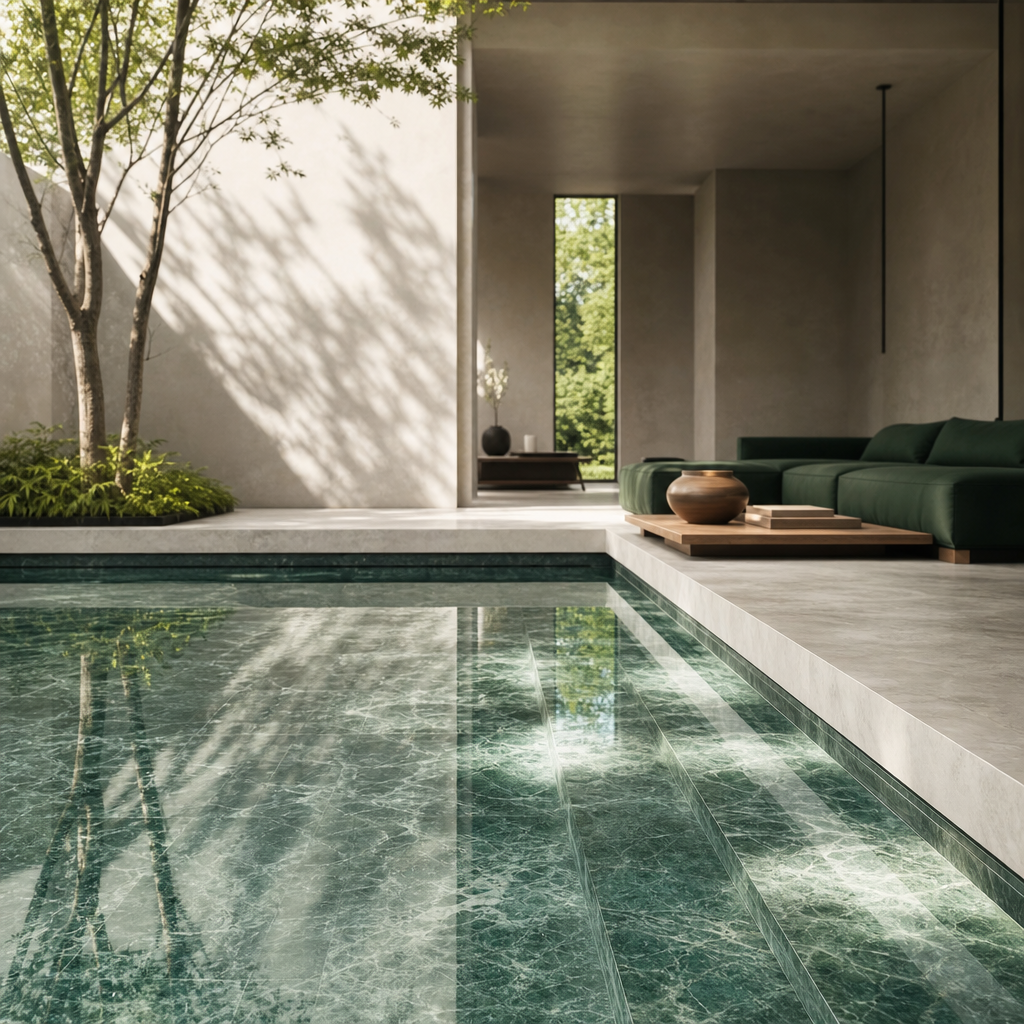
The best lighting for minimalist interiors is quiet by design: low-glare, carefully layered, and chosen so it supports calm surfaces rather than competing with them. In our showroom work across apartments, villas and larger developments in Iraq, lighting reads best when it lets porcelain slabs, natural-stone-look tiles and restrained furnishings stay the visual centre of the room. This list gathers the lighting types and use cases that pair directly with our modern, Scandinavian-leaning materials and bathroom solutions, and it explains where each one fits and where it can go wrong.
Table of contents
How we selected these lighting types
Minimalist interiors fail when lighting turns into decoration. So every option here earns its place against a short, practical test grounded in the way our materials are actually used on residential and commercial projects.
First, each lighting type has to keep surfaces visually calm and continuous, in the same way porcelain slabs minimise joints and grout lines in a modern room. Second, it has to work with our natural-stone-look ranges, including travertine-inspired collections and design-led porcelain such as the ABSTRA tile. Third, it has to fit the typical renovation scope in Iraq, where lighting is planned alongside flooring, kitchens, bathrooms and furnishings rather than added later. Fourth, it has to be realistic to implement with our portfolio of bathroom solutions and interior furnishings, not with speculative fixtures.
Each entry below sets out its distinction, the situations where it fits best, and its main limitation, so architects, designers and homeowners can decide whether it belongs in a specific brief. This is not a ranked countdown, and there is no forced round number: the point is fit, not volume.
Slim recessed ceiling lights for calm ceilings and slabs
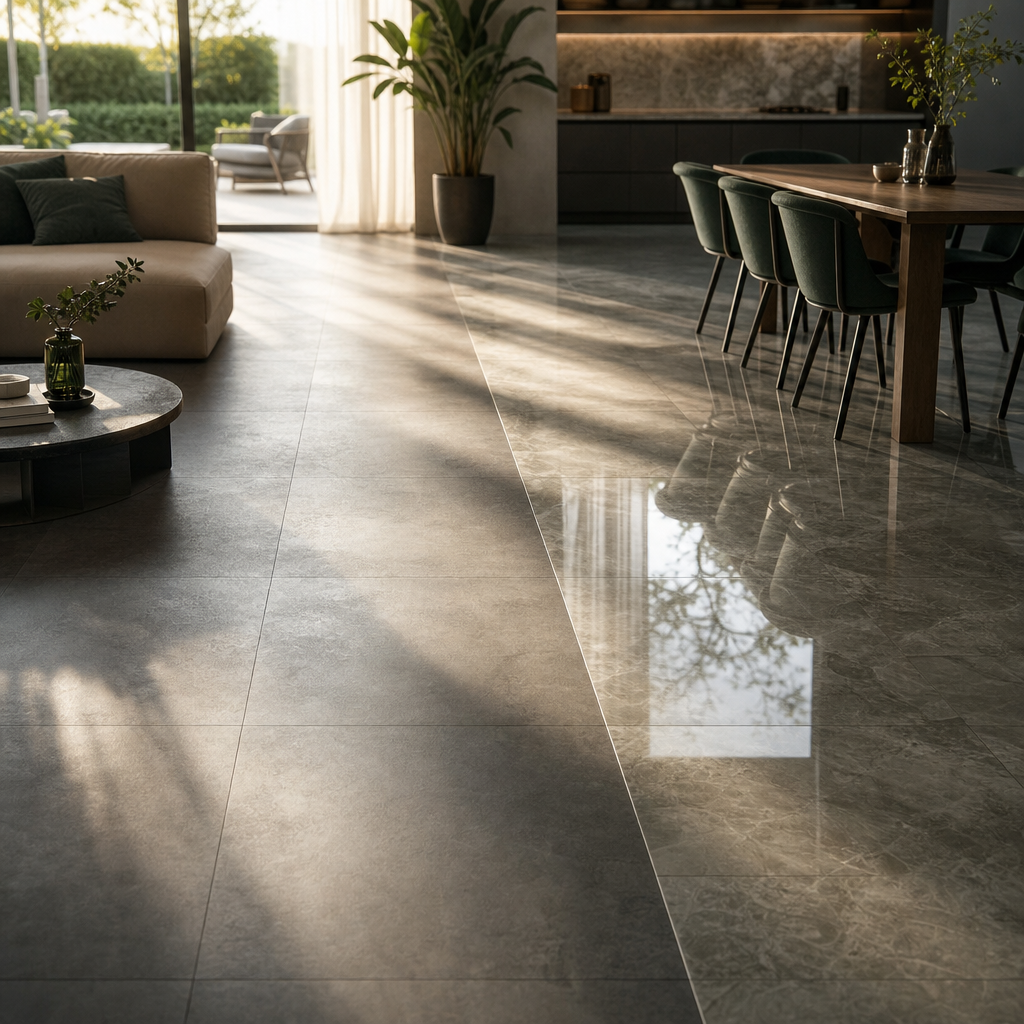
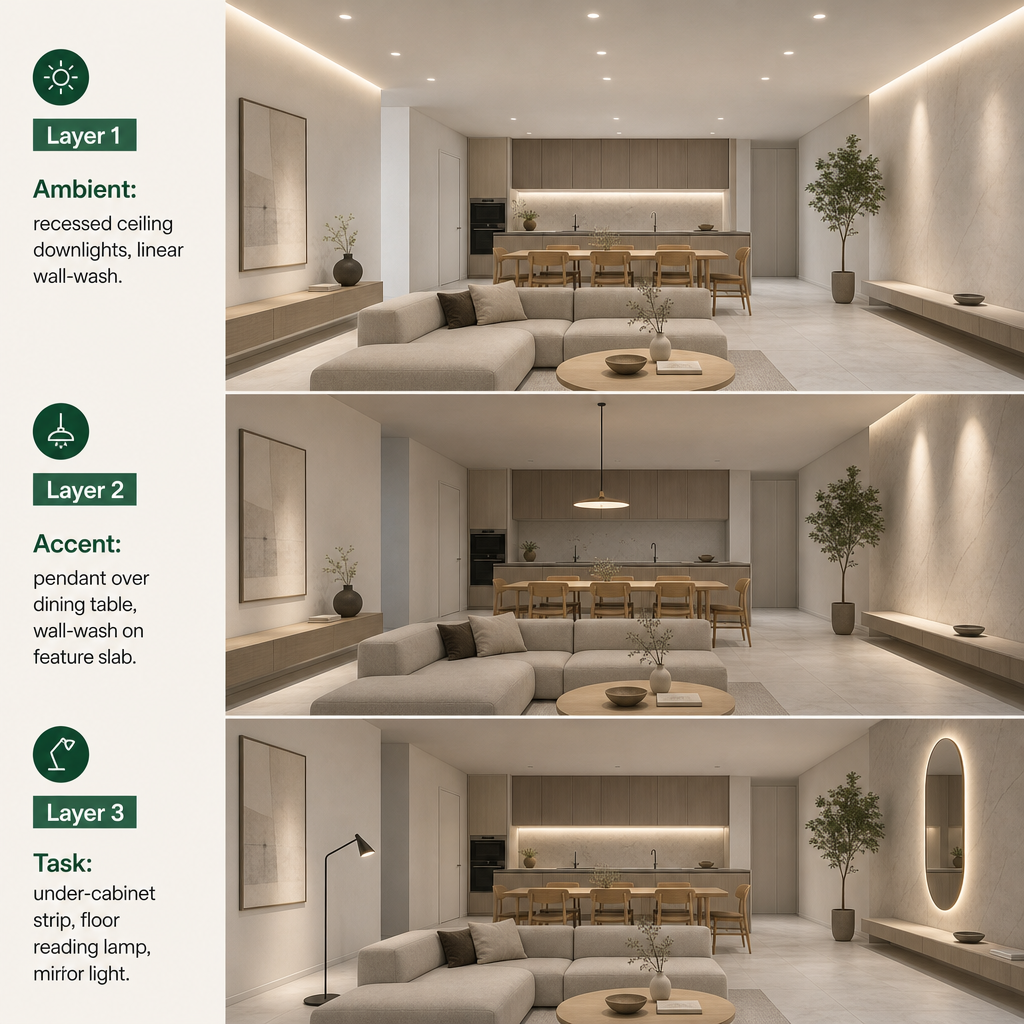
What should a ceiling do in a minimalist room? As little as possible. Slim recessed downlights and spotlights keep ceilings visually clean, echoing the uninterrupted look of porcelain slabs and large-format tiles in modern and Scandinavian-inspired interiors. Laid out in simple rows or quiet clusters, they deliver ambient light without hanging bulk over a living room finished in porcelain or stone-look floors.
On our projects, recessed ceilings pair well with porcelain tile and slab solutions in living rooms, open-plan spaces and circulation areas where continuous surfaces are the priority. They suit apartments and villas that already plan ceilings, flooring and lighting together, alongside furnishings such as sofas and dining tables.
The limitation is coordination. Recessed lighting demands early alignment with the ceiling build-up, wiring routes and structural considerations, which is harder in partial renovations or existing concrete ceilings. Overuse creates a spotlight grid that fights the minimalist intent, especially over strong or graphic tiles, so fixture counts and beam angles need deliberate design rather than a default spacing.
Linear LED wall-wash to highlight porcelain slabs and ABSTRA
A feature slab deserves light that reveals it, not fixtures that distract from it. Linear LED profiles that wash walls or ceilings are especially effective wherever our porcelain slabs or graphic porcelain tiles are used as feature surfaces. A soft wall-wash brings out subtle texture, veining and relief without resorting to bold decorative fittings, which keeps the calm, continuous aesthetic intact.
This works well behind sofas, along corridors and in entry spaces where slabs or large-format tiles run floor to ceiling, such as high-end apartments and towers using natural-stone-look finishes. It is also a natural way to frame an ABSTRA feature wall, letting the graphic design read clearly while still delivering a soft, hotel-like ambience that suits developers of villas and commercial spaces.
Installation is the catch. Linear wall-wash systems are unforgiving: uneven mounting or poor alignment causes streaks and hotspots that expose imperfections in the slab or tile joints. They also depend on reliable drivers and dimming, which must be coordinated with electrical contractors familiar with local standards and the project’s power constraints.
Soft wall and ceiling lighting for Travertine Silver spa bathrooms
A master bathroom should feel restful the moment you walk in, and lighting decides whether it does. Travertine Silver and similar travertine-inspired looks read as a route to calm, spa-like bathrooms, and soft wall and ceiling lighting amplifies that effect. Low-glare fixtures near mirrors and along walls warm the stone-look surfaces and reduce harsh reflections on wet zones and large-format tiles.
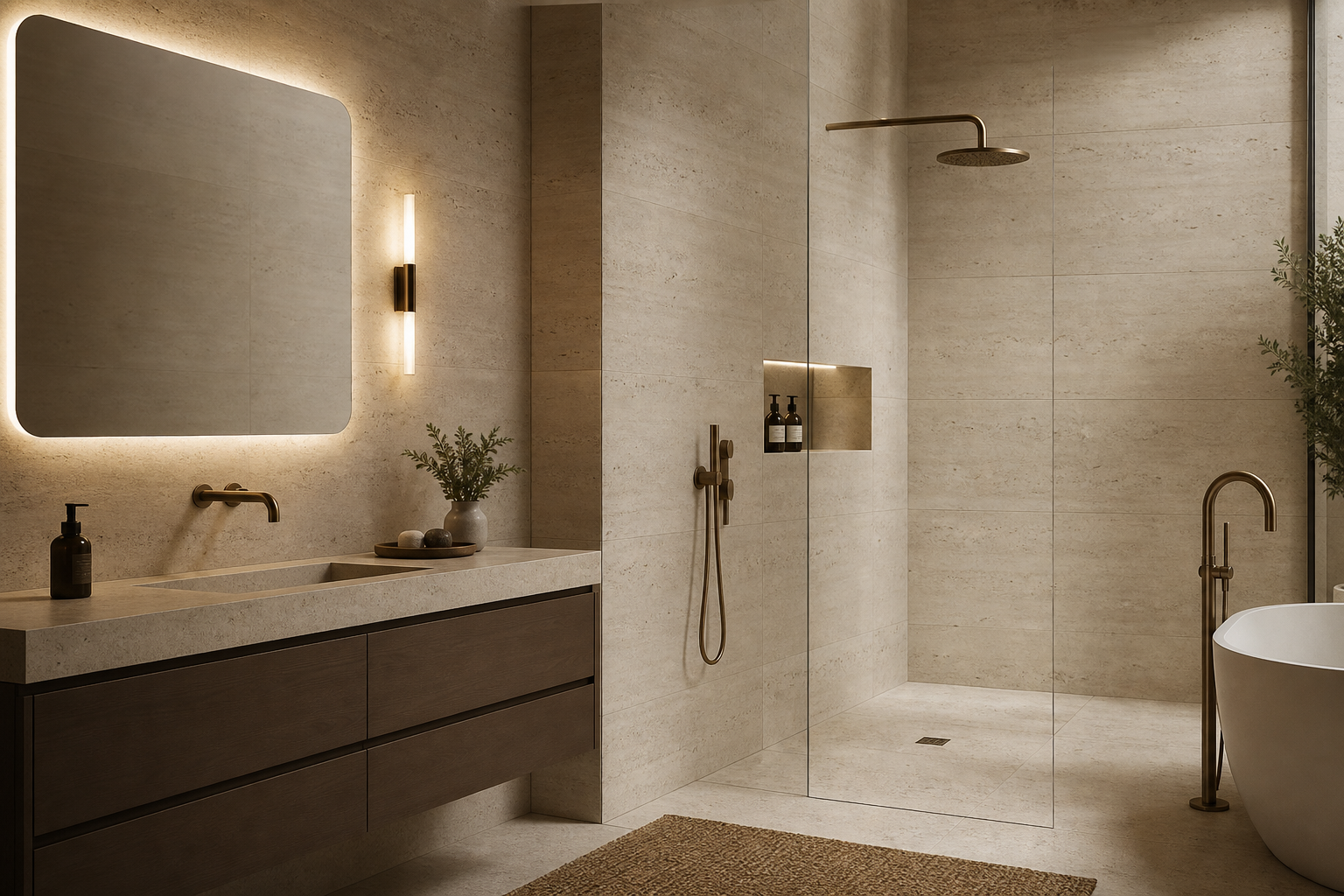
This approach suits master bathrooms and en-suites where Travertine Silver or sealed travertine accents are already specified as key visual elements. It complements walk-in showers and premium bathroom solutions by keeping the light comfortable while still showcasing the stone-look surfaces and fittings, which matters for a luxurious yet minimalist feel.
Two limitations deserve attention. Bathroom lighting must be selected and installed according to appropriate protection ratings for humid and wet zones; mis-specified fixtures can cause safety risks or premature corrosion. Separately, overly warm or dim light can make travertine and porcelain look dull or yellow, so colour temperature and brightness are worth testing against the actual tiles and slabs in our showroom before you commit.
Discreet task and under-cabinet lighting in minimalist kitchens
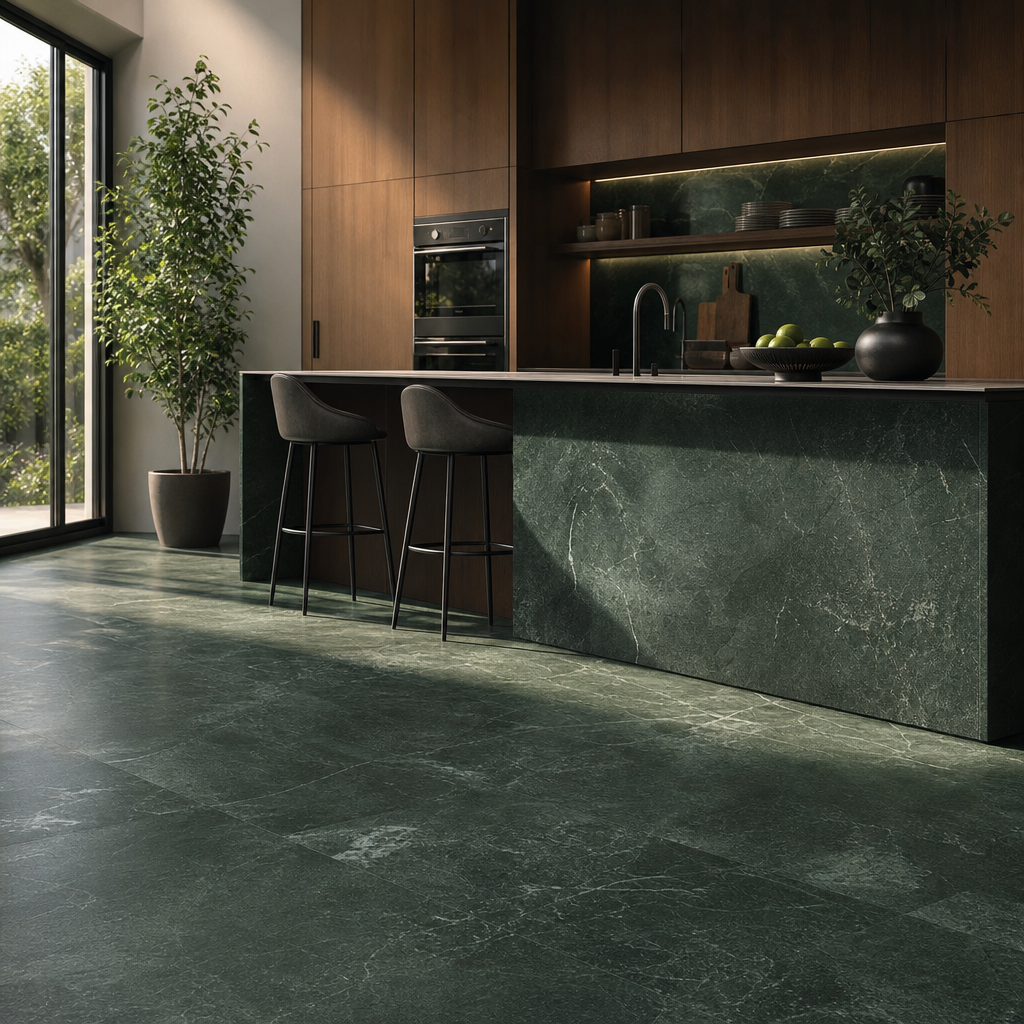
A minimalist kitchen loses its calm the moment visible fittings clutter the sightlines. The fix is discreet task lighting placed under wall cabinets, in open shelves or within ceiling details, keeping the focus on continuous counters, splashbacks and floors. That is exactly the effect our stone-look and porcelain kitchen surfaces are meant to hold.
Under-cabinet and niche lighting is especially relevant wherever neutral, stone-look kitchen finishes are used, from compact apartments to larger villa kitchens. It gives bright, shadow-free light on worktops while leaving the overall volume visually quiet, complementing integrated appliances and the simple joinery that architects and interior designers tend to specify.
The limitation is detailing and maintenance. These systems depend on careful coordination between cabinetry, tiles or slabs and wiring, and retrofitting is complex once the kitchen is installed. LED strips and small fixtures also wear from heat, grease and humidity, so access for cleaning and replacement has to be planned or the minimalist look degrades over time.
Simple statement pendants over dining tables and islands
Even a disciplined room needs one point of focus. In an otherwise minimalist space, one or two simple pendants over a dining table or island act as controlled focal points, balancing understated surfaces with a clear spatial hierarchy. As a supplier of interior furnishings that includes dining tables and lighting, we treat these pieces as curated anchors that support the room rather than dominate it.
Pendants work best in open-plan living and dining spaces where floors and walls are already calm: porcelain or stone-look tiles, soft neutrals and restrained textures, with a carefully chosen luminaire to anchor the seating zone. They suit homeowners who want warmth and personality in social spaces without unpicking the minimalist language carried through from kitchens and bathrooms.
Restraint is the whole game. Too many pendants or overly decorative forms break the effect and compete with the surface finishes. Height coordination over tables and islands is critical too; a badly placed pendant creates glare, blocks sightlines or visually lowers the ceiling, which is a real risk in apartments with modest heights.
Flexible floor and portable lamps to layer light with furnishings
Not every project can open up ceilings and walls, and not every client wants to. Flexible floor lamps and portable fixtures add movable pools of light that complement sofas, armchairs and other furnishings, letting occupants adjust the atmosphere without altering the structure. Kept visually simple, they stay consistent with a modern, Scandinavian-inspired interior.
These lamps are ideal for living rooms and bedrooms where floors and walls are already finished in porcelain tiles or slabs but the user still wants freedom to reconfigure seating or reading areas over time. They suit renters, phased renovations and projects that cannot take on major electrical work yet still need quality light layered over minimalist surfaces.
The trade-off is visible cables and sockets, which clash with a minimalist aesthetic if they are not managed. Overusing portable lamps makes a space feel busy, and low-quality units give uneven light compared with the controlled effect of recessed or integrated fixtures.
How to choose the right minimalist lighting for your project
The right choice follows the material and the room function, not a fixture catalogue. This mapping connects common project situations to the lighting types above so the selection stays anchored to your surfaces.
| Project situation | Lead lighting choice | Main watch-out |
|---|---|---|
| Calm, continuous slabs on floors and walls | Slim recessed downlights plus linear wall-wash | Avoid a dense spotlight grid |
| Spa-like master bathroom in Travertine Silver | Soft wall and ceiling light with careful mirror illumination | Correct wet-zone protection ratings |
| Neutral, stone-look minimalist kitchen | Under-cabinet and niche task lighting, minimal ceiling fixtures | Plan access for cleaning and replacement |
| Social living and dining with our furnishings | One or two simple pendants plus flexible floor lamps | Coordinate pendant height and glare |
| Full home renovation planning | List lighting alongside flooring, kitchens, bathrooms and furnishings | Coordinate fixtures with surfaces early |
If you are shaping a broader scheme, it also helps to understand the types of lighting for home interiors as a layered system of ambient, accent and task light before locking any single fixture. And if slabs are central to the design, our guidance on sourcing premium slabs for a villa project shows how surface decisions and lighting decisions reinforce each other. From there, the practical next step is a showroom conversation where fixtures are tested against the exact tiles and slabs you are considering.
Frequently Asked Questions
How should lighting relate to porcelain slabs and large-format tiles?
Let the lighting support the calm, continuous surfaces the slabs create. Recessed fixtures and wall-wash lighting emphasise texture and veining without adding decorative clutter, which keeps large-format tiles reading as one uninterrupted plane.
What colour temperature works best with travertine-inspired ranges?
Neutral to slightly warm white light keeps travertine-inspired looks feeling natural and spa-like, in line with using Travertine Silver for calm master bathrooms. Stark, cold light tends to flatten the stone character, so it is worth testing warmth against the actual surface.
How should homeowners in Iraq plan lighting during a renovation?
List lighting alongside kitchens, bathrooms, living spaces, flooring and furnishings from the start of a full home renovation. Coordinating fixture types and positions with tiles, slabs and furniture early prevents rework and keeps the minimalist result coherent.
Do minimalist interiors still need multiple layers of light?
Yes. Even a pared-back space benefits from combining ambient light (recessed or ceiling), accent light (wall-wash or pendants) and task light (under-cabinet or mirror lighting). Layering keeps rooms usable and comfortable while the calm aesthetic stays intact.
What is the biggest risk when adding decorative lighting?
Visual clutter. Too many decorative fixtures or overly expressive forms compete with the refined porcelain and stone-look surfaces that define the scheme, undermining the modern, Scandinavian-leaning language the interior is built around.