No products in the cart.


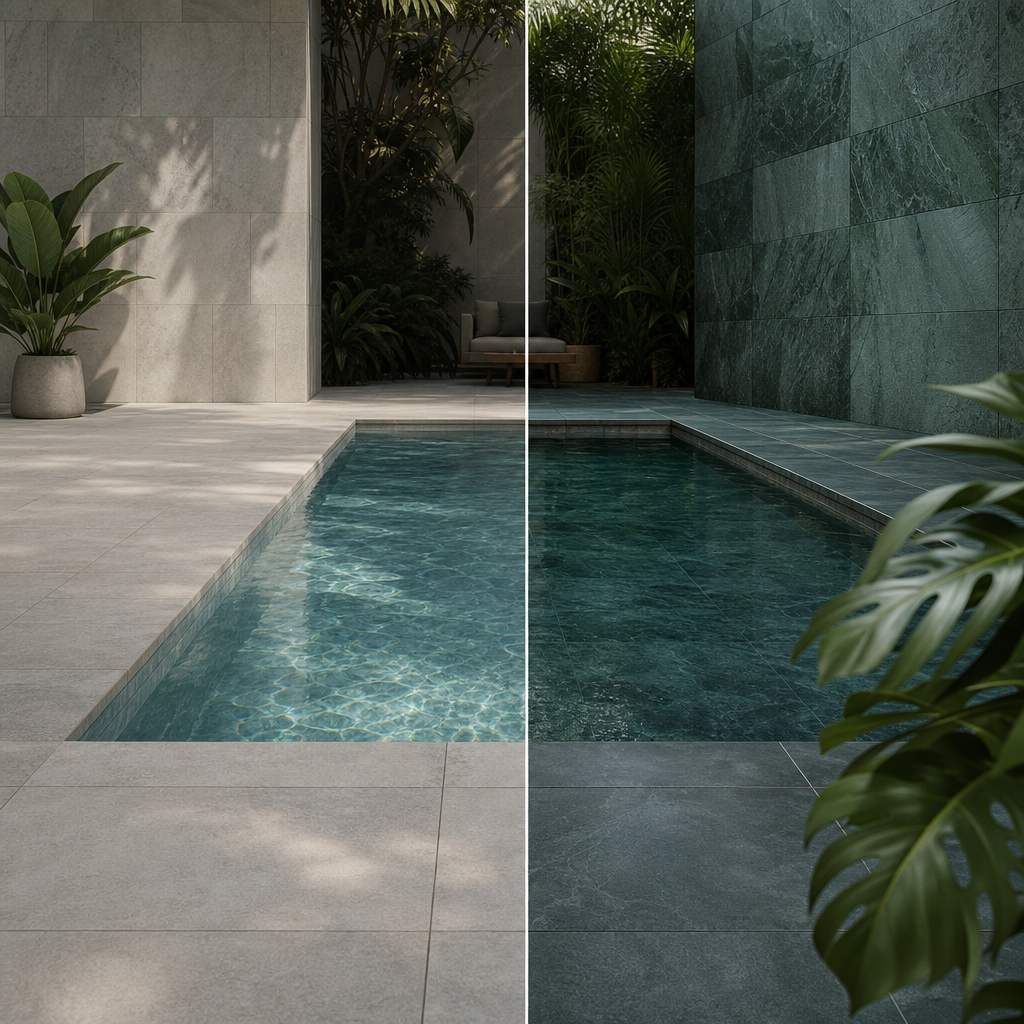
Choosing between porcelain vs ceramic tiles is rarely about which material is objectively better. It is about matching each room to how much moisture it holds, how hard it gets used, and how much design freedom and ongoing care you are willing to accept. Both are clay-based tiles fired in kilns, yet they behave differently once a bathroom floods with steam, a villa corridor fills with foot traffic, or a balcony bakes under an Iraqi summer. At Agata Iraq, we help homeowners, designers and developers work through that logic room by room, and in some cases we steer a project toward slabs or stone instead of either tile. This comparison lays out the real alternatives, the criteria that actually move the decision, and the thresholds that tell you which way to lean.
Table of contents
The decision and the main alternatives
Porcelain and ceramic come from the same family: clay-based bodies shaped and fired at high heat. The practical difference is that porcelain is a denser, more refined subtype with a much lower water absorption rate and higher overall toughness, while standard ceramic uses less refined clays fired at slightly lower temperatures, which leaves it lighter, more porous and easier to cut.
For a typical project in Iraq that mixes a kitchen, bathrooms, living areas and a balcony, the realistic options are narrower than catalog marketing suggests:
- Porcelain tiles in standard sizes, plus large-format and slab-like panels
- Non-porcelain ceramic tiles for floors and walls
- Other surfaces, including natural stone tiles, porcelain slabs and specialist coatings, where conventional tiles are not the best fit
The aim here is not to crown a winner. It is to match each option to its job. A powder room wall and a hospital corridor do not share the same demands, and specifying one tile for the whole floor plan usually means over-paying in some rooms and under-performing in others.
What porcelain tiles are
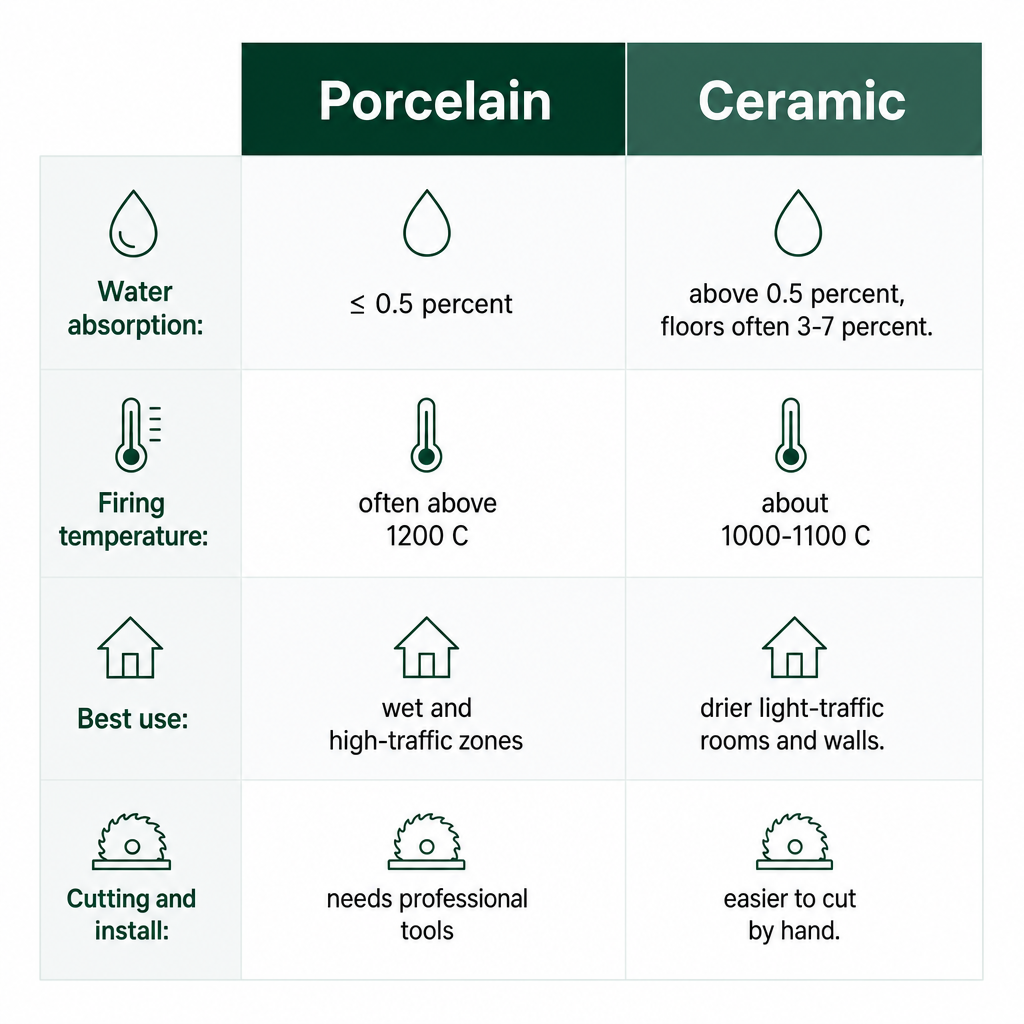
Porcelain tiles are made from finer, often kaolin-rich clay blended with minerals such as feldspar, then pressed and fired at higher kiln temperatures, often above 1200 °C. That process vitrifies the body into something denser, harder and far less porous than ordinary ceramic.
The defining line is measurable. Under widely used standards, a tile qualifies as porcelain only when its water absorption is 0.5 % or less, confirmed through boiling and soaking tests. That near-impervious body is why porcelain holds up in areas with constant moisture, steam or high humidity, from bathrooms and wet rooms to balconies in mild climates.
Density brings a chain of practical advantages. Porcelain typically offers higher breaking strength and better resistance to impact and heavy foot traffic, resists stains and scratches more effectively over the years, and supports larger formats with thinner grout lines, which suits minimalist and contemporary interiors.
The trade-offs are real. Porcelain is harder to cut and drill, usually calling for professional tools and experienced installers, and it generally costs more per square meter than comparable ceramic because of its more intensive manufacturing. Those two factors, cutting difficulty and price, are where most of the hesitation around porcelain actually sits.
What ceramic tiles are
Non-porcelain ceramic tiles are also clay-based, but the mixtures are less refined and fired at lower temperatures, roughly 1000–1100 °C. The result is a slightly less dense, more porous body.
That porosity shows up in the numbers. Typical ceramic tiles absorb more than 0.5 % water, with ceramic floor tiles often landing in the 3–7 % range and wall tiles higher still. In plain terms, ceramic is tuned for low-to-medium moisture conditions, which is why it performs so well on walls and in lighter-traffic indoor rooms.
Ceramic earns its place for reasons porcelain cannot always match. It is softer and lighter, so it is easier to cut and shape, which keeps intricate layouts and detailed work practical. It comes in a wide range of glazes, colors and decorative patterns at more accessible price points. And when it is installed and maintained in suitable conditions, it still delivers decades of service.
The limits follow from the same porosity. Ceramic is more vulnerable to moisture, chips and scratches, especially on floors that see heavy traffic or standing water. In bathrooms and wet rooms it is not disqualified, but it demands more careful detailing, better grout selection and more attentive maintenance than porcelain.
Criteria that decide between porcelain and ceramic
The fastest way to a confident choice is to compare the two against the criteria that genuinely change outcomes, then read each criterion against the specific room in front of you.
| Decision criterion | Porcelain tiles | Ceramic tiles | Where it matters most |
|---|---|---|---|
| Water absorption and moisture | ≤ 0.5 % absorption; body is nearly impervious and highly water-resistant | Above 0.5 %; floors often 3–7 %, so the body is more porous and less suited to sustained wetting | Bathrooms, wet rooms, laundry, balconies |
| Durability and wear | Denser, harder, more impact-resistant; among the toughest tile types for floors | Durable for residential use but softer, so more prone to chips and wear in heavy-traffic zones | Villa corridors, towers, hospital and public areas |
| Stain and scratch resistance | Low porosity gives strong resistance to stains, scuffs and long-term scratching | More porous surface makes stains and scratches more likely over time, especially when unglazed | Kitchens, family rooms, reception spaces |
| Sizes and aesthetics | Density enables large formats and thin profiles for continuous, minimalist and stone-effect looks | Easier to produce in decorative shapes and small formats; strong for patterns and feature walls | Scandinavian interiors, backsplashes, accent walls |
| Installation | Harder to cut and drill; generally needs professional tools and installers | Softer and lighter; easier to cut by hand, more forgiving for complex shapes | Timelines, skilled-labor availability |
| Cost and lifecycle | Usually higher material and install cost, offset by long life and low maintenance | Typically more budget-friendly upfront, but may need more care or earlier replacement in demanding zones | Villa, tower and renovation budgets |
Two points sit behind the table. First, the water-absorption threshold is not a marketing label but a tested classification, so it is the most reliable single criterion when a space stays wet. Second, cost is a lifecycle question, not just a shelf price: ceramic can be the cheaper total only in rooms where its lighter performance is never tested.
When porcelain tiles fit best
Porcelain becomes the clear technical choice once a space crosses certain thresholds for moisture, wear or longevity.
- Constant or high moisture. Bathrooms, walk-in showers, steam areas and laundry rooms where surfaces are frequently wet benefit directly from porcelain’s ≤ 0.5 % absorption. Level-entry wet rooms paired with glass shower screens are more forgiving when lined with a dense, low-absorption body, because the tile itself is far less vulnerable to seepage.
- Heavy foot traffic and long service life. Villa entrances and corridors, tower lobbies and hospital circulation zones demand surfaces that shrug off impact and abrasion for years. Porcelain’s higher breaking strength and resistance to scuffs and stains align with those conditions.
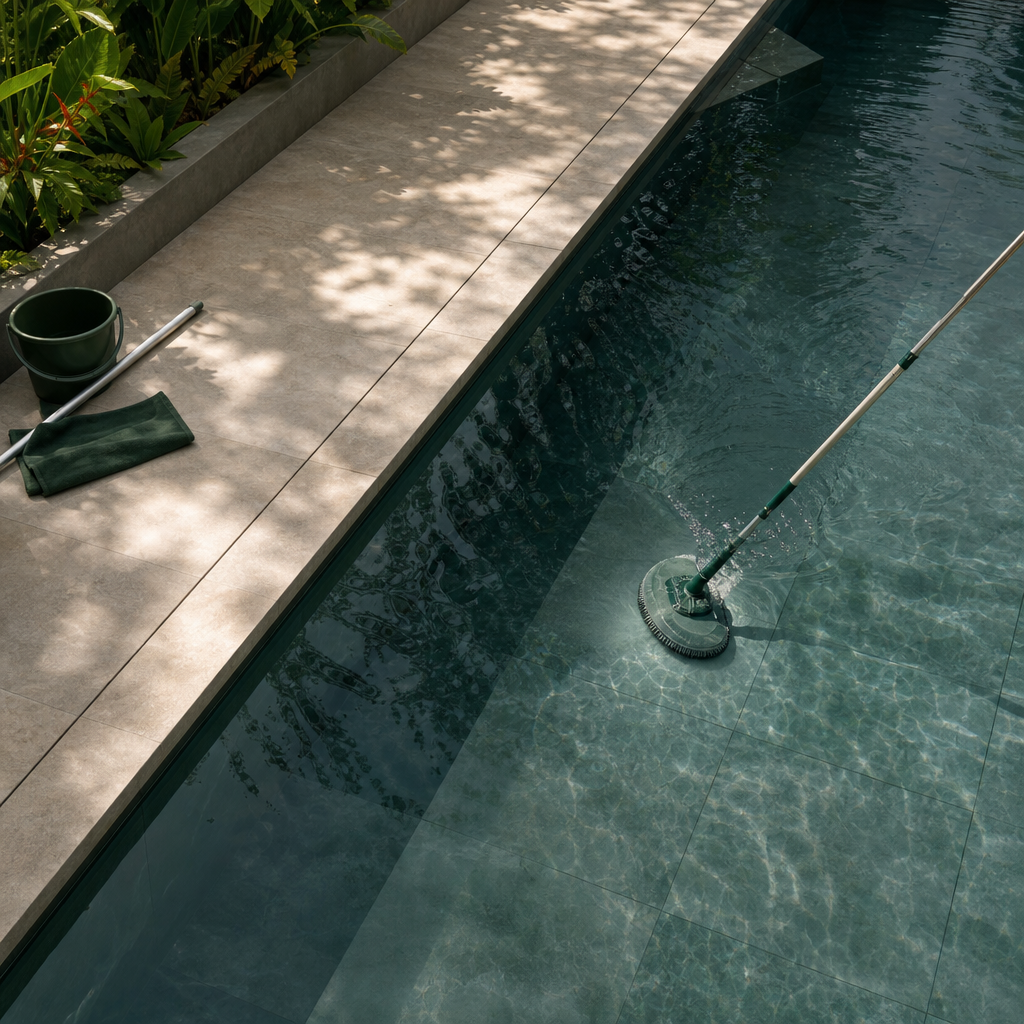
- Outdoor and semi-outdoor zones. Balconies, terraces and some patios in mild climates can take appropriate porcelain, as long as the surface carries suitable slip resistance and the substrate is prepared properly. In the dusty, hot conditions common across Iraq, porcelain’s dense, easy-clean surface helps keep a stable appearance despite sand and temperature swings.
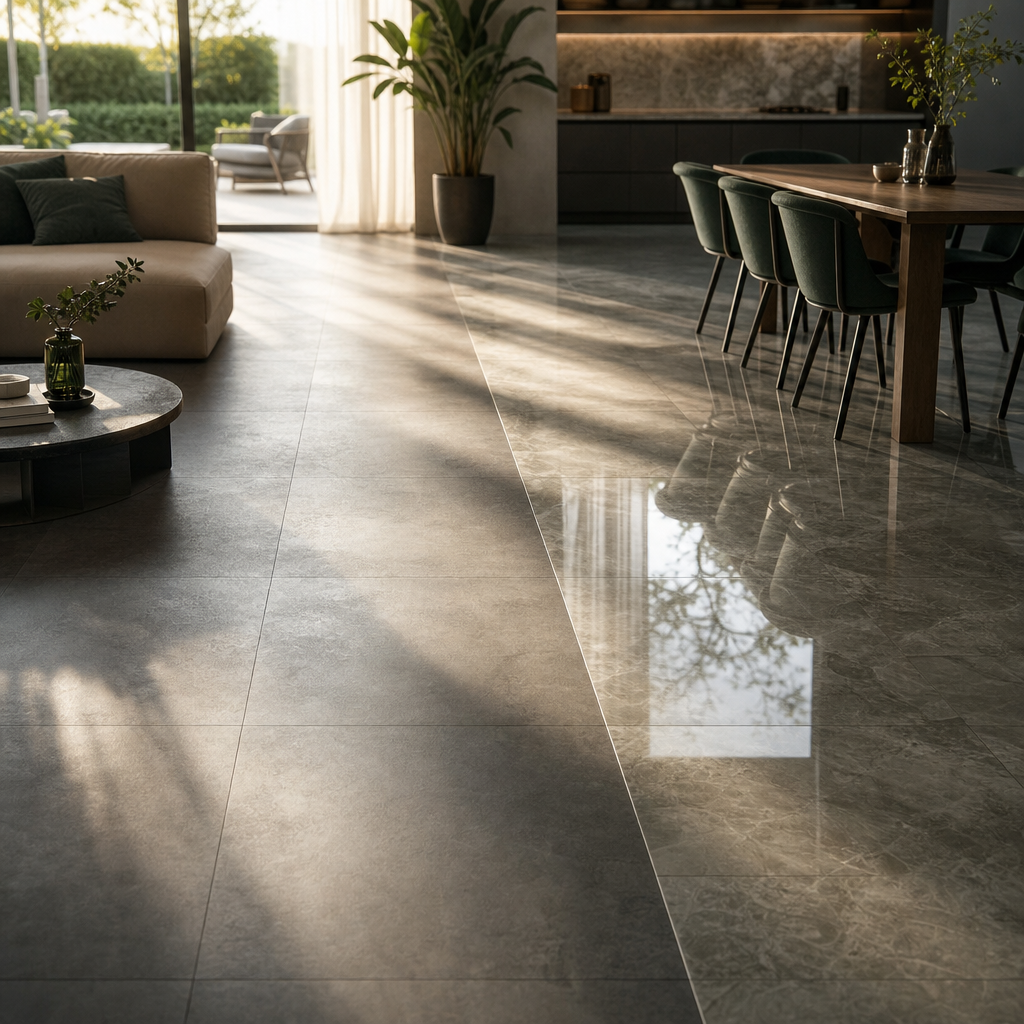
- Minimalist and stone-look aesthetics. Large-format porcelain, including slab-like panels, delivers calm, continuous floors and walls with fewer grout lines, which is exactly what modern, minimalist and Scandinavian interiors call for. Stone-look and concrete-look collections give the appearance of travertine or marble with a porcelain maintenance profile.
In these cases porcelain is usually the safe technical answer, and the remaining work is choosing the design, format and slip rating that fit your budget and schedule.
When ceramic tiles fit best
Ceramic is not a compromise. It is simply tuned for projects where moisture and wear are controlled and design variety or budget matters more.
- Light-traffic, drier rooms. Bedrooms, home offices, guest rooms and many living-room walls never see constant moisture or heavy wear, which makes ceramic a sensible choice for walls and for floors with moderate traffic. Decorative kitchen backsplashes and feature walls are prime ceramic territory, where visual effect outweighs extreme performance.
- Intricate designs and expressive layouts. A softer body that cuts easily opens up mosaics, borders, niches and custom patterns. Glazed ceramics also carry broad color ranges and surface effects that support playful or richly detailed interiors.
- Budget-sensitive scopes. Ceramic generally costs less in both material and installation than equivalent porcelain, which can free budget for premium sanitaryware, lighting or furniture elsewhere. For large wall areas or secondary rooms, it offers solid value without over-specifying beyond what the room actually needs.
Use ceramic deliberately, not defensively. When a room’s moisture and traffic are genuinely modest, specifying porcelain there spends money the project could use better somewhere wet.
When neither porcelain nor ceramic is ideal
Some situations in Iraq point away from conventional tile altogether.
- Very high-impact or industrial environments. Workshops and heavy service areas with frequent dropped tools may need specialized concrete toppings, resin floors or heavy-duty stone built for extremes beyond typical tile ratings.
- Heritage and luxury stone requirements. High-end villas or heritage projects sometimes specify natural stone such as travertine or marble for its veining, tactile feel and patina, accepting the higher maintenance and sealing that stone demands.
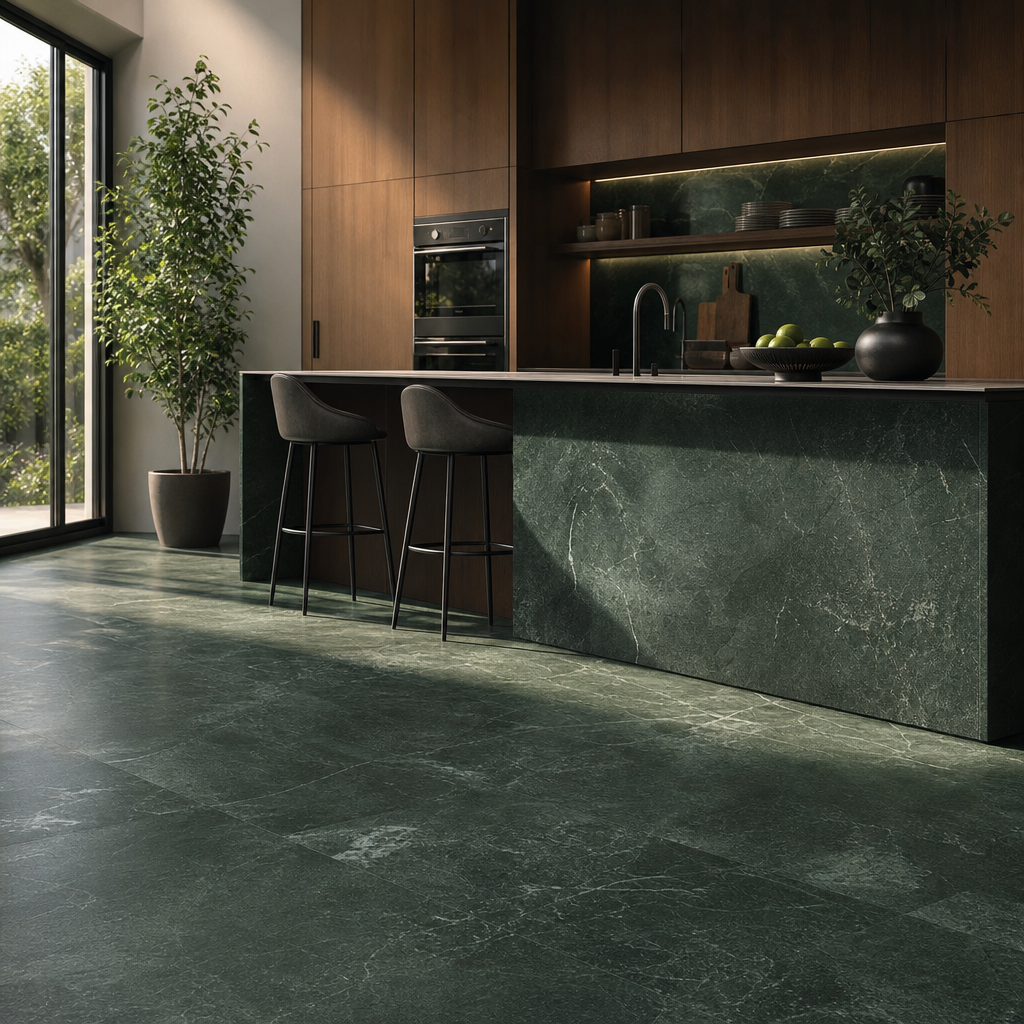
- Ultra-continuous, minimal-grout surfaces. For feature walls, large kitchen islands or monolithic counters where joints should nearly disappear, porcelain slabs or panel systems can outperform standard tile formats by cutting grout lines down dramatically.
In these scenarios porcelain and ceramic are part of a wider palette, and the right answer may be a slab, a stone or a specialist surface rather than a tile at all.
What to do next for your Iraqi project
Start by reading each room the way the materials do. Map every space by moisture and use intensity: shower zones, kitchen work areas, family living rooms, guest rooms and balconies. Then separate the rooms with strict performance thresholds, such as wet rooms, entrances and healthcare zones, from the rooms where aesthetics and budget can lead, like feature walls and secondary bedrooms. Shortlist porcelain for the strict areas and ceramic for the controlled ones, and only then move on to specific collections, formats and finishes.
From there, a few of our existing guides sharpen the detail. To set realistic numbers and understand how a quotation is built, our breakdown of porcelain tiles price in Iraq sets a current market baseline. For planning a wet room where the porcelain decision matters most, our bathroom renovation cost breakdown walks through the drivers that move a budget. And to relate technical choices to daily living-room use, our porcelain tiles living room buyer’s guide connects performance to real rooms.
When you are ready to turn that room-by-room map into specific tiles, share your spaces, moisture zones and budget with us and we will match the right material and finish to each job.
Frequently asked questions
Is porcelain always the right choice for Iraqi bathrooms and wet rooms?
Porcelain’s ≤ 0.5 % water absorption, dense body and strong stain and wear resistance make it highly suitable for bathrooms, walk-in showers and wet rooms, especially where water sits on floors or walls. Ceramic can still work in lighter-use bathrooms or as a wall-only finish, but in constantly wet zones it needs more careful design, grout selection and maintenance.
Can ceramic tiles handle Iraqi kitchens and family living rooms?
It depends on how intensely the space is used. Ceramic performs well on walls and in moderate-traffic kitchens when spills are cleaned promptly and impact loads stay modest. For busy households, open-plan living or heavy cooking, porcelain’s tougher, less porous body offers better long-term resistance to stains, scuffs and dropped objects.
Are porcelain tiles too hard or cold underfoot in a hot climate?
Both porcelain and ceramic feel cooler than wood or vinyl because they draw heat away from the foot more efficiently, which is often welcome in a hot climate. The choice between the two is driven by moisture and durability rather than temperature, and comfort can be tuned with rugs, underlays and, where specified, underfloor heating.
Do I need to seal porcelain tiles like natural stone?
Porcelain’s very low absorption means the tile body itself usually does not need sealing, though grout lines still require protection and careful cleaning. Natural stone surfaces are different and generally need sealing and periodic resealing to manage stains and moisture.
Which is easier to install in Iraqi homes and projects?
Ceramic’s softer, less dense body is easier to cut and shape, which simplifies complex walls and detailed layouts and suits smaller-scale work with limited tools. Porcelain is harder to cut and drill and usually calls for professional equipment and skilled installers, but it rewards that effort with superior performance in demanding areas.