No products in the cart.


Picking between matte and glossy tiles usually comes down to one quiet decision you make long before the showroom: where is this tile going, and what will happen on its surface? The honest answer to matte vs glossy tiles which is better is that neither wins everywhere. A finish that feels perfect on a sunlit feature wall can be the wrong call on a bathroom floor, and the same glossy surface that deepens a rich colour can also flag every water spot. The better question is which finish fits the room, the way it gets used, and what the exact product’s technical data actually confirms.
We sell both finishes across our tile and slab collections, so we have no reason to crown one winner. What we can do is help you read the trade-offs the way a designer or site specifier does: by surface, by light, by cleaning reality, and by the one number that settles wet-floor questions. This comparison keeps matte and glossy side by side, then walks through when each makes sense and when a third finish serves you better.
Table of contents
What matte and glossy actually mean
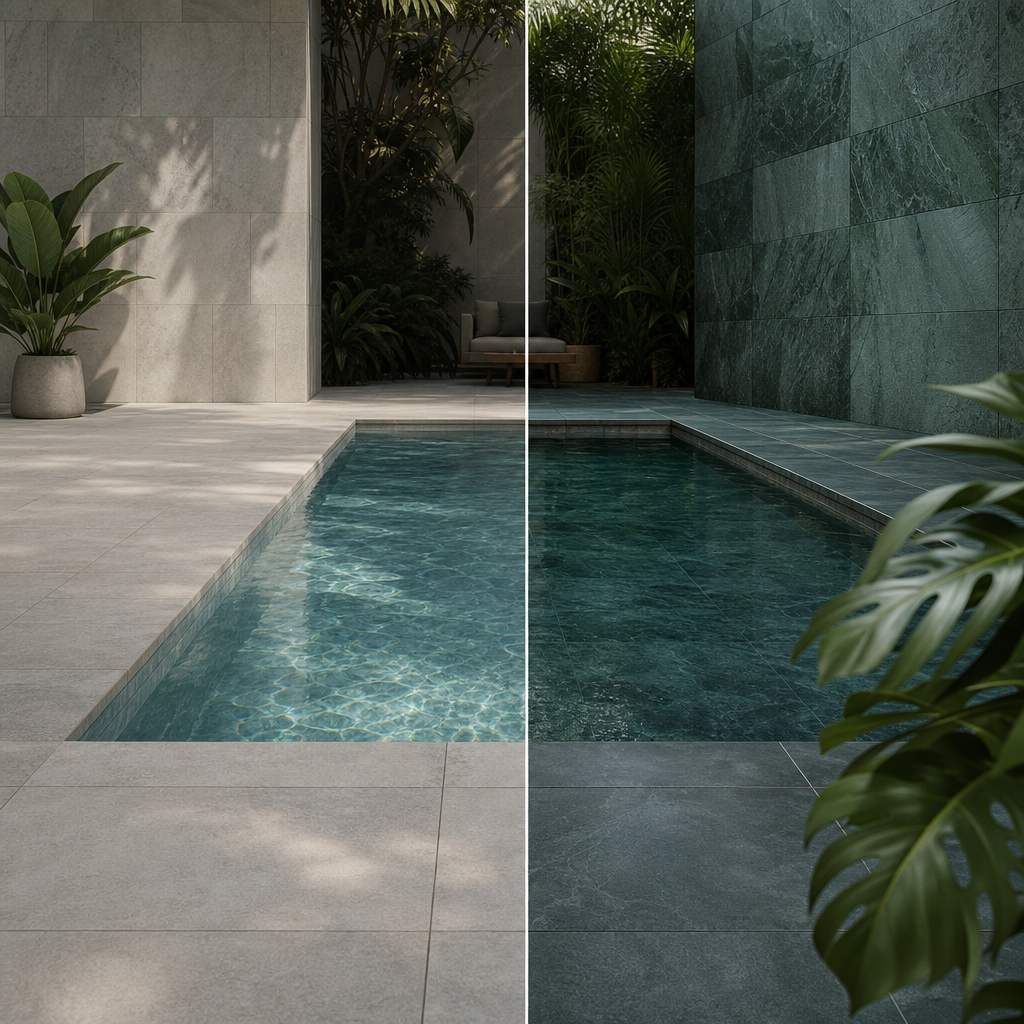
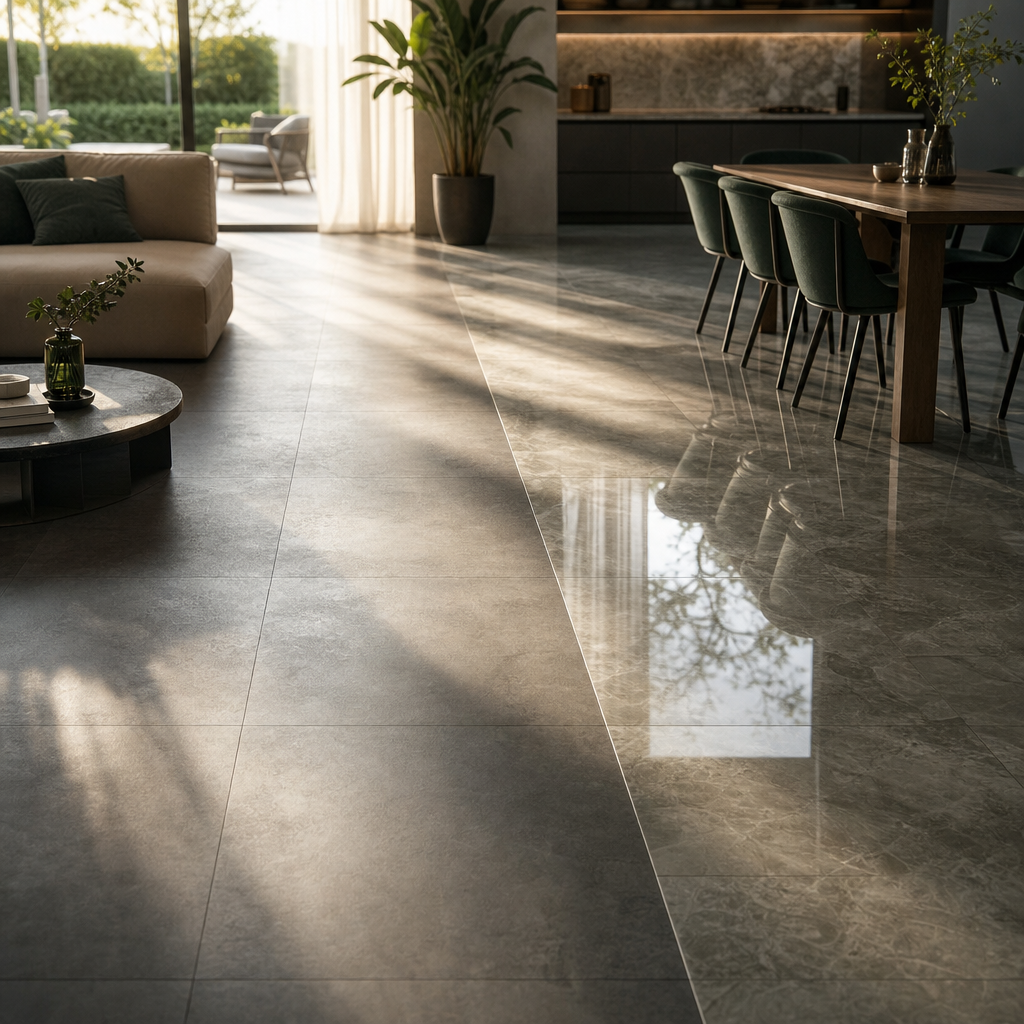
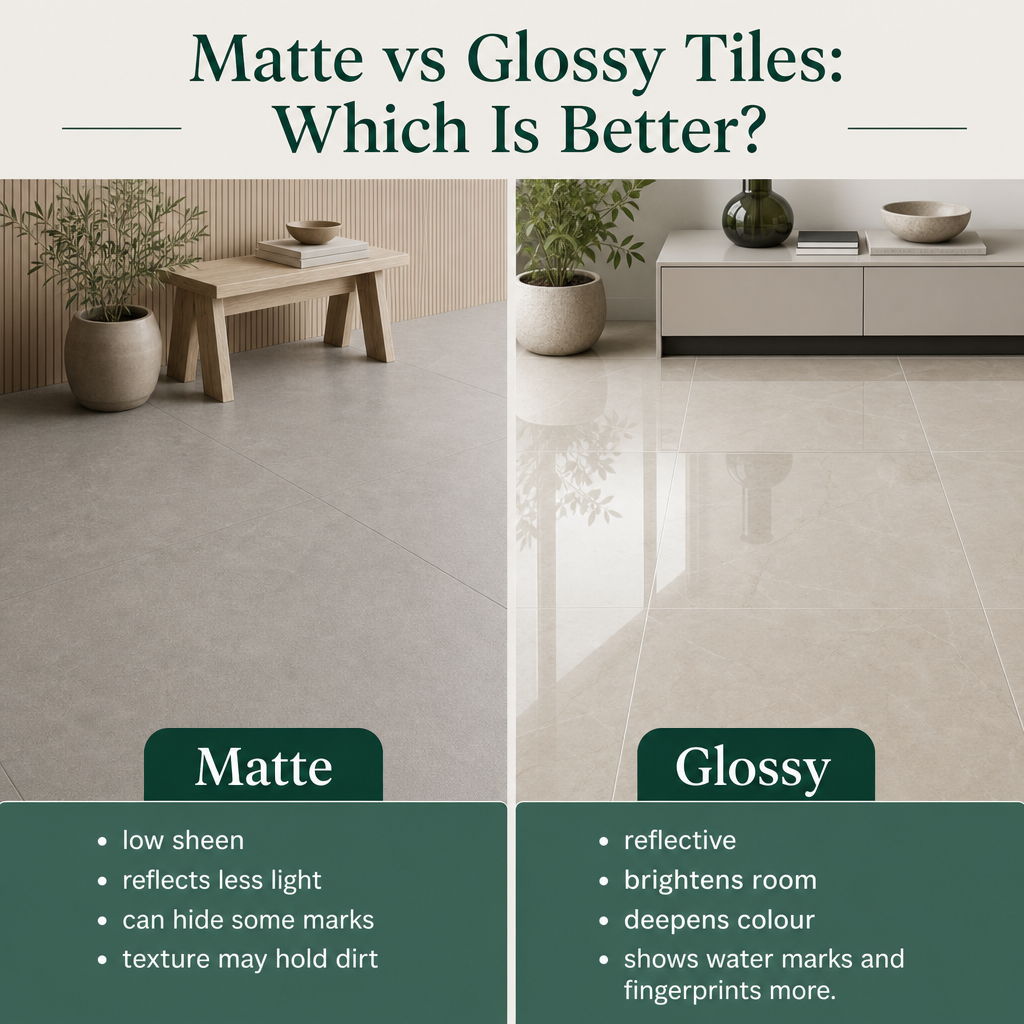
The two words describe how a tile’s surface handles light, not how safe or durable it is. A matte tile has a low-sheen surface that reflects less light. Depending on its texture, that can make smudges and water marks less noticeable, which is part of why matte reads as calm and understated. The trade-off is that a deeply textured matte surface can take more effort to clean, because dirt has more to grip.
A glossy tile has a reflective surface that makes colours look deeper and helps a room feel brighter. The smooth face is often quick to wipe, but that same reflectivity shows water marks, fingerprints and cleaning residue more clearly. Light bounces off it, which designers use deliberately in darker or smaller rooms.
Treat these as tendencies rather than rules. The tile’s texture, colour, the room’s lighting and the manufacturer’s care instructions all change how a finish looks and behaves day to day. Two glossy tiles in different colours and textures will not show marks the same way, and a soft matte is a different animal from a rough, stone-look matte.
The criteria that decide the finish
Most finish regret comes from judging a tile by how it looks on a sample board instead of how it will perform in place. These are the criteria that actually separate matte from glossy once the tile is on a wall or underfoot.
| Criterion | Matte tiles | Glossy tiles |
|---|---|---|
| Wet-floor use | Worth investigating for floors exposed to water, but matte alone does not confirm slip performance. | A polished or very smooth face deserves extra scrutiny underfoot; check the specific tile’s suitability and test data first. |
| Light and appearance | Reflects less light for a quieter, softer look. | Reflects more light, brightening a space and adding a polished effect. |
| Everyday marks | May make some smudges and water marks less conspicuous; deep texture can hold dirt. | Often easy to wipe, but water marks, fingerprints and residue stand out more. |
| Cleaning | Follow the tile’s care guidance; textured surfaces may need more attention. | Usually simple to wipe, though streaks or residue may need extra drying or buffing. |
| Design effect | Suits restrained, natural-looking schemes where you want less shine. | Suits schemes built around reflection, brighter surfaces or a formal sheen. |
The wet-floor row is where names stop being useful. For level interior floors expected to be walked on while wet, Daltile’s slip-resistance guidance cites an ANSI A137.1 DCOF value of 0.42 or greater for tiles recommended for that use, and cautions against polished and semi-polished surfaces in areas exposed to water, oil or grease. Read that as a referenced standard to ask about, not a stand-in for your own project requirements or the exact product specification.
The practical decision threshold follows from that: if the area is a wet floor, ask for the product’s intended-use guidance and any available slip-test information before you commit. A matte appearance by itself does not prove a tile is suitable for a wet floor, and a beautiful gloss does not disqualify a tile from a wall it will never be walked on.
When to choose matte, glossy, or neither
The finish choice gets easier once you tie it to a specific surface and the conditions around it rather than a general preference.
Matte earns its place when you want a low-sheen, understated look, or when glare and the visibility of everyday marks are real concerns. Floors in busy kitchens, bathrooms and entryways are where that quiet surface pays off visually. For a bathroom or kitchen floor, though, shortlist matte options only after checking their technical suitability for the expected conditions, because the look is only half the job.
Glossy makes sense when you want a reflective finish, especially on a wall or another surface that will not be walked on. A feature wall, a backsplash or a vertical accent is where gloss adds brightness and depth without raising slip questions. It is a strong design move where sheen matters and the extra visibility of water marks or fingerprints is acceptable, which is why it suits formal and light-starved rooms.
Sometimes neither extreme fits, and the honest answer is a middle finish. When a room needs a different balance of reflection, grip or ease of care, ask to compare satin or soft-matte finishes, or a textured option with documented suitability for the intended use. These are alternatives to assess rather than automatic safety guarantees, so verify each product’s specifications the same way you would a full matte or full gloss.
For an Iraqi renovation, the room’s reality should steer the choice: think about where water, dust and frequent cleaning will land on the surface, then view samples in that room’s actual light. Our dusty, hard-water conditions make the cleaning column matter as much as the look. If the tile is destined for a wet floor, let the product’s documentation settle the suitability question, not its appearance.
Seeing the finish in your own room
A finish you love under showroom spotlights can read completely differently against your own windows and wall colour, which is why the last step is always the room itself. Browse our tile collection to line up matte and glossy options side by side, and compare specific surfaces such as our Abstra porcelain tiles to see how a single design can feel in different lights. For a floor decision that runs room by room, move on to our guide on the best flooring for modern kitchens, which weighs finish alongside wear and layout.
Tell us the room, the water and dust exposure, and whether the surface is a floor or a wall, and we will confirm the finish and technical details for the exact product. A product name or a photograph alone does not establish slip performance, so the showroom match is where the final call gets made with the right data in hand.
Frequently asked questions
Are matte tiles safer than glossy tiles in a bathroom?
Not necessarily. Matte is a finish description, not a slip rating. Check the exact tile’s intended use and available test data, especially for a floor that gets wet.
Are glossy tiles a good choice for bathroom walls?
They can be, if the reflective look suits the design and the product is appropriate for the application. A wall is different from a floor because it is not walked on.
Do matte tiles show less dirt?
They may make some marks less noticeable, but textured surfaces can hold dirt and need more detailed cleaning. The result depends on the tile’s colour, texture and the type of mark.
Do glossy tiles make a small room look brighter?
Their reflective surface can help bounce light around a room. The effect depends on the room’s lighting, tile colour, layout and surrounding finishes.
What should I ask for when choosing a tile for a wet floor in Iraq?
Ask for the exact product’s recommended applications, care guidance and available slip-test information. Check that these match the room’s expected water exposure and use, and don’t choose on the basis of matte or glossy alone.