No products in the cart.


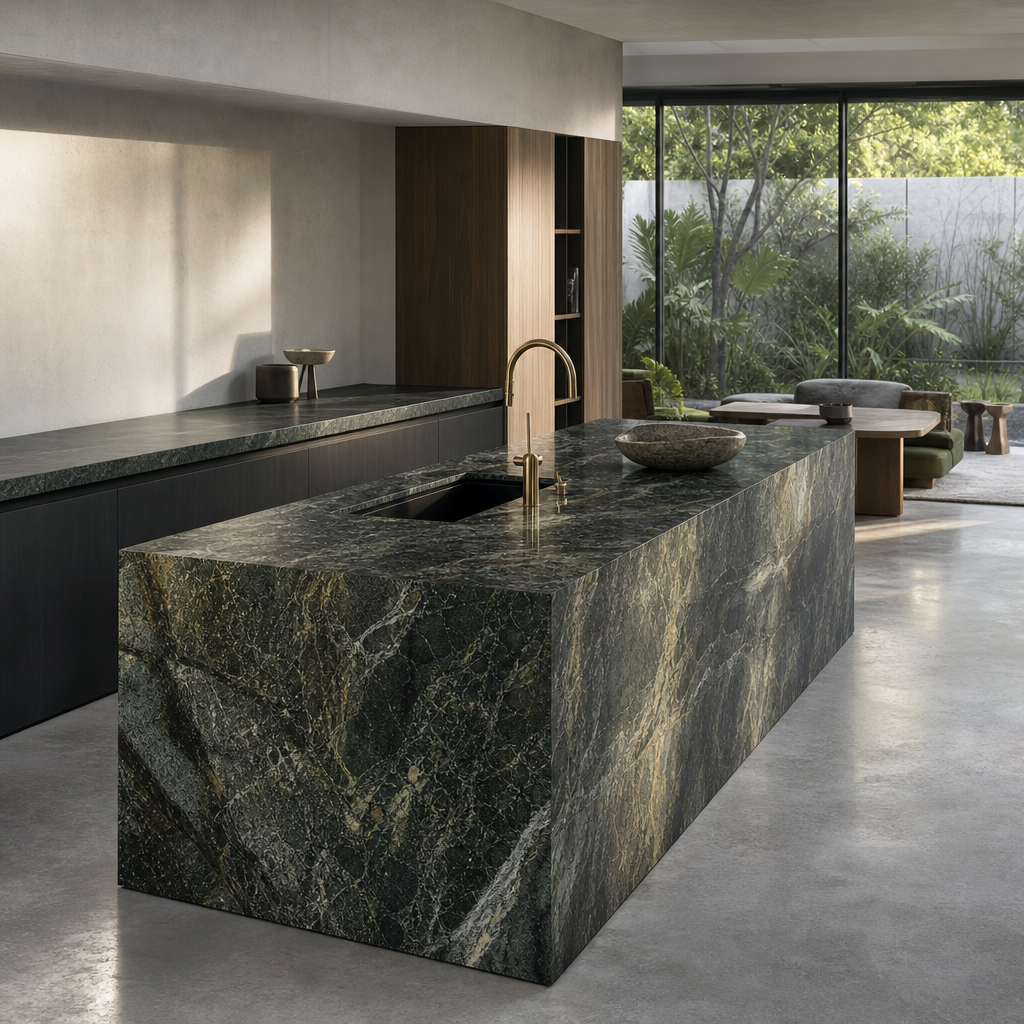
A natural stone slab is a large, cut piece of genuine rock quarried from the earth and processed for use in interiors or construction. That one sentence answers the common question of what is natural stone slab, but it leaves the decision that actually matters: whether a particular stone, finish and thickness suits the room you have in mind. Unlike a porcelain slab, which is engineered from refined minerals and fired in a factory, a natural stone slab keeps the geological colour, veining, grain and variation of the original rock. That individuality is the appeal, and it is also the reason two slabs sharing the same name can behave very differently in a kitchen or a wet room.
We use natural stone slabs across worktops, vanity tops, shower walls, feature walls, flooring, staircases and reception desks. Choosing one well depends less on the photograph and more on composition, absorption, hardness, finish, thickness and where it will live. This guide walks through each of those so a homeowner, architect or developer in Iraq can decide with confidence rather than by name alone.
Table of contents
What defines a natural stone slab
The word “slab” describes a format, not a single type of stone. A slab is cut from a quarried block to a specified length, width and thickness. The U.S. Geological Survey defines dimension stone as natural rock quarried and shaped into blocks or slabs that meet requirements for size, shape, colour, texture and finish, and it names durability, strength and polishability as key selection criteria. That framing is helpful because it ties the material directly to its intended use rather than to appearance alone.
The stone families we work with each carry their own personality. Marble is a metamorphic stone prized for veining and luxury interiors. Granite is an igneous stone generally chosen for strength and everyday wear resistance. Quartzite is a naturally hard metamorphic stone with distinctive patterns. Travertine is a porous limestone, recognisable by warm tones and characteristic voids. Limestone is a calcareous stone with a softer, understated look, and slate is a layered stone often used for textured floors and walls.
A shared name is not a performance guarantee. Two marble slabs can differ in hardness, porosity, veining and surface treatment, so one may suit a bathroom wall while the other struggles as a hard-used kitchen counter. This is why selection starts with the specific slab in front of you, not the category it belongs to.
How a natural stone slab is made
The exact method varies by quarry and stone type, but the sequence is consistent. Large blocks are extracted from a quarry, sawn into slabs, then calibrated or polished to the required thickness and flatness. The surface is then finished — polished, honed, leathered, brushed or flamed — before the slabs are inspected, selected and cut for the final installation.
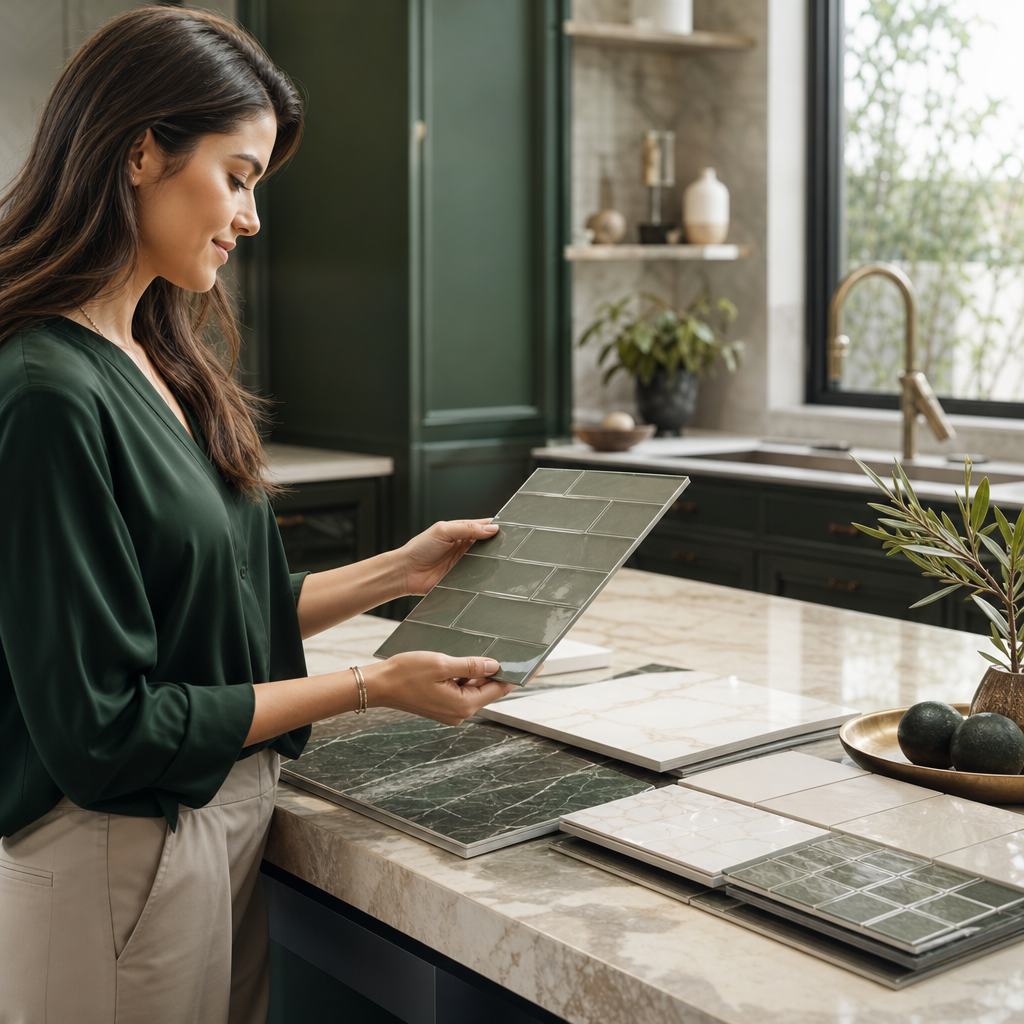
This process does not make the stone uniform the way a manufactured surface is uniform. Mineral deposits, fissures, colour shifts and veining changes are part of the material’s character. A practical consequence follows: a small sample may look noticeably different from the full slab delivered to site. For anything where the visual outcome matters, approve the actual slab or a representative selection, not a cutting the size of a tile.
Natural stone slab versus porcelain slab
Natural stone and porcelain can both deliver a premium, large-format surface, yet they are fundamentally different materials. The table below sets out where they diverge so the right one lands on the right job.
| Feature | Natural stone slab | Porcelain slab |
|---|---|---|
| Origin | Quarried natural rock | Factory-manufactured ceramic |
| Appearance | Unique veining and geological variation | Reproduces stone looks with more consistency |
| Porosity | Varies by stone and finish; some absorb readily | Generally very low |
| Maintenance | May need sealing and stone-specific cleaning | Usually simpler routine care |
| Fabrication | Needs experienced stone fabrication | Needs specialist slab cutting and handling |
| Design character | Each slab is individual | Easier to repeat across areas |
Natural stone is usually the better fit when a project prioritises genuine material character, unique veining and the possibility of a natural patina over time. Porcelain tends to suit projects where consistent appearance, low absorption and simpler maintenance carry more weight. Our marble versus porcelain slab comparison sets out the origin and maintenance differences in detail, and for the engineered side of the story we explain what a porcelain slab is in a companion guide.
What makes one slab right for a project
Appearance narrows the shortlist; six technical questions settle the choice. Work through them in order and most slabs either confirm themselves or rule themselves out quickly.
Composition comes first: is the stone calcareous or siliceous? Calcareous stones — many marbles, limestones and travertines — contain calcium carbonate and can react with acids. Lemon juice, vinegar and acidic cleaners may dull or etch them. Siliceous stones such as many granites and quartzites are generally more resistant to common kitchen acids, though exact mineral content still matters. This distinction weighs most on worktops, vanity tops, shower walls, dining tables and any surface exposed to cosmetics, soap or cleaning chemicals.
Absorption and porosity tell you how easily water, oil or other liquids can enter the stone. Ask the supplier or fabricator for water absorption figures, a recommended sealer, the expected resealing interval, whether the stone is rated for wet areas, and whether the chosen finish changes its maintenance needs. Sealing is not a force field; it buys resistance and time to wipe a spill before it penetrates.
Hardness and durability govern scratching and wear, and they depend on mineral composition, density, finish, use and installation quality together. A stone that shines as a bathroom wall may be the wrong pick for a busy kitchen counter or a high-traffic commercial floor. For architects and developers, the decision should rest on intended application and testing evidence rather than the stone’s name.
Finish changes both look and behaviour. Polished surfaces are reflective and dramatic but show etching, fingerprints and water marks more readily. Honed surfaces are soft and matte. Leathered and brushed finishes add tactile character and can demand more detailed cleaning, while flamed finishes are textured and often reserved for slip-conscious or exterior use. A high polish is not automatically right for a wet floor; in bathrooms and entrances, assess finish and slip performance together.
Thickness and support must match the use. A worktop, a wall cladding panel, a stair tread and a vanity top do not all need the same thickness or reinforcement. Have the fabricator confirm slab thickness, maximum unsupported span, cut-out requirements, edge profile, reinforcement around sinks and openings, and substrate support. Large slabs are heavy and vulnerable at corners, narrow sections and cut-outs, so transport, storage and installation belong to the material decision, not to an afterthought.
Pattern and veining deserve a deliberate review before fabrication. Look at vein direction, colour movement, fissures, matching between adjacent slabs, bookmatching across walls or counters, and where sinks, taps and hob cut-outs will fall. On a villa feature wall or a tower lobby, slab layout can shape the result as much as the stone itself.
Where natural stone slabs work best
In kitchens, natural stone makes a distinctive worktop, island or splashback. Marble offers classic veining, while granite and quartzite are often chosen where greater scratch and wear resistance is needed. For any kitchen, confirm the stone’s reaction to acids, its staining behaviour, heat exposure and sealing requirements before approval.
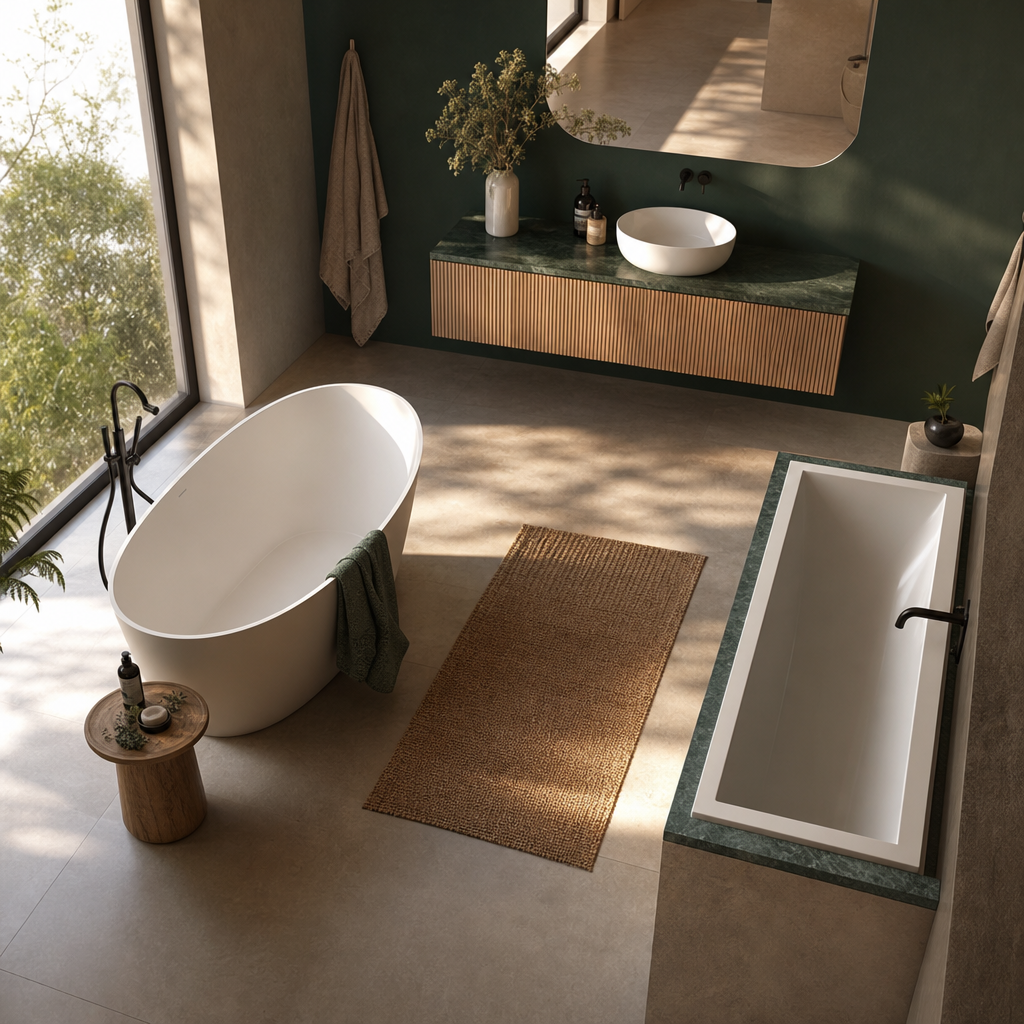
In bathrooms and vanities, marble, travertine and limestone can create a calm, spa-like feel on vanity tops and selected wall applications when correctly specified and maintained. In shower areas, pay close attention to absorption, sealing, surface texture, drainage, cleaning chemicals and joint detailing. A stone slab can suit a shower wall, but it is never a substitute for a properly waterproofed substrate and correctly detailed joints.
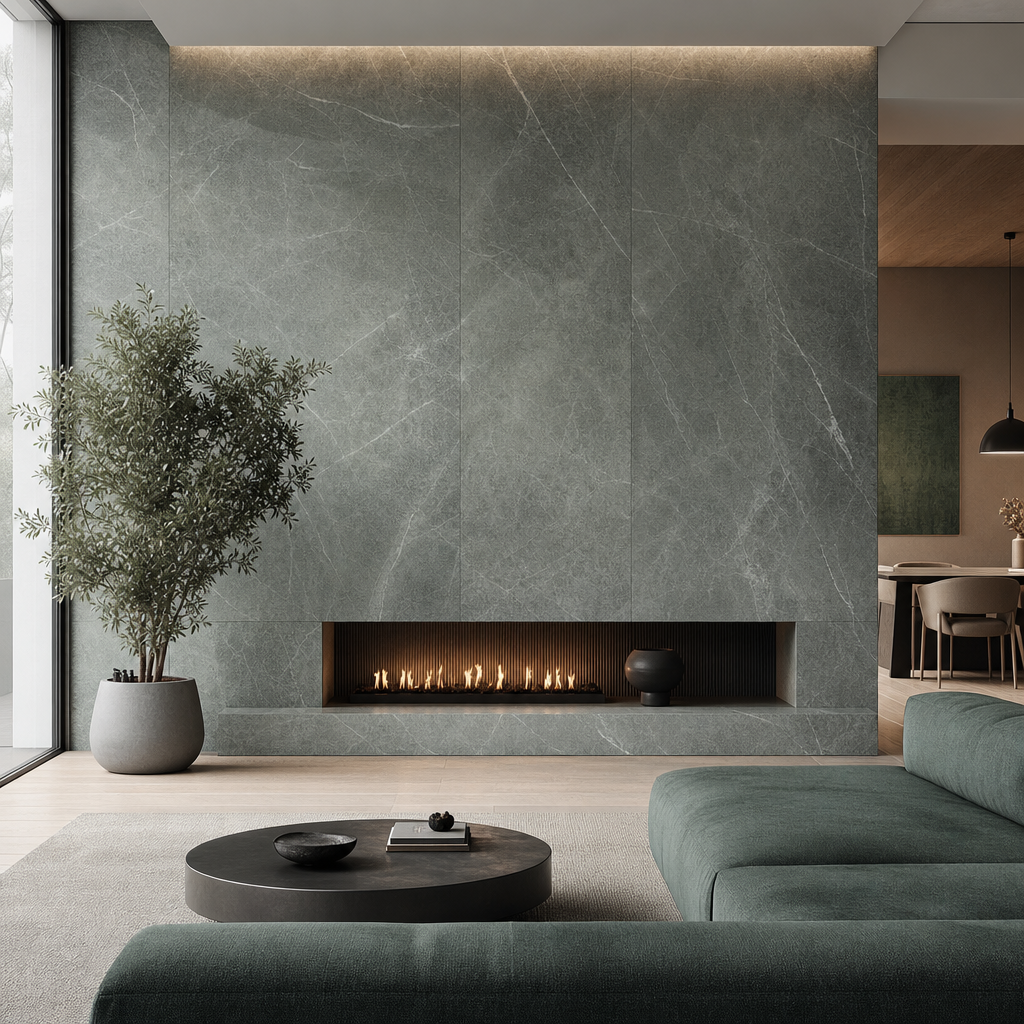
For feature walls and reception areas, large slabs read beautifully in entrance halls, reception desks, fireplaces and statement walls, where a continuous surface shows the pattern with fewer joints. These spots often place less wear on the stone than a kitchen or floor, yet panel weight, anchoring and substrate still need competent design.
On floors and stairs, natural stone can be durable, but selection must account for traffic, abrasion, finish, slip risk and maintenance. A surface that looks ideal in a showroom can behave differently under sand, dust and repeated cleaning — a real consideration in many Iraqi homes. For commercial work, request performance information and review a sample or mock-up before approving the full installation.
Natural stone slab risks to understand
Natural stone is not maintenance-free, and its character comes with responsibilities worth knowing before purchase. Etching is a dull or lightened mark caused by a chemical reaction rather than dirt on the surface; it is common where acid-sensitive calcareous stones meet lemon, vinegar, acidic drinks or unsuitable cleaners. Staining is different — oil, coffee, cosmetics and construction residues can penetrate porous stone, and prompt cleaning plus appropriate sealing reduce the risk without eliminating it.
Scratching and abrasion vary by stone, and grit or sand can act as an abrasive on floors and well-used counters. Cracking or breakage is a handling risk: slabs can fail during transport, fabrication or installation, especially at thin sections, corners and cut-outs, and poor support or substrate movement can contribute. Colour and pattern variation is expected in genuine stone, so a project needing a highly uniform look across many rooms may be easier to control with a consistent porcelain surface.
Maintenance mismatch is the avoidable risk. Using the wrong cleaner can damage the surface. The Natural Stone Institute recommends neutral cleaners, stone soap or mild dishwashing detergent with warm water, followed by rinsing and drying, and warns that lemon- or vinegar-based products may etch calcareous stone. Agreeing a cleaning routine at specification stage prevents a beautiful slab from being quietly dulled in its first year.
How to specify a natural stone slab
A clear specification protects both the look and the budget. For a homeowner, architect or developer in Iraq, a useful slab specification names the stone and its geological type, the intended location and application, slab thickness, surface finish, edge profile, required dimensions and an acceptable colour and veining range. It should also record water absorption or porosity information, strength and durability evidence where relevant, a sealing recommendation, cleaning and maintenance instructions, and who holds fabrication and installation responsibility.
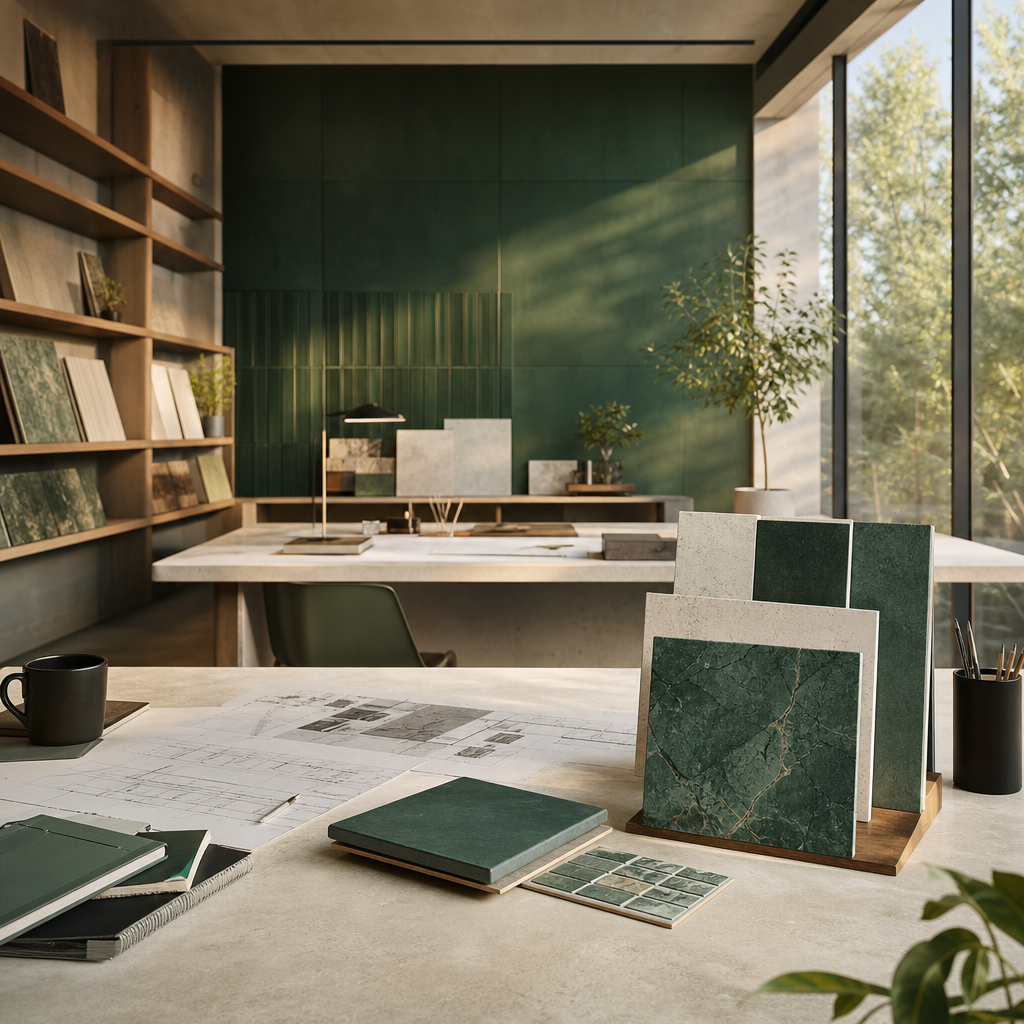
The final line of any good specification is approval of the actual slab or a representative mock-up. For larger projects, do not sign off from a small sample; request slab photos, batch information or an in-person selection where the visual outcome matters. Our tile specification checklist for architects helps project teams organise performance, wet-area, approval and procurement questions, though natural stone slabs should also be assessed with stone-specific technical data alongside it.
One naming point avoids a common mix-up. Products described as stone-look are often engineered, not quarried. Our range includes stone-look surfaces such as TRAVERTINE SILVER, which is listed as a tile rather than a natural stone slab. A travertine-look porcelain tile can carry the visual direction of travertine while remaining a manufactured product, so confirm composition before you specify.
A practical decision for Iraqi homes and projects
For a kitchen or bathroom, start with the room’s exposure to water, acids, heat, sand, dust and cleaning products, then compare the actual stone’s technical information against the look you want. If the maintenance demands fit how the space is really used, natural stone rewards the effort; if they do not, a consistent porcelain surface may serve better.
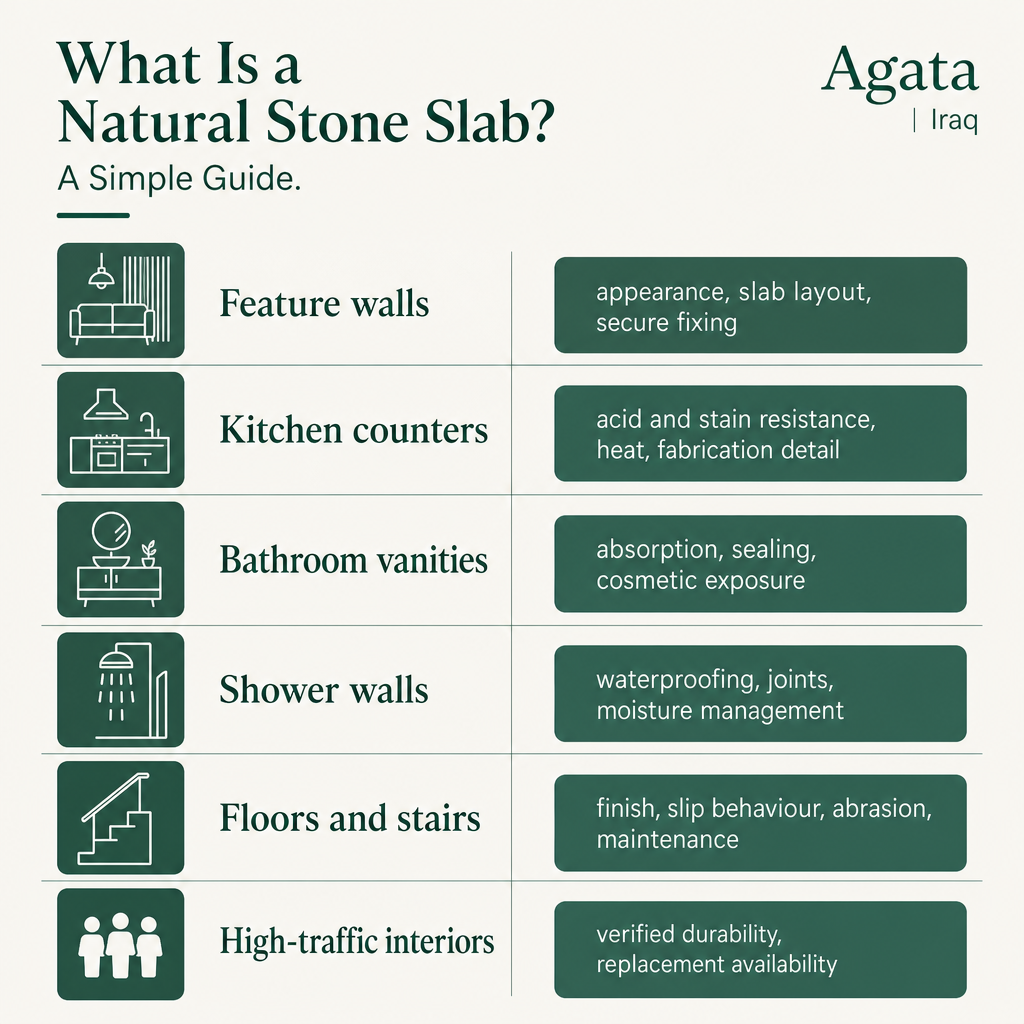
For a tower, villa, hospital or commercial project, define the use zone before choosing a material. Feature walls favour appearance, layout and secure fixing. Kitchen counters favour chemical resistance, staining, heat and fabrication detail. Bathroom vanities favour absorption, sealing and cosmetic-product exposure. Shower walls favour waterproofing and joint detailing. Floors favour finish, slip behaviour and abrasion, while high-traffic interiors favour verified durability and replacement availability. A showroom sample settles colour and finish; the final decision should be backed by the real application requirements and installation method. When you are ready, bring us the zone, the exposure and the look you are after, and we can help you weigh genuine stone against a coordinated porcelain alternative.
Frequently asked questions
What is a natural stone slab?
A natural stone slab is a large, cut and finished piece of quarried rock used for surfaces such as counters, walls, vanities, floors and stairs. It is not the same as a porcelain slab, which is manufactured.
Is marble a natural stone slab?
Yes. Marble is a natural metamorphic stone. When a quarried marble block is sawn into large pieces for fabrication, those pieces are marble slabs.
Are natural stone slabs waterproof?
No slab should automatically be called waterproof. Some stones are relatively dense and others are porous. Waterproofing behind the slab, correct joints and suitable sealing all matter in wet areas.
Do natural stone slabs need sealing?
Many porous stones benefit from sealing, but the correct product and interval depend on the stone, finish and application. Sealing improves resistance; it does not make the stone immune to staining or etching.
Is travertine a natural stone?
Travertine is a natural limestone formed by mineral deposits. A product described as travertine-look, however, may be porcelain or another manufactured material, so confirm composition before specifying it.