No products in the cart.


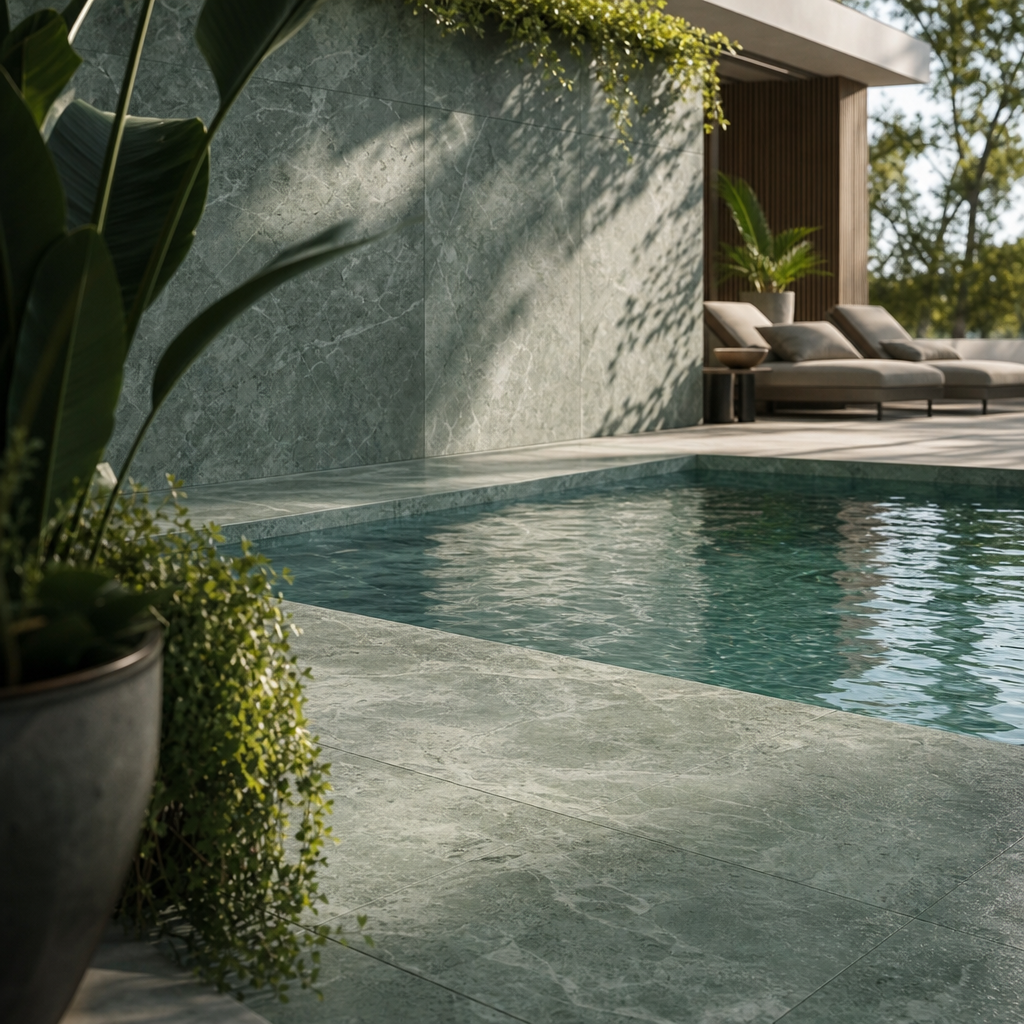
A porcelain slab is a single, large-format porcelain panel made from refined clays, feldspar, silica and mineral oxides that are pressed and fired above roughly 1,200 °C. That firing turns the material vitrified: a dense, glass-like body that is extremely hard, non-porous and resistant to stains, chemicals and abrasion. In everyday terms, think of it as an extra-large, high-performance tile designed to cover a countertop, shower wall or feature wall in one or a few pieces, with very few grout lines. If you are weighing surfaces for a kitchen, bathroom or facade in Iraq, understanding what a porcelain slab actually is helps you judge whether its performance justifies its place in your project.
Table of contents
What defines a porcelain slab
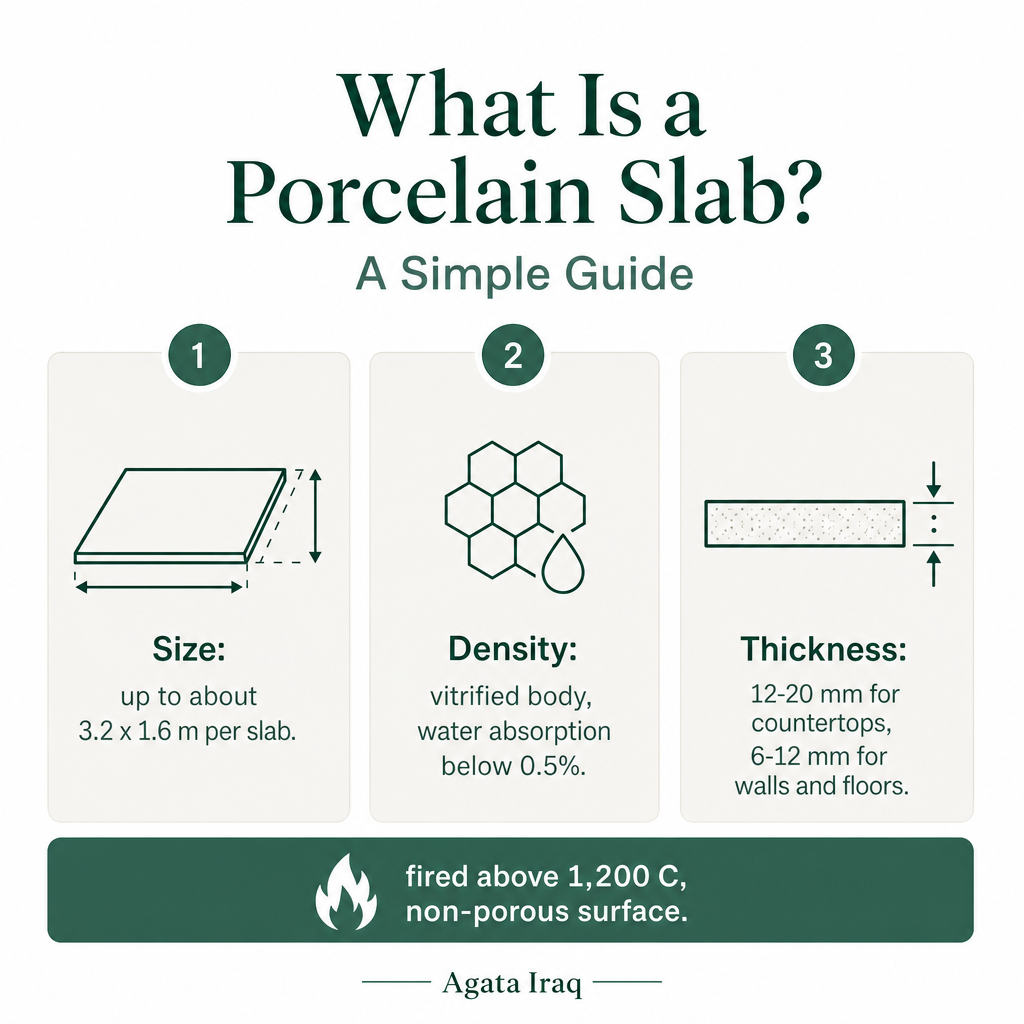
Three features separate a porcelain slab from an ordinary tile. The first is size. Typical slabs are far larger than standard tiles, often reaching around 3.2 × 1.6 m or more, so a single panel can span a whole worktop or a full-height wall. The second is density. Because the body is vitrified during firing, water absorption usually sits below 0.5%, which is why slabs are recommended for wet areas and for surfaces that move between indoors and outdoors. The third is thickness, which is chosen for the job: many ranges offer 12–20 mm for countertops and 6–12 mm for wall and floor panels, balancing strength against manageable weight.
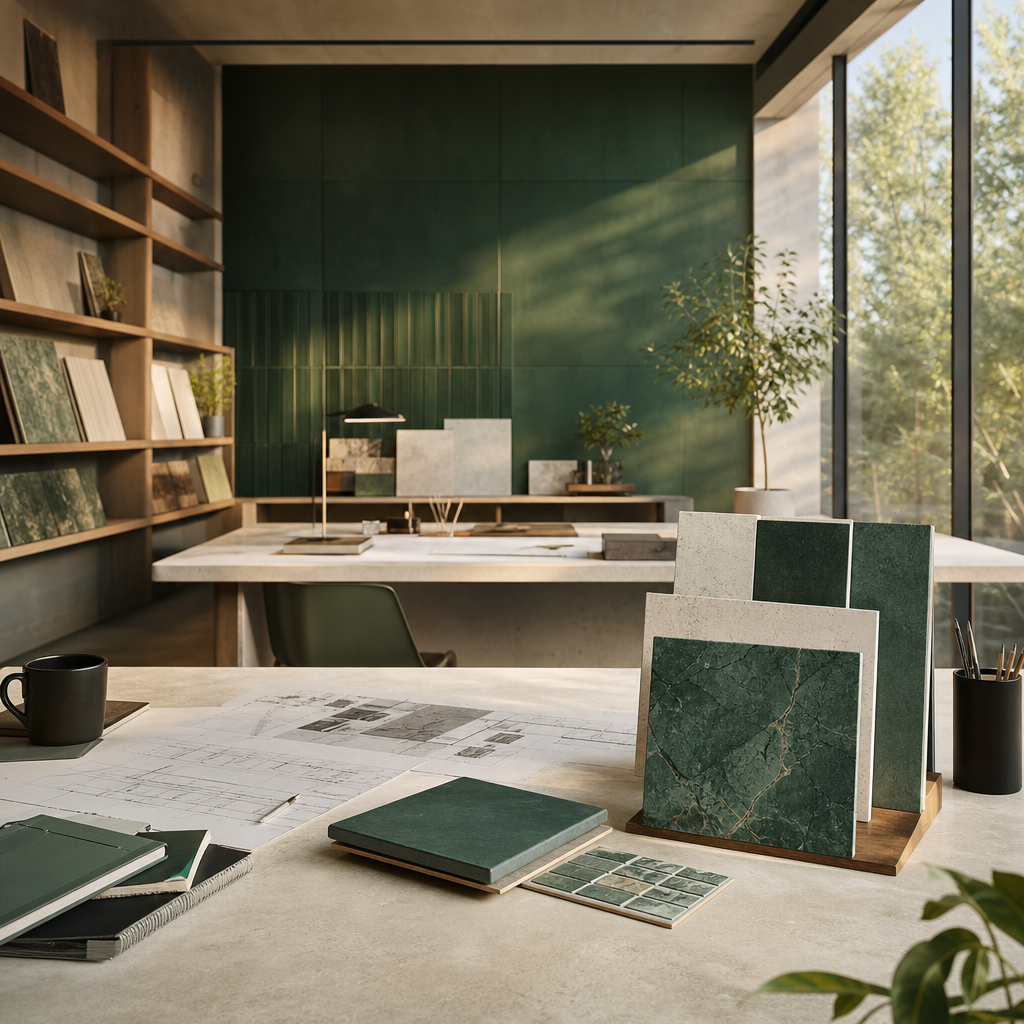
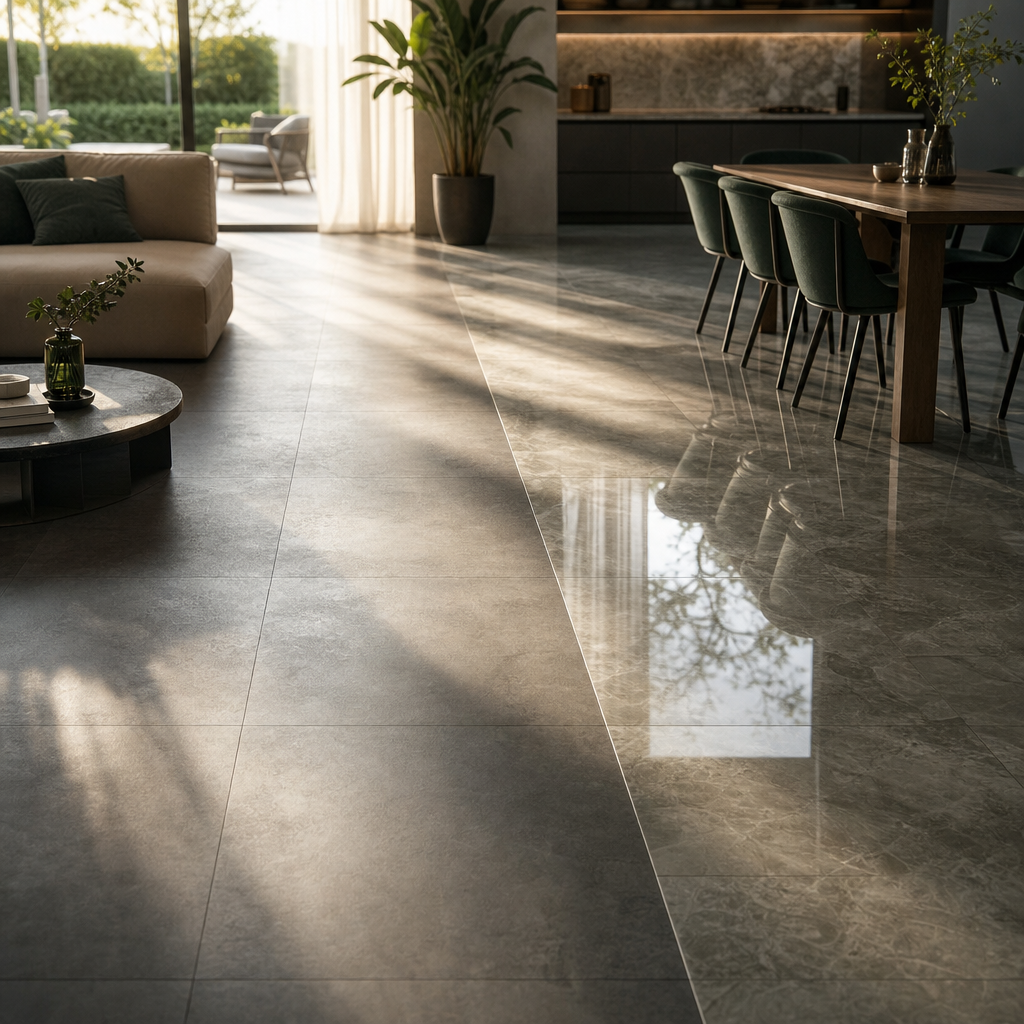
Visually, the format opens up design options that small tiles cannot match. Porcelain slabs are produced in marble, travertine, concrete, wood and metal looks, so you can achieve a natural-stone appearance with more consistent performance and simpler maintenance. Because graphics are printed across a large sheet rather than dozens of small pieces, continuous patterns and book-matched veining become possible, giving walls and counters an uninterrupted, considered finish.
Where porcelain slabs are used
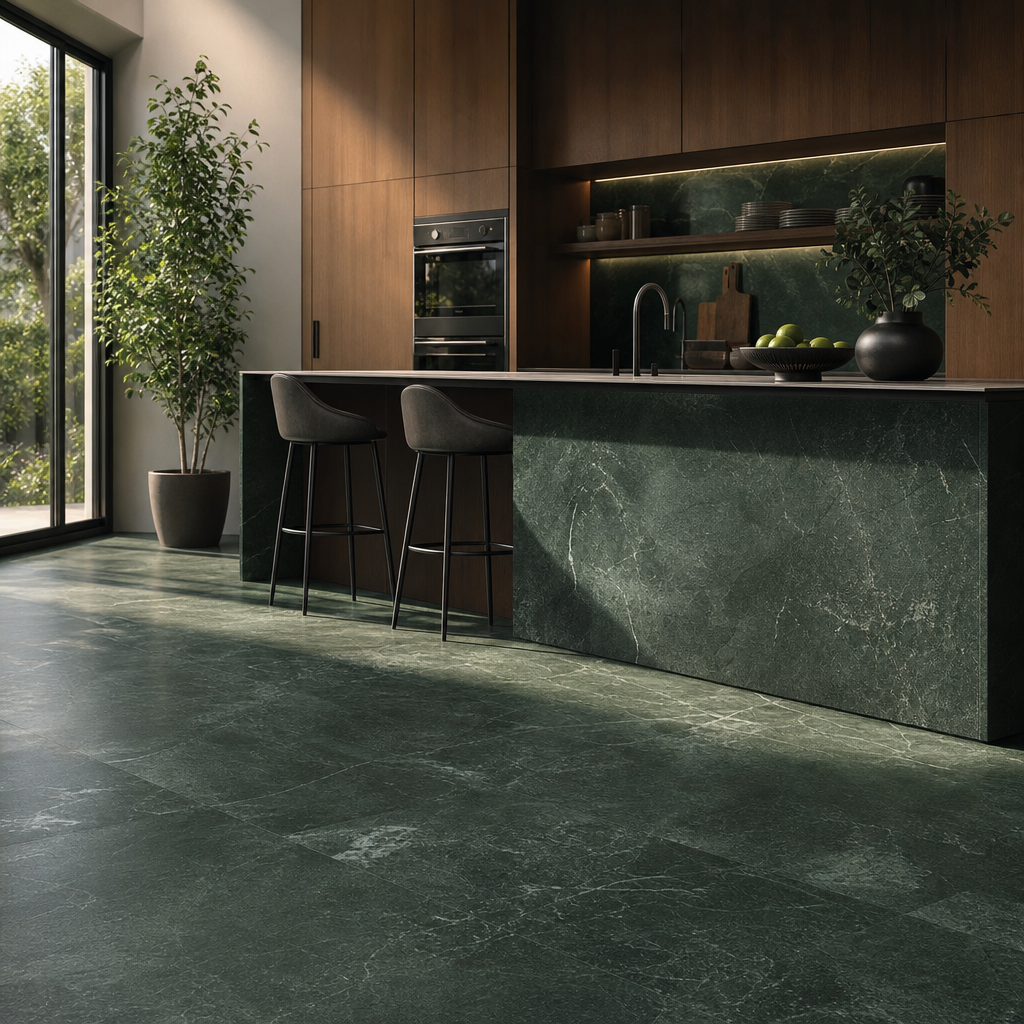
The large, dense panel has become a default surface for several zones in contemporary homes and commercial interiors. On kitchen counters, islands and waterfall edges it copes with heat, spills and constant wear. As a full-height backsplash it runs from counter to wall cabinets with almost no joints. In bathrooms it works for shower walls, tub surrounds, vanity tops and cladding around mirrors and niches, offering a waterproof, mould-resistant, easy-clean surface. In living spaces, large panels turn feature walls and fireplace surrounds into a single seamless statement.
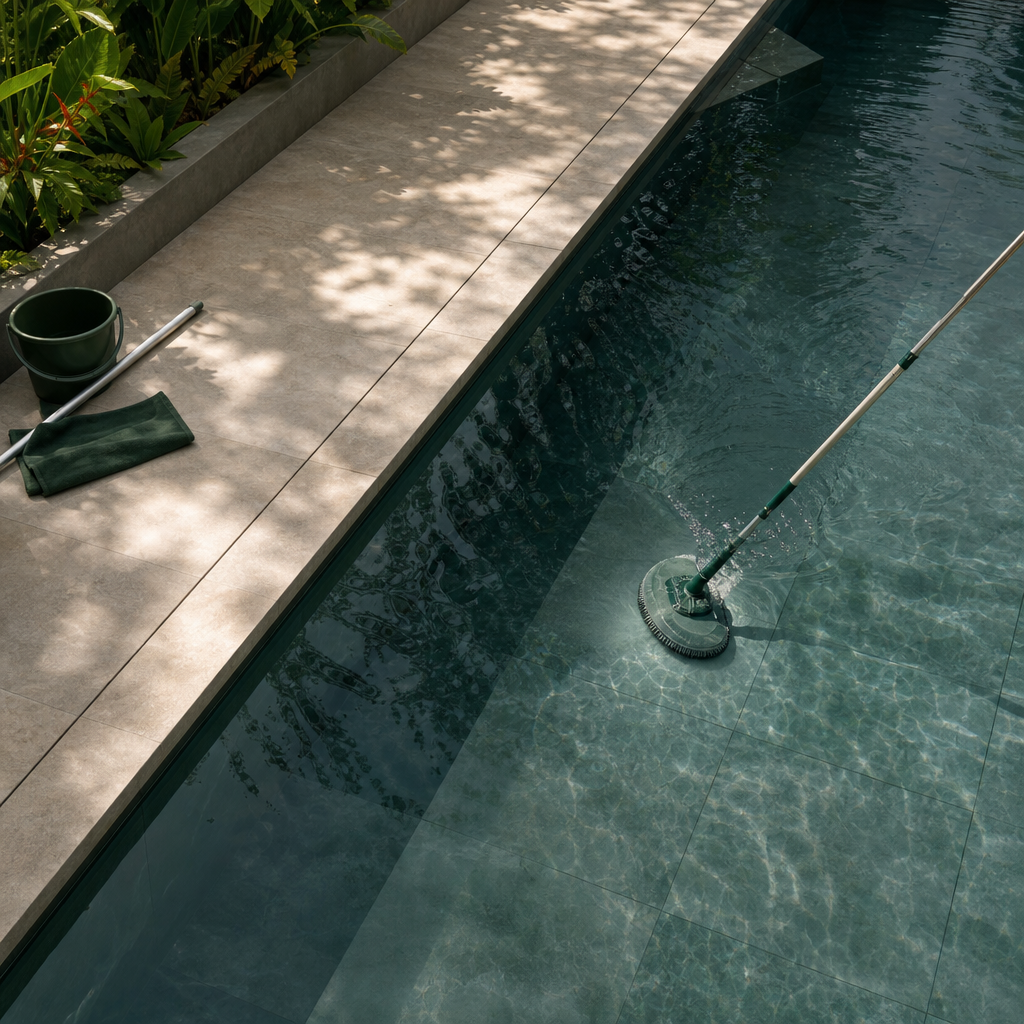
The same properties scale up to commercial work. Hotel lobbies, retail interiors and office receptions need durability and a refined look across big areas, while outdoor kitchens, terraces and building facades benefit from porcelain’s resistance to UV, weather and temperature extremes. For projects in Iraq these traits are practical rather than abstract: kitchens and bathrooms take heavy daily use, balconies and terraces sit under strong sun, and towers, villas and hospitals demand surfaces that stay durable and hygienic in high-traffic conditions.
How they are made, and why it matters
The performance of a porcelain slab comes directly from how it is produced. Purified clay, feldspar and mineral oxides are finely ground and blended into a controlled body. That mix is pressed into large sheets under high pressure, which removes air pockets and creates uniform density. The sheets are then dried and fired in kilns above 1,200 °C, where vitrification takes place and the panel becomes its final, glass-hard self.
That process is worth understanding because each stage explains a benefit you will feel later. Vitrification produces ultra-low porosity, so the slab does not absorb liquids and strongly resists staining. The dense body delivers high hardness and abrasion resistance, suiting intensive foot traffic in homes and commercial buildings. Chemical resistance means common household cleaners and many disinfectants used in healthcare and hospitality do not damage the surface. Kiln firing gives heat resistance, so hot pans can go on the counter and the material suits fireplaces and outdoor kitchens. Outdoor-grade products add UV stability and frost resistance, keeping colours and textures stable under sun and seasonal swings.
There is a maintenance consequence too. Because the surface is already non-porous, porcelain slabs do not require sealing the way many natural stones do, and routine care is typically limited to wiping with water and a mild detergent.
Porcelain slab versus other surfaces
Buyers usually compare porcelain slabs with natural stone such as marble or granite, with engineered quartz, and with conventional tiles. Each comparison highlights a different reason to choose porcelain.
| Comparison | How a porcelain slab differs |
|---|---|
| Natural stone (marble, granite) | Similar marble, travertine or concrete looks, but more predictable resistance to stains, acids and wear; lower water absorption and no periodic sealing |
| Engineered quartz | Handles high temperatures better because it is kiln-fired ceramic rather than resin-bound; resists UV, so surfaces are less likely to fade in bright interiors or outdoors |
| Standard tiles | Essentially an extra-large tile that reduces grout lines; a few planned seams replace many small joints, so rooms can feel larger and more open |
These distinctions explain why architects and interior designers increasingly specify porcelain slabs for premium kitchens, bathrooms, hotel suites and facade systems. The material offers the appearance clients want alongside technical behaviour that holds up under real use. If you are furnishing the room around such a surface, our buyer’s guide to porcelain tiles for living rooms in Iraq covers how these finishes coordinate with the rest of a space.
Is a porcelain slab right for your project in Iraq
The underlying question is whether you need a surface that combines design flexibility with top-tier technical performance across one large, continuous panel. A few practical filters make the answer clearer.
Project type and location. Porcelain slabs are strong candidates for family kitchens with heavy cooking, hot cookware and frequent spills; for bathrooms and wet rooms that need waterproof, mould-resistant, easy-clean walls and vanity tops; for feature walls, reception desks and lift lobbies in towers and villas where a clean, minimal look is wanted at scale; and for outdoor kitchens, terraces and villa facades exposed to sun, dust and temperature swings. If a project is mainly decorative with light use, other materials may suffice, but for demanding spaces the performance argument is strong.
Aesthetic direction. Slabs suit modern, minimalist and Scandinavian-inspired interiors because they deliver calm, continuous surfaces with few joints, stone-look finishes in marble, travertine and limestone without a grid of grout lines, and soft neutral palettes that pair easily with wood, concrete and metal. This is where an integrated supplier helps: at Agata Iraq we can coordinate porcelain surfaces with furniture, lighting and bathroom solutions in one aesthetic language, which matters most for whole-home renovations and new villas.
Performance and maintenance priorities. Where hygiene, durability and low upkeep lead the brief, the non-porous, stain- and chemical-resistant body makes porcelain slabs a natural fit for kitchens, bathrooms, hospitals and hospitality work. No sealing and simple cleaning reduce the long-term burden for busy households and facilities. In hospital corridors, hotel lobbies and shared apartment amenities, where traffic, moisture and frequent cleaning are constant, that technical profile becomes especially valuable. For healthcare specifically, our overview of surface materials for hospital interiors in Iraq goes deeper into hygiene requirements.
Practical considerations and risks. Large-format panels are heavy and must be cut, transported and installed with the right tools and technique, so specialist installation matters to avoid breakage or edge damage. This is a general reality of any large slab, not a flaw of the material. Once fitted, porcelain is robust; the real planning work lies in positioning seams, matching patterns on veined marble-look slabs, and designing correct substrate and support. Those are execution details our showroom consultants and your architect or designer can coordinate together.
How we work with porcelain slabs at Agata Iraq
We operate as a premium supplier and showroom for tiles, slabs, bathroom solutions and interior furnishings, with curated collections aligned to modern, minimalist and Scandinavian aesthetics across residential and commercial projects in Iraq. Our porcelain portfolio includes tiles and surfaces in natural-stone looks, such as travertine-inspired ranges that coordinate with slabs on floors, walls and counters, and design-led collections like ABSTRA in porcelain, which show how graphic and textural design is applied to a high-performance porcelain body.
We also hold project references for towers, villas and hospitals, so surfaces can be seen in real Iraqi conditions rather than as isolated technical products. Because our offering spans surface materials, bathrooms and furnishings together, homeowners renovating kitchens and bathrooms, as well as architects and developers, can choose porcelain slabs as part of a complete interior concept. If you are early in the process, our guidance on planning a full home renovation in Iraq helps you sequence surface decisions with everything else. Bring us the room, its use and your preferred look, and we will help you decide whether a porcelain slab is the right surface and which finish fits.
Frequently asked questions
What is a porcelain slab in simple terms?
It is a very large, high-performance porcelain panel made from refined clay and minerals fired above 1,200 °C, giving a dense, non-porous, stain-resistant surface that can cover big areas with minimal joints.
Can porcelain slabs handle Iraq’s heat and strong sun?
Yes. Kiln-fired porcelain is highly heat resistant and tolerates hot cookware, fireplaces and outdoor kitchens, while outdoor-grade slabs are UV stable and frost resistant, making them suitable for sun-exposed terraces and facades.
Are porcelain slabs good for kitchens and bathrooms?
They are particularly well suited. Low water absorption, a non-porous structure and resistance to stains and chemicals make them excellent for countertops, backsplashes, shower walls and vanities, where hygiene and easy cleaning matter.
How do porcelain slabs compare to marble or granite?
Porcelain can mimic marble or travertine visually but offers more consistent resistance to stains, acids and moisture, needs no sealing, and often performs better in wet rooms and outdoors than many natural stones.
What maintenance do porcelain slabs need?
Routine care is usually limited to wiping with water and a mild detergent. No sealing or polishing is required, thanks to the dense, non-porous surface.