No products in the cart.


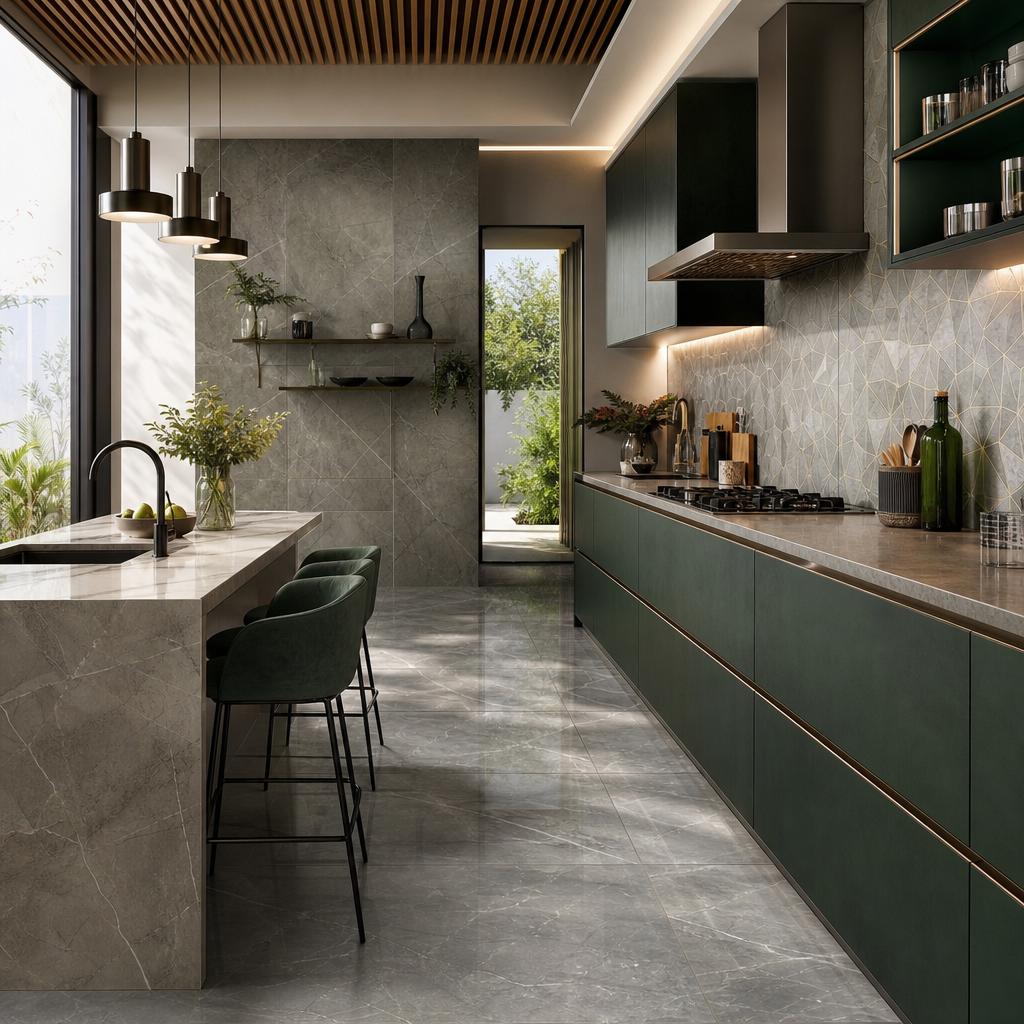
A kitchen in Iraq works harder than almost any other room. It cooks for extended families, doubles as a circulation hub, faces spilled tea and hot oil, and often opens straight onto a terrace or courtyard. So when we shortlist kitchen tiles ideas Iraq homeowners can actually live with, we look past the mood board. Every idea below earns its place because it balances design, everyday performance, and the practical rules of renovating here. Some ideas suit a compact Baghdad apartment; others belong in an open-plan villa. Each one comes with the honest trade-offs we would flag before you order a single box.
Table of contents
How we chose these kitchen tiles ideas for Iraq
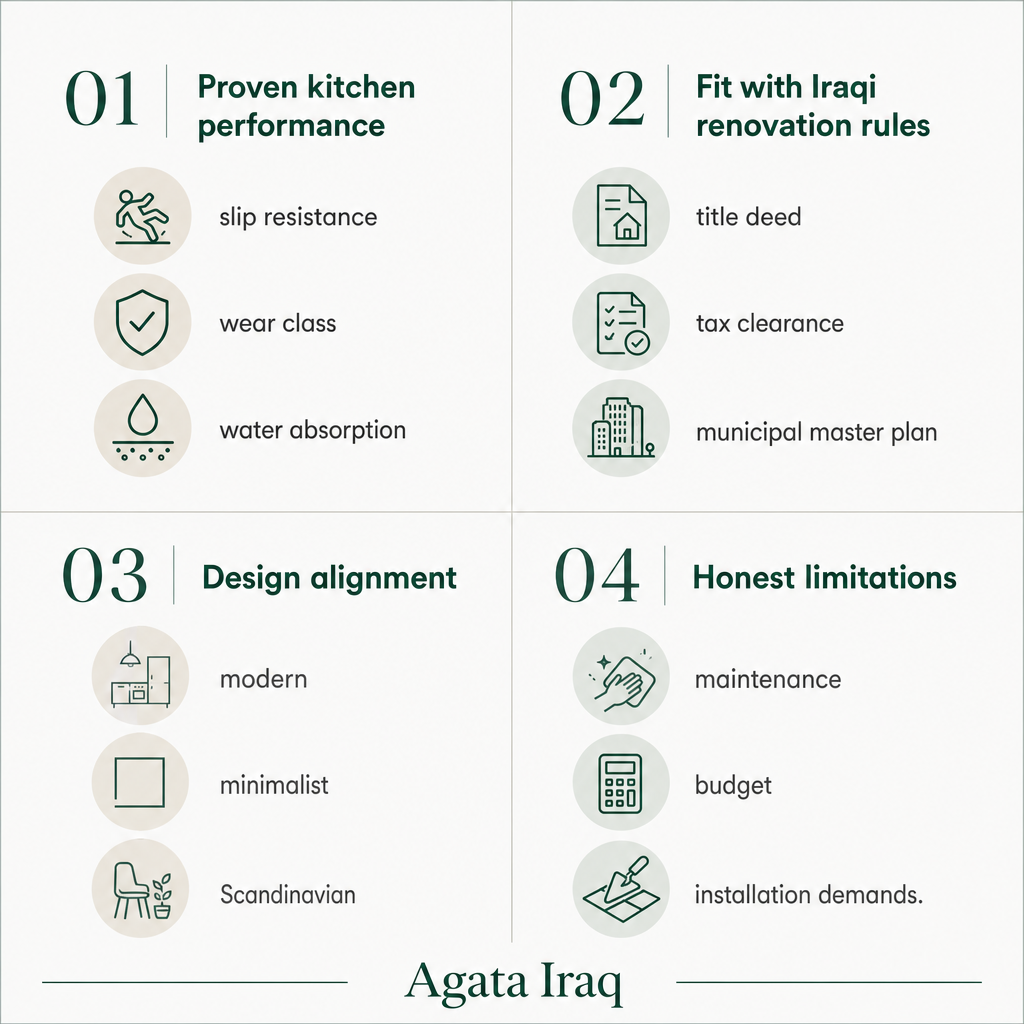
None of these ideas made the list for being trendy. Each one clears four filters we apply before we recommend anything to a homeowner, designer, or developer.
The first is proven kitchen performance. We favour porcelain and stone-look surfaces that handle spills, moisture, heat, and frequent cleaning, and that can be specified against measurable properties such as slip resistance, wear classification, and water absorption rather than looks alone.
The second is fit with the reality of renovating in Iraq. Our own renovation planning starts with documentation and compliance, not with tile selection. Before ordering, we confirm the title deed and site map, secure property tax clearance, and check that the works align with the municipal master plan and land-use designation. Every idea here is written to sit inside those constraints.
The third is design alignment. As a design-led supplier of porcelain and natural-stone-look surfaces with a modern, minimalist, and Scandinavian leaning, we shortlist ideas that carry that language cleanly from apartments to villas and larger developments.
The fourth is honesty about limitations. For each idea we name where it shines and where it does not belong, whether the constraint is maintenance, budget, or a demanding installation. If you want the full sequence of legal and budget steps behind these choices, our guide on how to plan a full home renovation in Iraq sets out the order of work.
Warm travertine-look floors with Travertine Silver
What if you want the warmth of stone without the daily worry of raw stone? Travertine-look porcelain answers that, and Travertine Silver is where we usually start the conversation for kitchens that need to feel welcoming.
Distinction. Travertine-look surfaces live between rustic and modern. They bring a Mediterranean warmth that pairs naturally with oak cabinets, soft greys, and Scandinavian lighting, but they arrive as a durable tile that is easier to live with than quarried stone. Once sealed correctly, a stone-look floor like Travertine Silver resists stains and moisture in the busiest cooking zones.
Best fit in Iraq. Open-plan villa kitchens where the floor has to connect visually to living and dining areas. Homes that host often, where a cosy floor matters as much as its performance. Projects where designers want a natural look but still have to control maintenance and budget across large floor areas.
Limitations. The advantage disappears if the sealing is skipped. These tiles need thorough cleaning before sealing and a maintained sealing routine to keep stains and moisture out. If the kitchen sits inside a wider renovation that changes built area or structure, municipal approvals and licensed drawings come before re-tiling. And clients who expect the irregular patina of raw stone should be briefed early: porcelain reads more consistent in tone and pattern.
Large-format minimalist porcelain with ABSTRA
Modern kitchens are chasing a single calm plane, and grout lines are the enemy of that goal. Large-format porcelain is how we get there.
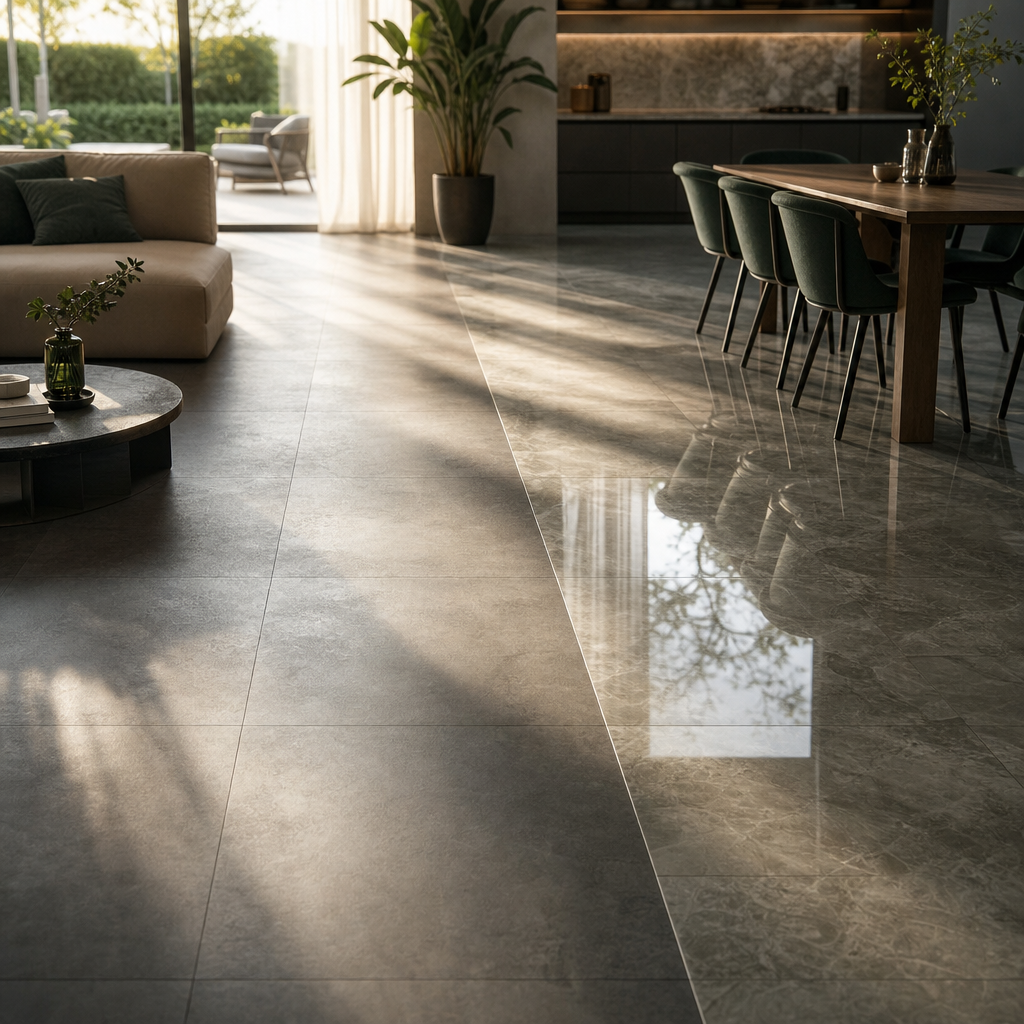
Distinction. A porcelain such as ABSTRA is our go-to for larger formats and a seamless, minimalist look. Fewer joints, a quieter visual field, and easy pairing with minimalist cabinetry and integrated appliances give architects the continuity they want in contemporary towers and villas. It suits the Scandinavian and modern direction we carry through our projects.
Best fit in Iraq. High-end apartments and penthouses in Baghdad and Erbil where clients expect hotel-grade finishes. Kitchens with islands or peninsulas that need visual continuity under cabinetry and along circulation paths. Schemes where pale walls, large windows, and slim lighting depend on an understated floor to stay balanced.
Limitations. Large-format tiles are unforgiving. They need a very flat substrate and experienced installers; poor preparation causes lippage, and correcting uneven edges is costly. In smaller kitchens, oversized tiles can mean more cutting, wasted material, and broken pattern continuity, so we mock up the layout in plan before sign-off. The minimalist result also exposes every detail, which means grout colour, room-to-room transitions, and movement joints must be specified and documented clearly for the contractor.
Stone-look wall tiles for durable backsplashes
Backsplashes take the daily abuse of steam, oil, and splashing, yet they are also the most visible design moment behind a hob. Stone-look wall tiles handle both jobs.
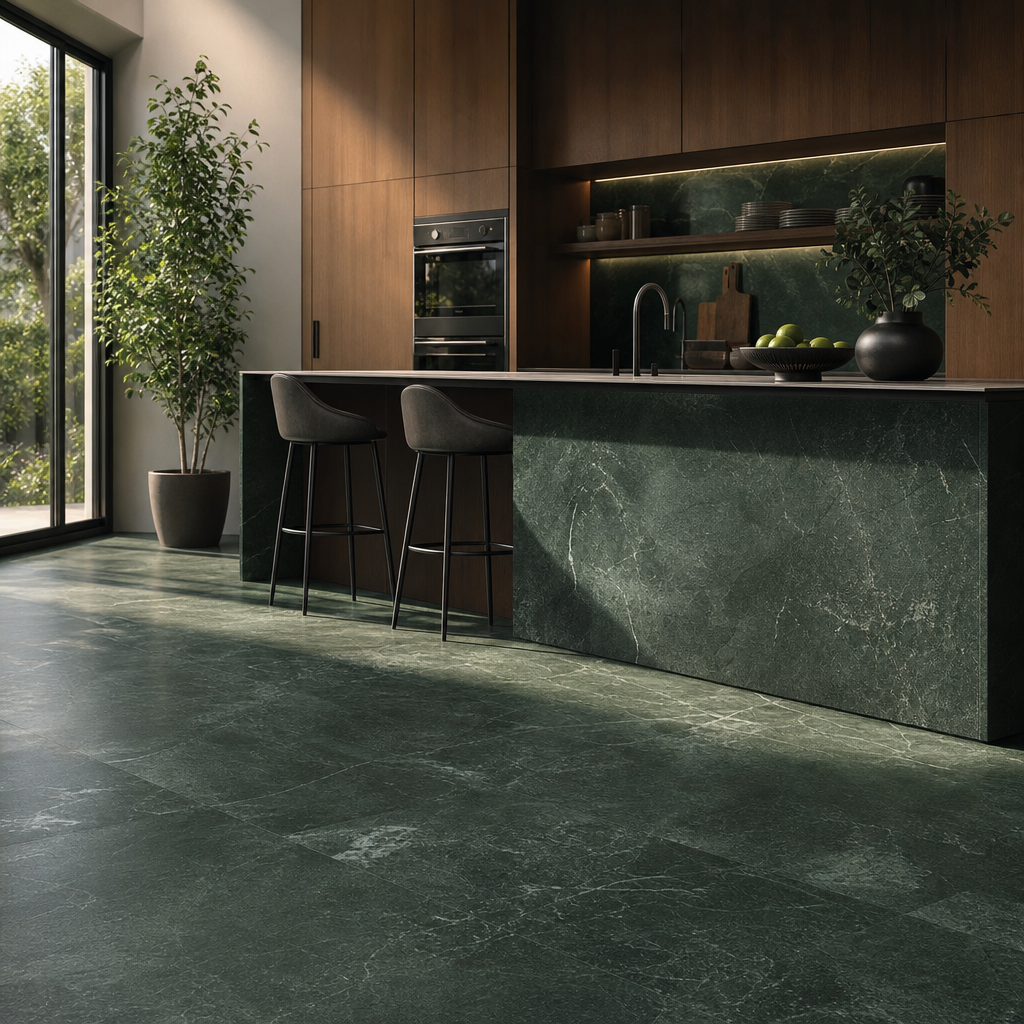
Distinction. Unlike paint or laminate panels, stone-look wall tiles add tactile depth while forming a robust barrier against everyday splashes. They can echo a travertine-look floor for a warm, layered scheme, or contrast against plain minimalist porcelain on the floor for a more designed feel.
Best fit in Iraq. Family kitchens with intense cooking, where cleaning has to be easy but clients still want a focal point. Villas with open shelving or glass-fronted cabinets that leave the backsplash fully on show. Interior upgrades near heritage or restricted zones, where the exterior stays untouched but the kitchen can still carry real character.
Limitations. Heavy texture and relief trap grease and make cleaning harder, so near the hob we often recommend a smoother stone-look tile and keep deeper textures for less exposed walls. Back walls still need thorough cleaning and sealing to avoid patchy absorption or darkening. And when overhead cabinets already dominate a small kitchen, a heavily patterned backsplash can crowd the space; subtler veining usually reads better there.
Slip-resistant porcelain floors for busy family kitchens
Safety is not a design afterthought in a kitchen that also serves as a hallway. Damp floors, running children, and older adults change the specification.
Distinction. Slip-resistant porcelain finishes combine micro-texture with strong wear ratings, giving grip underfoot even when the floor is wet while staying easy to mop. In Iraqi homes where the kitchen doubles as a circulation route and regularly sees spilled tea and water, these performance characteristics translate directly into everyday safety.
Best fit in Iraq. Multi-generational homes with constant barefoot and slipper traffic. Ground-floor kitchens that open onto yards, courtyards, or service balconies. Developer projects that must meet consistent safety expectations across show units, staff kitchens, and common areas.
Limitations. Very rough textures feel abrasive and are harder to sweep, so slip resistance has to be balanced against daily comfort, especially in homes where soft slippers are the norm. The critical step is documentation: the slip-resistance rating, wear class, and water absorption should appear in the specification, not just the product name, so the contractor and client know exactly what was ordered. Highly matt surfaces can also show more dust in drier seasons, which is worth raising when you agree cleaning routines at the design stage.
Light, Scandinavian-inspired schemes with pale porcelain
Bright, calm, and open is the brief we hear most from younger buyers, and light tiles are the fastest route to it.
Distinction. Pale porcelain in soft whites, light greys, and muted beiges reinforces openness in both apartments and villas. It reflects natural light and pairs easily with wood, black metal, and simple textiles, which is exactly the understated, contemporary language our curated collections are built around.
Best fit in Iraq. Urban apartments with smaller kitchens that gain a sense of space from light surfaces. Villas whose owners want one continuous material story from kitchen to living room. Developments marketing a Scandinavian or minimalist interior to young buyers and tenants.
Limitations. Light floors reveal spills, dust, and coloured spices sooner, so the client has to be comfortable with a regular cleaning rhythm. In very sunny, south-facing kitchens, an all-white scheme can feel clinical, and we often introduce warmer undertones or a textured finish to soften it. Pale tiles combined with glossy cabinets can also cause glare, so the surface finish, matt or satin, needs to be chosen deliberately rather than by default.
Continuous indoor-outdoor porcelain from kitchen to terrace
When the kitchen opens onto a terrace used for grilling and gatherings, a visual break at the threshold undercuts the whole design. One tile series can run straight through.
Distinction. Using a single porcelain series across the kitchen and its connected outdoor space simplifies transitions and reinforces modern values of continuity and open living. It lets a family treat the terrace as a genuine extension of the kitchen rather than a separate zone.
Best fit in Iraq. Villas with direct kitchen-to-garden or kitchen-to-patio access. Apartments with sizeable balconies off the kitchen, often used for secondary cooking or laundry. Hospitality suites and serviced residences that promise generous, connected living.
Limitations. Not every interior tile is rated for outdoor use. Before extending a floor outside, the exact product must be confirmed for frost, weather, and chemical resistance alongside slip resistance and water absorption. Drainage, slopes, and movement joints have to be coordinated with engineers early so a continuous surface does not pool water or crack. And where building or municipal regulations restrict external alterations, extending tiles outdoors may need approval before work begins.
Budget-controlled upgrades inside Iraq’s renovation rules
The most common mistake we see is a beautiful tile selection made before the legal and budget groundwork is done. That order gets expensive to reverse.
Distinction. Our renovation planning confirms the foundations before any detailed specification: verify the title deed and site map (ideally under one year old), secure property tax clearance, and check that the works comply with the municipal master plan and land-use designation. Where structure, faade, or built area changes, we prepare preliminary architectural drawings through a licensed engineer or architect, and we define a budget per square metre with a 10 to 15 percent contingency. That framework keeps kitchen tile choices aligned with the larger renovation instead of fighting it.
Best fit in Iraq. Owners renovating kitchen, bathrooms, and living areas together, where tile decisions carry major cost impact. Projects near antiquities or heritage sites, which need written approval from the Antiquities Authority before works proceed within one kilometre of such a site. Developers coordinating multiple units, where documented tile specifications and budgets prevent costly variations later.
Limitations. Skipping these steps can delay the kitchen works or trigger stop-orders where municipal or heritage approvals were required but not obtained. Underestimating the per-square-metre tile budget leaves nothing for substrate repairs, trim details, or higher-performance products in wet zones. And choosing tiles from the showroom alone, before the legal and technical checks, often forces a re-selection once drawings or approvals change the layout. For the fuller sequence, our guide on planning a full home renovation in Iraq walks through each stage in order.
How to choose the right idea for your home
Moving from inspiration to a realistic shortlist takes four decisions, in this order.
Start with the use case and project type. A compact, enclosed apartment kitchen points toward light Scandinavian porcelain and slip-resistant finishes. An open-plan villa with a terrace points toward travertine-look floors, stone-look backsplashes, and continuous indoor-outdoor porcelain. A full-home renovation or new build means folding tile choices into the wider documentation and budget framework from the start.
Then shortlist by material and finish. Porcelain covers high-performance, low-maintenance floors and walls. Stone-look porcelain earns its place where warmth and texture are the priority. Decide the surface finish, matt, textured, or satin, according to your slip-resistance needs and cleaning preferences rather than appearance alone.
Next, confirm performance early. For each candidate, check the slip-resistance rating, the wear classification for the traffic you expect, and water absorption and weather resistance if the tile will also go outdoors. Record these next to the product name and intended location.
Finally, lock the specification with drawings and approvals. Once the palette is agreed, integrate sizes, layouts, and movement joints into the architectural drawings, confirm the legal approvals where needed, and finalise budgets per square metre with contingency. That discipline is what keeps a design from unravelling late in the schedule. The table below is a fast way to match a home type to its strongest starting ideas.
| Home type | Strong starting ideas | Watch for |
|---|---|---|
| Compact apartment kitchen | Pale Scandinavian porcelain, slip-resistant floors | Glare from glossy cabinets, showing dust |
| Open-plan villa kitchen | Travertine-look floors, stone-look backsplash | Sealing routine, large-area budget |
| Kitchen with terrace access | Continuous indoor-outdoor porcelain | Frost and weather rating, drainage |
| Full renovation or new build | Budget and documentation-led selection | Approvals before ordering tiles |
Frequently asked questions
Are porcelain tiles a good choice for Iraqi kitchen floors?
Yes. We recommend porcelain such as ABSTRA for its large formats, seamless minimalist look, and durable, low-maintenance surface in kitchens. Specified with the right slip resistance and wear rating, porcelain is among the most practical options for both residential and commercial kitchens in Iraq.
How should travertine-look kitchen tiles be maintained here?
Travertine and stone-look surfaces should be cleaned thoroughly before sealing and then kept on a proper sealing routine, using suitable products at suitable intervals to guard against stains and moisture. This matters most in humid or high-use kitchens, where an unsealed surface absorbs unevenly.
Do I need formal approvals to retile my kitchen?
If the work is limited to swapping surfaces, it is usually straightforward. But when your kitchen upgrade is part of broader works that change structure, faade, or built area, you need preliminary drawings by a licensed engineer or architect and compliance with the municipal master plan and land-use designation before ordering tiles. Properties within one kilometre of an antiquities or heritage site also require written approval from the Antiquities Authority in advance.
How do designers document kitchen tile choices for a project?
Professional practice records the product details (name, supplier, code), the format and finish (size, thickness, colour, surface), the performance ratings (slip resistance, wear class, water absorption, and weather resistance where relevant), the installation assumptions (substrate, movement joints, adhesives, grout), and the accessories such as trims, transitions, and grout colour. Clear documentation is what makes contractors deliver the intended design.
What budget cushion should I plan for tiles?
We recommend defining a budget per square metre with at least a 10 to 15 percent contingency. That cushion absorbs unforeseen conditions, layout changes, and the higher-performance products that wet zones like the kitchen often need.