No products in the cart.


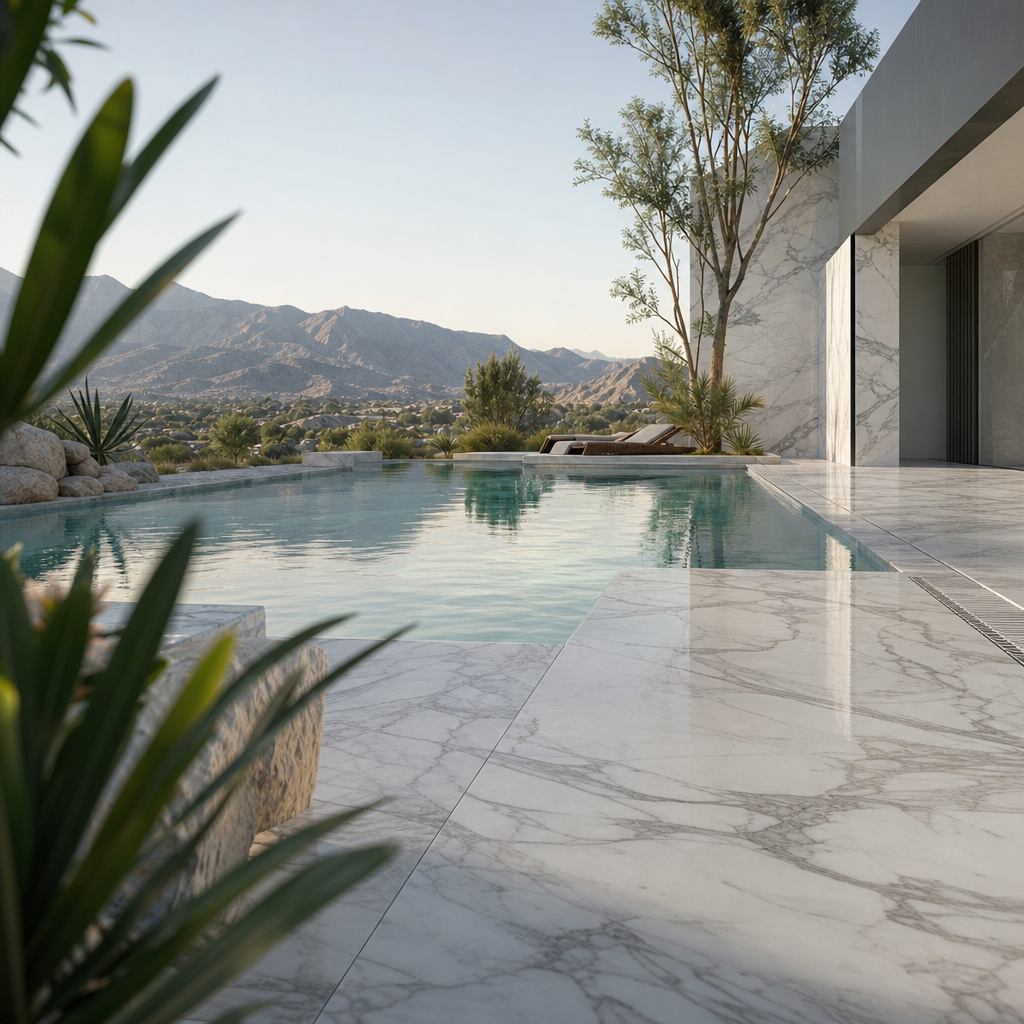
Marble-look porcelain slabs in Iraq give you the visual impact of natural marble with the durability, consistency and low maintenance that busy homes, towers and villas actually need. They are engineered large-format panels that hold up better than most natural stone where heat, sun, oil-heavy cooking, dust and frequent cleaning are part of daily life. For homeowners, architects and developers weighing a marble surface against a marble-look one, the practical answer for most Iraqi projects is porcelain: same calm luxury, far fewer maintenance obligations.
Table of contents
What marble-look porcelain slabs actually are
A porcelain slab is a single, large-format panel made from refined clays, feldspar, silica and mineral oxides, pressed and fired above roughly 1,200 °C. That firing vitrifies the body into a dense, glass-like material that is extremely hard, non-porous and resistant to stains, chemicals and abrasion. In marble-look versions, the surface is printed and textured to imitate natural marble veining and colour, most often in white, beige and grey palettes.
Size is what separates a slab from an ordinary tile. Large formats around 1200×2400 mm and above sit in an ultra-premium category, used for feature floors, countertops and wall cladding where a continuous surface matters more than a modular grid.
The contrast with natural marble is fundamental. Marble is quarried metamorphic stone, so every slab is unique, with organic veining and variation that carry an emotional, classic-luxury appeal. But the stone is porous and needs sealing to resist oils and sauces. Porcelain reproduces marble, travertine or concrete looks with more consistency across pieces and no sealing requirement, which is where the day-to-day advantage begins. If you want the deeper technical background, our simple guide to what a porcelain slab is covers the material in more detail.
Why Iraq projects choose marble-look porcelain slabs
Countertops, floors and wall cladding in Iraq face a demanding set of conditions: high ambient temperatures, strong sun, cooking with oils and spices, hot pans set down without ceremony, dust, and constant cleaning in open kitchens and on balconies. Hard, non-porous, heat-resistant materials cope with this far better than many natural stones, and that is precisely the environment porcelain slabs are built for.
Market demand reflects the same logic. Across almost every price segment in Iraq, marble-look porcelain is the dominant design category, with white, beige and grey surfaces holding the largest volume share and stable, long-running demand. Within that, slab formats of 1200×2400 mm and above are a growing ultra-premium niche for feature floors, countertops and façade cladding.
So the real decision is not aesthetic taste alone. It is whether to accept marble’s natural variability and ongoing maintenance obligations, or specify marble-look porcelain slabs that deliver a comparable visual result with more predictable performance, fewer joints and simpler upkeep. For a busy family kitchen, a tower lobby or a hospital corridor, that trade-off usually points one way.
How they work: mechanisms and options
The performance starts with vitrification. Firing the porcelain body above roughly 1,200 °C fuses it into a dense, glass-like matrix that is effectively non-porous. That structure resists water absorption, staining from oils, tea and coffee, and everyday household chemicals far better than many natural marbles, which absorb and etch when the same substances sit on them.
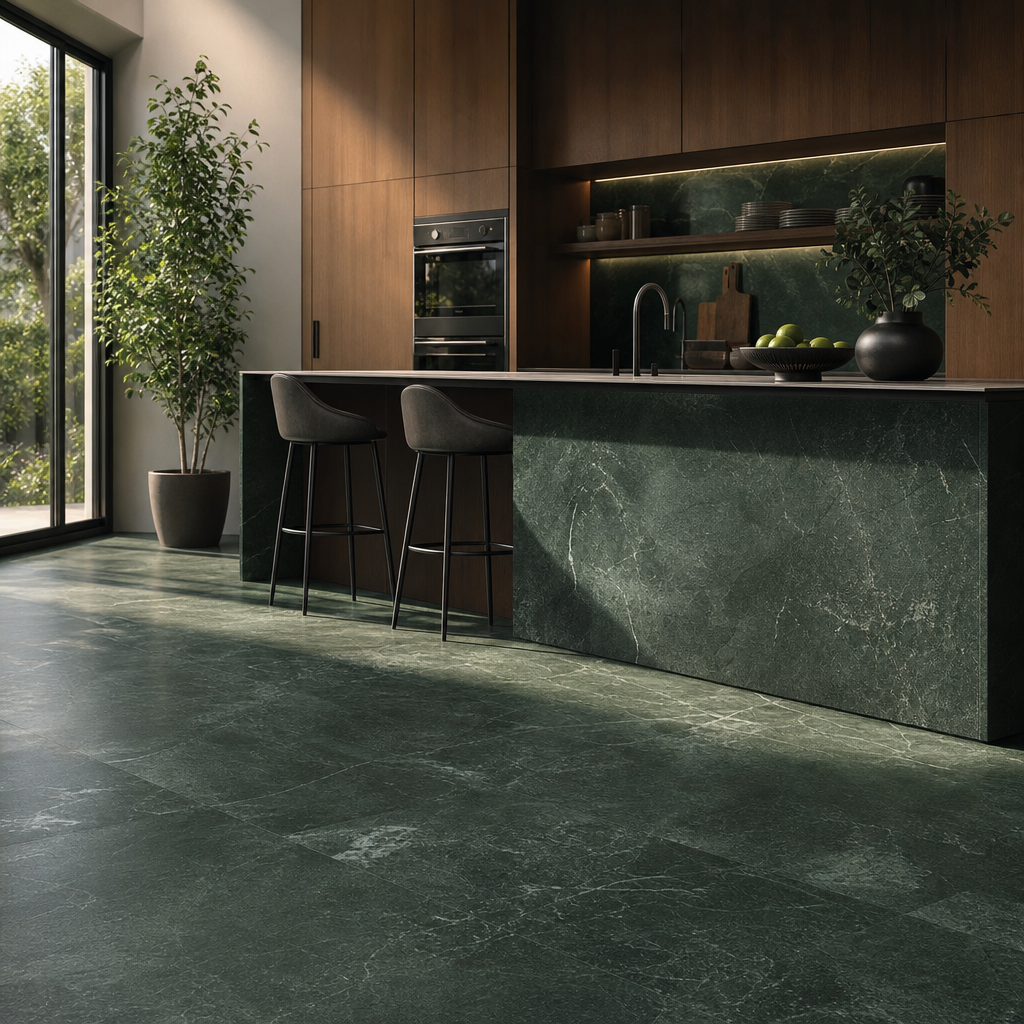
Aesthetically, slabs give you large, calm surfaces with minimal joints, a natural fit for modern, minimalist and Scandinavian-inspired interiors. Because they can be produced in marble, travertine, concrete, wood and metal looks, a single project can carry stone-look slabs on counters and walls while coordinating tiles run across the floor, all from one visual language.
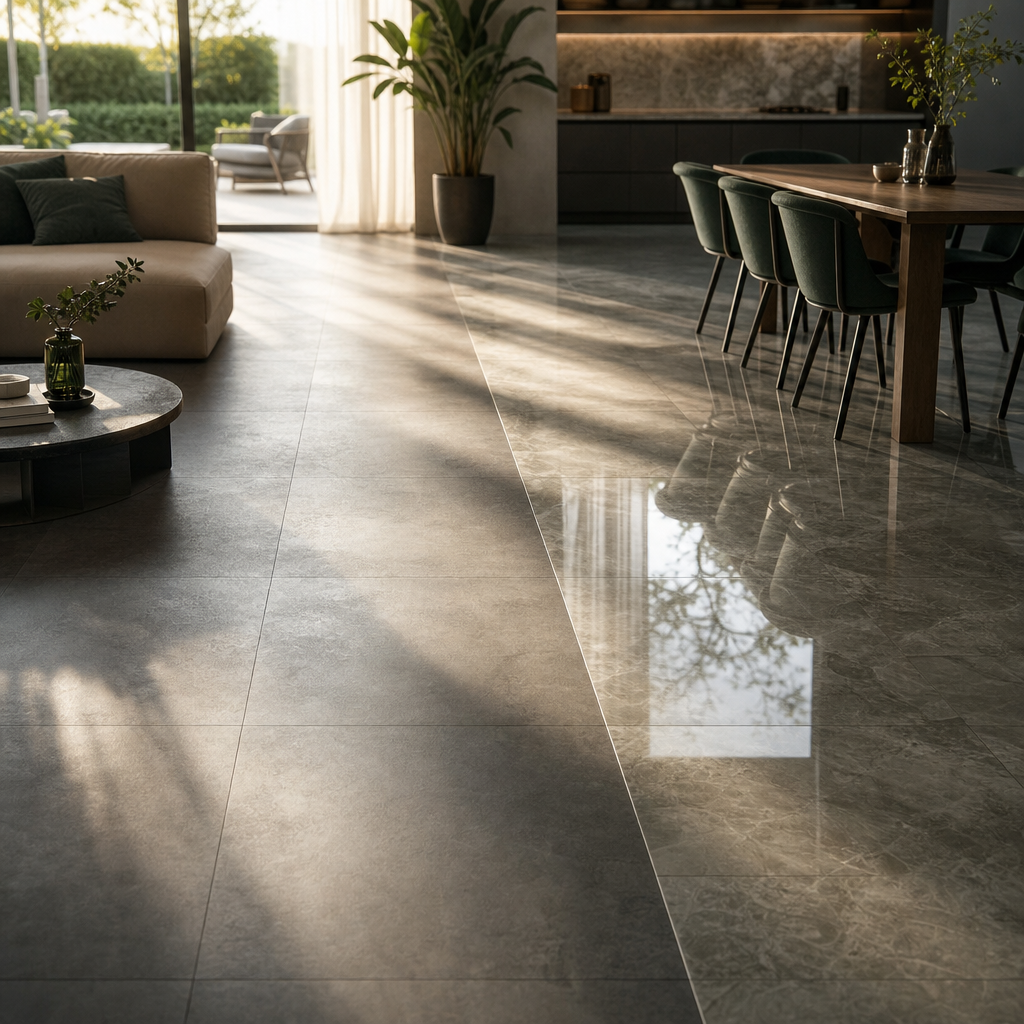
Finish is the lever that tunes both look and safety. Polished marble-look surfaces suit prestige living areas and hotel-style bathrooms where depth of gloss is the point. Lappato, a semi-polished finish, is the fastest-growing option for marble-look living spaces because it keeps a sense of sheen while offering better traction underfoot. In the wider market, 600×1200 mm marble-look porcelain dominates main living areas, while slabs above 1200×2400 mm are specified where a genuinely continuous, ultra-premium surface is required.
Bathrooms show the effect most clearly. Large slabs let a bathroom read as a continuous shell, with the shower integrated into the surface rather than visually broken up by small tiles and heavy grout lines, a look explored in our thinking on modern bathroom design.
Key decision criteria for homes, towers and villas
The choice between natural marble and marble-look porcelain slabs becomes clearer when framed around a few practical criteria that matter for Iraqi projects.
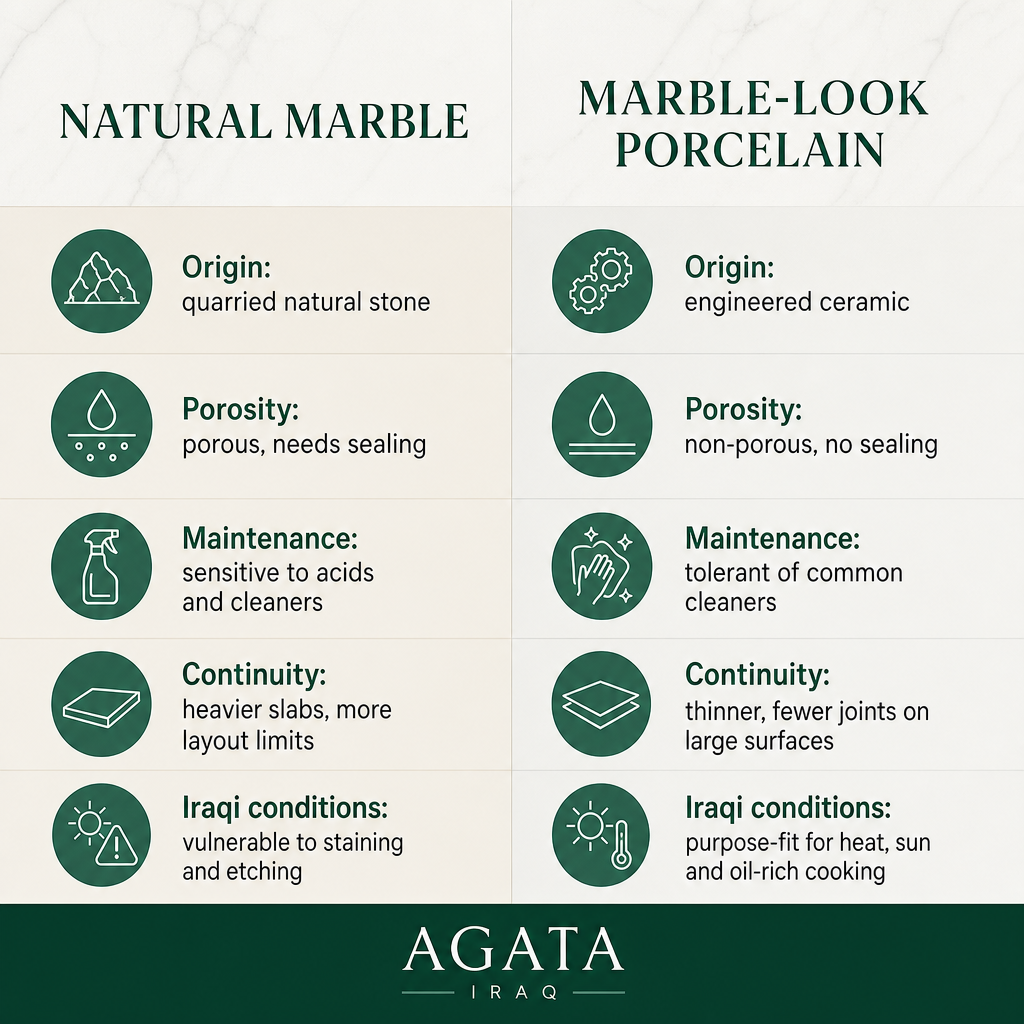
| Criterion | Natural marble slabs | Marble-look porcelain slabs |
|---|---|---|
| Origin | Quarried natural stone, each slab unique | Engineered ceramic made under controlled conditions |
| Visual character | Organic veining, classic luxury associations | Controlled veining and colour harmony across slabs |
| Porosity and sealing | Porous; needs sealing to resist oils and sauces | Non-porous; resists staining, no sealing required |
| Daily maintenance | Sensitive to acids and some cleaners; patinas over time | Tolerant of common cleaners, stains and abrasion |
| Joints and continuity | Heavier, thicker; more layout limitations | Thinner and lighter; fewer joints on large islands and walls |
| Fit for Iraqi conditions | Luxurious but vulnerable to staining and etching | Purpose-fit for heat, sun, oil-rich cooking and frequent cleaning |
Cost sits alongside these criteria rather than above them. Broad market data places standard porcelain tiles roughly in the IQD 15,000–35,000 per m² band, depending on size, finish and technical grade; our overview of porcelain tiles pricing in Iraq explains what moves that figure. Slabs sit above regular tiles in the ultra-premium tier and are generally quoted individually once format, finish and installation scope are defined, rather than shown as a fixed per-metre rate.
Procurement timing is the criterion developers underestimate most. Every shipment of tiles and slabs into Iraq requires a pre-shipment Certificate of Conformity from a COSQC-appointed body before the material can clear port. On a tower or villa programme, that single requirement shapes the schedule, so it belongs in the specification decision, not the last-minute logistics phase.
Risks and how to manage them
Specifying polished natural marble in a busy kitchen or a high-traffic lobby invites staining, acid etching and visible wear, the very things that erode the luxury effect it was chosen for. Marble-look porcelain removes most of that exposure, but it is not a licence to ignore finish selection. High-gloss surfaces can be slippery in wet areas unless they are paired with correct slopes and drain placement, so wet zones call for anti-slip finishes and properly designed falls.
Installation is the other decisive variable. Large tiles and slabs need the manufacturer’s recommended adhesive type, trowel size and joint width, and installers must respect expansion joints on large surfaces to avoid cracking. These are not optional refinements; they are the difference between a slab that performs for decades and one that fails early. Planning finishes and installation method together, as we recommend when coordinating a full renovation, keeps these details from being decided on site under pressure.
On the procurement side, importing non-compliant material without a valid Certificate of Conformity can trigger delays and extra costs at Iraqi ports, and the impact scales with the size of the order. That risk is easier to control when you work with a showroom and supplier that already understands the regulatory framework and can plan around it from the start.
Our marble-look slabs within a design-led portfolio
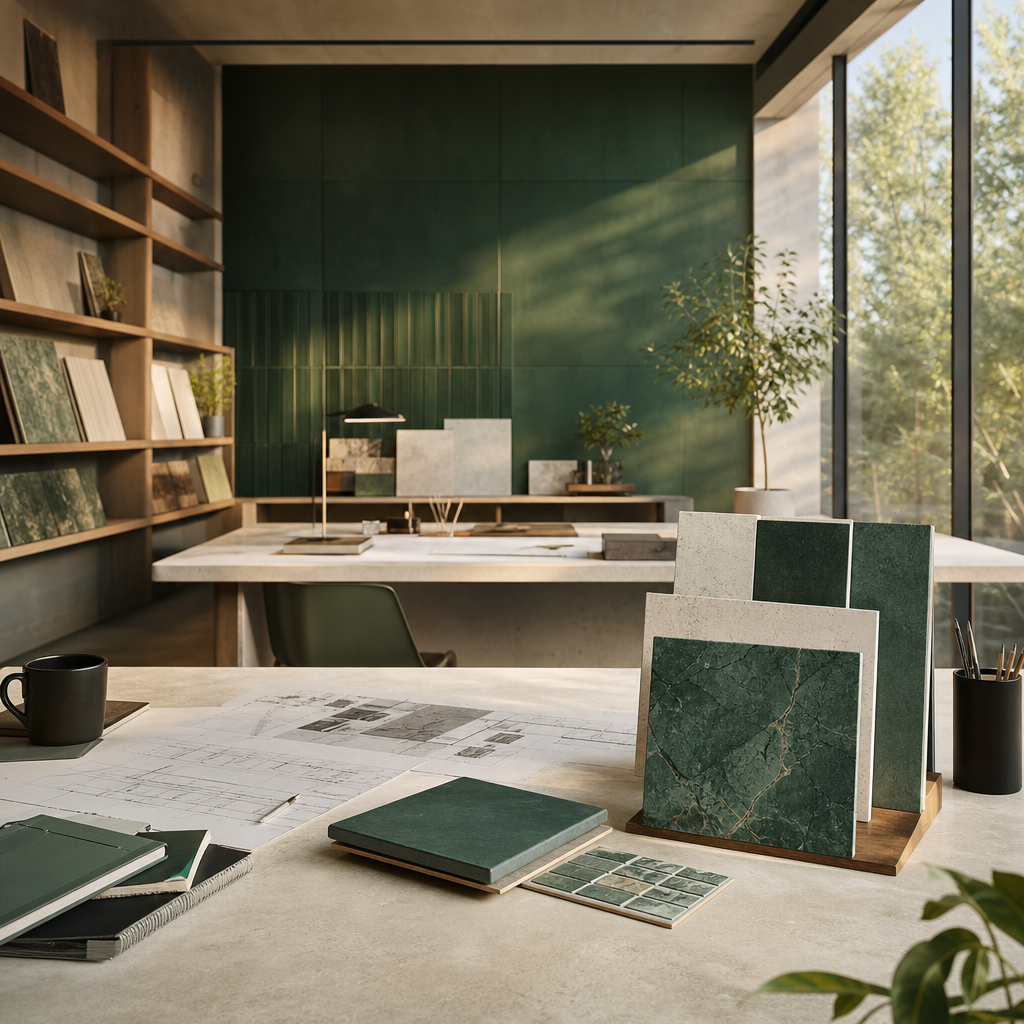
We operate as a premium supplier and showroom for tiles, slabs, bathroom solutions and interior furnishings, with porcelain and natural-stone-look collections built around modern, minimalist and Scandinavian aesthetics for residential and commercial projects alike. Our role sits at the surface and finish layer: we help clients choose porcelain tiles, stone-look slabs and coordinated bathroom elements so the finished space reads as a considered interior, not a purely technical assembly.
Our porcelain range includes stone-look surfaces such as Travertine Silver, which shows how travertine-inspired finishes can coordinate across floors, walls and counters in villas and hospitality settings. Design-led collections like ABSTRA demonstrate how graphic and textural character can be carried on a high-performance porcelain body while still sitting comfortably within neutral, Scandinavian-influenced schemes.
Because premium porcelain and slab solutions vary so much by format, finish, technical grade and installation scope, we quote them individually against your project rather than publishing a single per-metre price. That approach lets us match the right finish to the right room, confirm performance requirements early, and keep the specification honest.
The wider benefit for homeowners, architects and developers is coherence. Marble-look porcelain slabs can be chosen not as isolated surfaces but as part of a complete interior concept, with tiles, bathroom solutions and Scandinavian-style furniture drawn from the same design-led brand so floors, walls, counters and furnishings speak to one another.
Frequently asked questions
Are marble-look porcelain slabs suitable for Iraqi kitchens and bathrooms?
Yes. Their non-porous, stain-resistant and heat-resistant body suits oil-heavy cooking, strong sun and frequent cleaning, while large formats cut down grout lines in bathrooms for an easier-to-clean, continuous surface.
Do marble-look porcelain slabs need sealing like natural marble?
No. Porcelain slabs are effectively non-porous and do not require sealing to resist oils and sauces, unlike many natural marbles used on countertops that must be sealed and re-sealed.
What finishes work best for floors in villas and towers?
Polished and lappato marble-look finishes dominate living areas. Lappato is the fastest-growing option because it keeps a sense of gloss while offering better traction underfoot, which matters in larger, busier spaces.
How are prices for marble-look porcelain slabs in Iraq usually given?
Standard porcelain tiles fall roughly in the IQD 15,000–35,000 per m² band, while ultra-premium slab formats are normally priced by direct quotation based on size, finish and project scope.
Can you help coordinate slabs with the rest of the interior?
Yes. As a design-led showroom, we curate porcelain slabs, stone-look tiles, bathroom solutions and Scandinavian-inspired furnishings so floors, walls, counters and furniture work together as a single concept.