No products in the cart.


Sourcing premium slabs for a villa project rarely fails because someone picked the wrong colour. It fails when a beautiful polished floor turns dangerous in a wet bathroom, when a large panel cracks over a movement joint that was never planned, or when a supplier cannot produce a datasheet for the slab already glued to the wall. Knowing how to source premium slabs for a villa project means starting with performance and design requirements, then matching them to certified porcelain or stone-look surfaces with the correct thickness, slip resistance and format. With clear decisions and a design-led showroom like ours at Agata Iraq, most villa projects can finalise slab selection and ordering in roughly two to six weeks, with slab materials usually representing a mid-to-high share of the finishes budget.
This guide walks through the full path: what to prepare, the ordered steps from surface mapping to on-site inspection, the mistakes that cost the most, and where the line sits between what your team can decide and what belongs to professionals.
Table of contents
What a well-sourced slab project delivers
Before looking at timelines, it helps to fix the outcome. A well-managed sourcing process for a new-build or full villa renovation should give you continuous, modern surfaces across the areas that carry the design: entrance, living spaces, kitchen, bathrooms and terraces, using large-format porcelain or stone-look slabs. Those surfaces have to meet Iraqi quality and slip-resistance expectations in wet and accessible areas, and they need an installation plan that respects structural, seismic and accessibility requirements rather than fighting them.
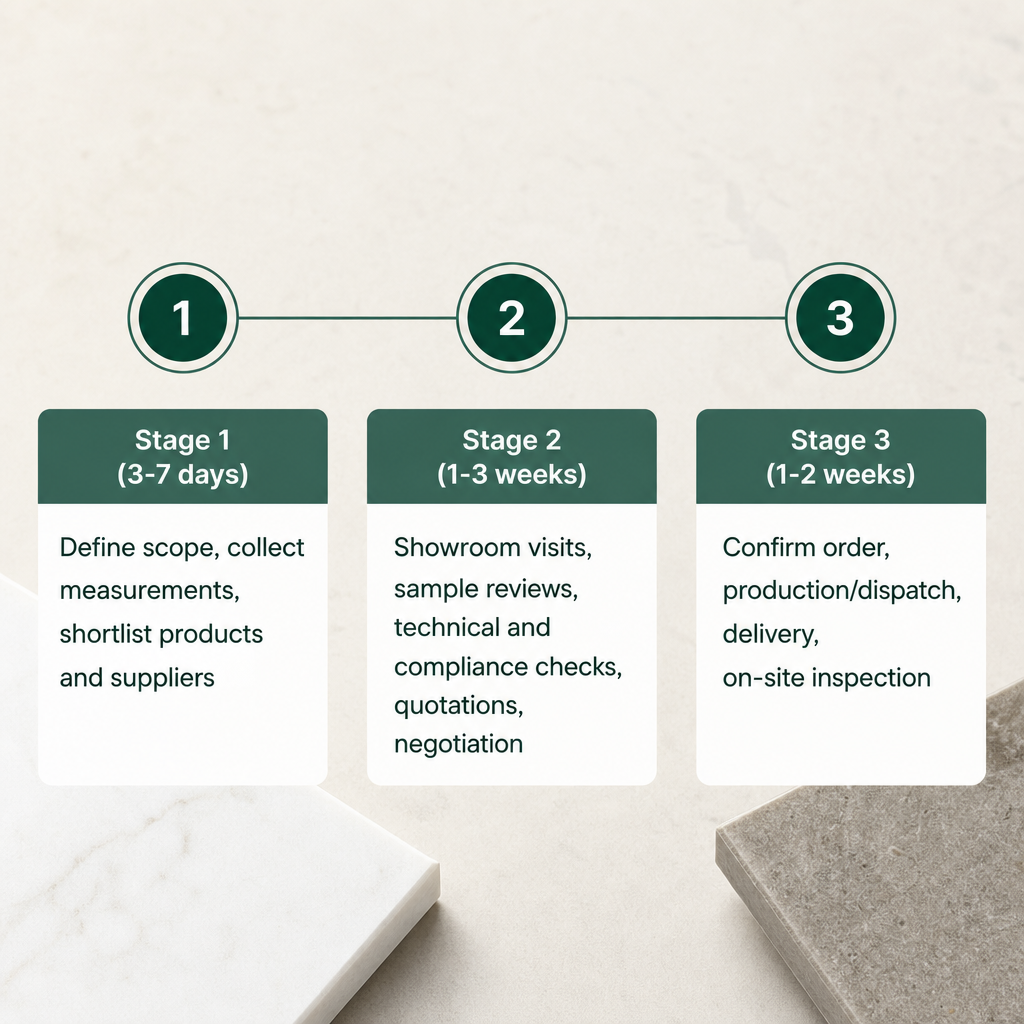
The sourcing phase, separate from installation, tends to move through three stages. Expect three to seven days to define scope, collect measurements and shortlist products and suppliers. Then one to three weeks for showroom visits, sample reviews, technical and compliance checks, quotations and negotiation. Finally one to two weeks to confirm the order, complete production or dispatch, take delivery and run an on-site inspection. Extensive slab use across floors and walls in key spaces pushes the cost upward: large-format branded porcelain generally costs noticeably more per square metre than basic ceramic tiles, and its installation costs more because of specialist handling and cutting.
Prerequisites before you contact a supplier
The quality of every quotation you receive depends on the brief you bring. Vague requests produce vague prices and mismatched samples. Prepare the following before any showroom visit or order:
- Measured plans. Accurate surface area by zone in square metres: living areas, corridors, kitchen, bathrooms, stairs and outdoor terraces.
- Design brief. A clear aesthetic direction, whether modern, minimalist or Scandinavian, with a colour palette and a decision on stone, concrete or marble looks, plus the areas where large-format slabs should form a continuous envelope.
- Performance requirements by area. Interior dry areas need comfort underfoot and scratch and stain resistance. Wet areas such as bathrooms and spa zones need low water absorption, high slip resistance and correct slopes to drains. Outdoor zones need thermal-shock resistance and textured, anti-slip surfaces.
- Regulatory basis. Awareness that Iraqi work specifications reference IQS standards for tile testing and quality, that anti-slip tiles are expected in sanitary units and accessible routes, and that engineers must coordinate movement joints and structural detailing against national engineering and seismic codes.
- Supplier shortlist. At least one design-led supplier and showroom with documented brands and catalogues. Our curated collections of porcelain and stone-look surfaces, along with our project references for towers, villas and hospitals, are built for exactly this kind of specification work; you can browse ranges through our tile and slab collections.
- Professional team. An architect or interior designer for layout and the material schedule, and a certified contractor familiar with large-format porcelain and manufacturer installation systems.
If you are still shaping budget expectations, our overview of porcelain tile pricing in Iraq gives a realistic sense of how format and finish move the numbers before you request formal quotations.
Step by step: sourcing premium slabs
1. Map surfaces and technical requirements
List every surface that may receive slabs: main floors, feature walls, kitchen backsplash and worktops, shower walls and floors, stair treads and risers, terraces and balconies. For each, define the traffic level and impact risk, and the exposure to water, oils, cleaning chemicals, sunlight and temperature swings. A villa entrance and a guest bedroom sit at opposite ends of that scale and should not receive the same specification.
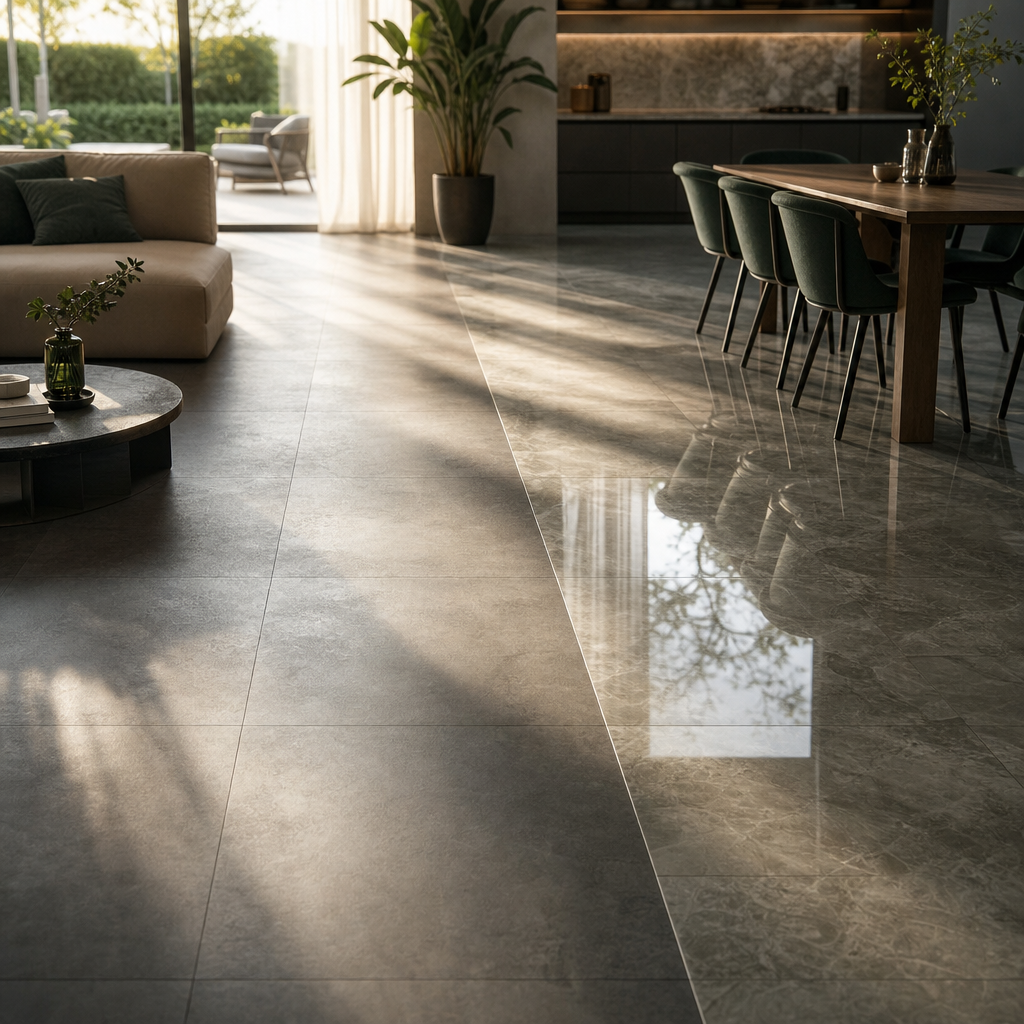
Translate those conditions into technical criteria. For gauged porcelain slabs, 6 to 9 mm suits walls and light floors, while 12 to 20 mm suits countertops and heavy-use zones. Aim for water absorption of 0.5% or less on dense porcelain, especially in kitchens, bathrooms and outdoor areas. Choose textured or matte finishes for wet or sloped floors and reserve polished surfaces for dry feature walls and some living areas. Higher wear ratings (PEI class) and coefficient of friction (COF) values belong in kitchens, corridors and exterior paths.
2. Align your design concept with slab options
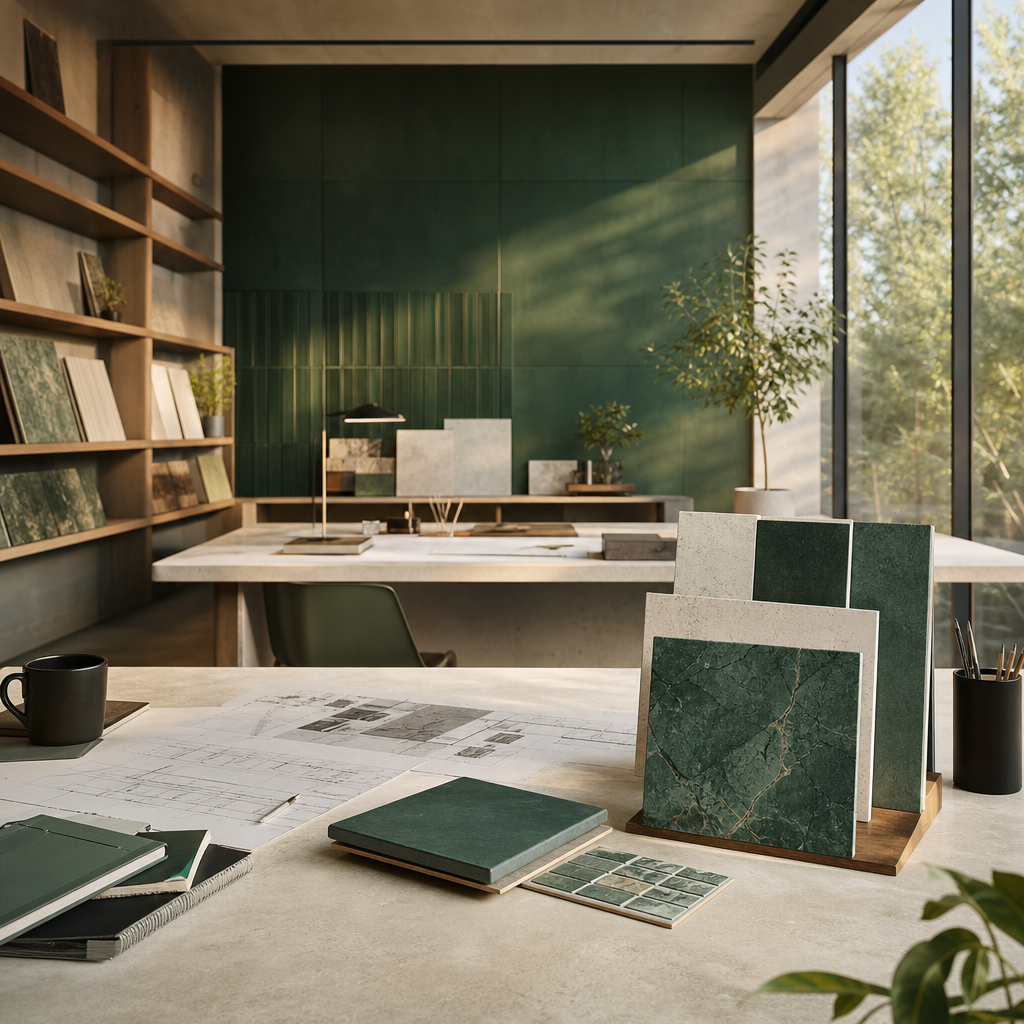
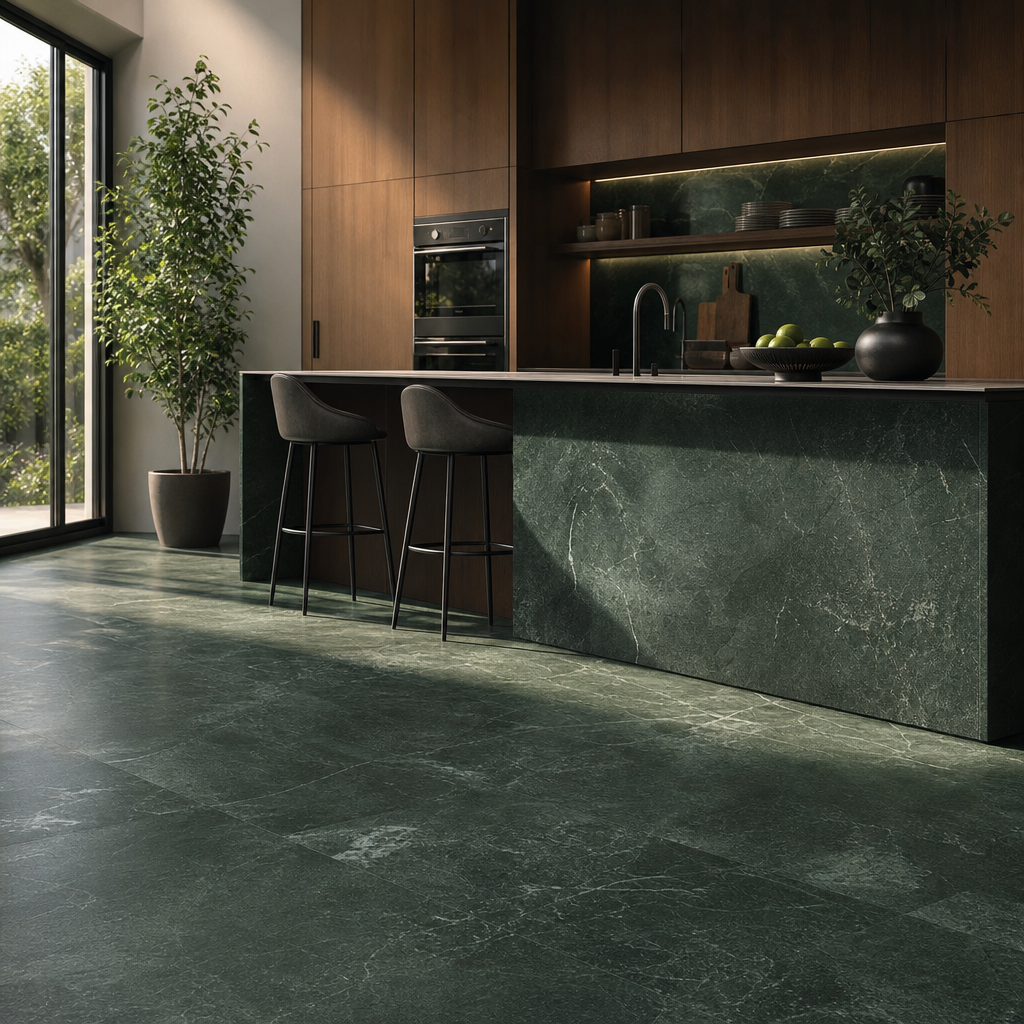
Use your plans and mood boards to decide where large-format slabs earn their cost: the living room, master suite, open-plan kitchen and bathroom shells usually reward it most. Visiting a showroom lets you see slabs at full scale under realistic lighting, which no catalogue image reproduces. In our showroom you can review porcelain and natural-stone-look collections for floors, walls and bathroom solutions side by side, and our catalogues and brand listings help you identify series that fit modern, minimalist and Scandinavian interiors.
Shortlist two to three slab families per key area, for example a travertine-look series for warm living spaces and a refined porcelain range for feature walls or bathrooms, then request physical samples for comparison at the villa or design office.
3. Check technical specifications and certifications
For each shortlisted series, request product datasheets that specify thickness ranges, standard formats and available special cuts, water absorption, flexural strength and impact resistance, and slip resistance expressed as a COF or R-rating with the spaces each finish suits. Confirm compliance with recognised international standards such as ISO 13006, EN 14411 or ANSI A137.1, and that products meet or exceed relevant Iraqi quality standards, whose IQS references typically cover dimensional tolerances, strength and durability. Check the manufacturer’s recommended applications: wall cladding versus flooring versus countertops, and residential versus commercial or light versus heavy traffic.
Treat any slab without clear technical documentation, batch codes or recognised standards with caution. Missing documentation is a well-known signal of inconsistent quality and higher failure risk, and it removes your ability to enforce anything later.
4. Verify suitability for Iraqi regulations and climate
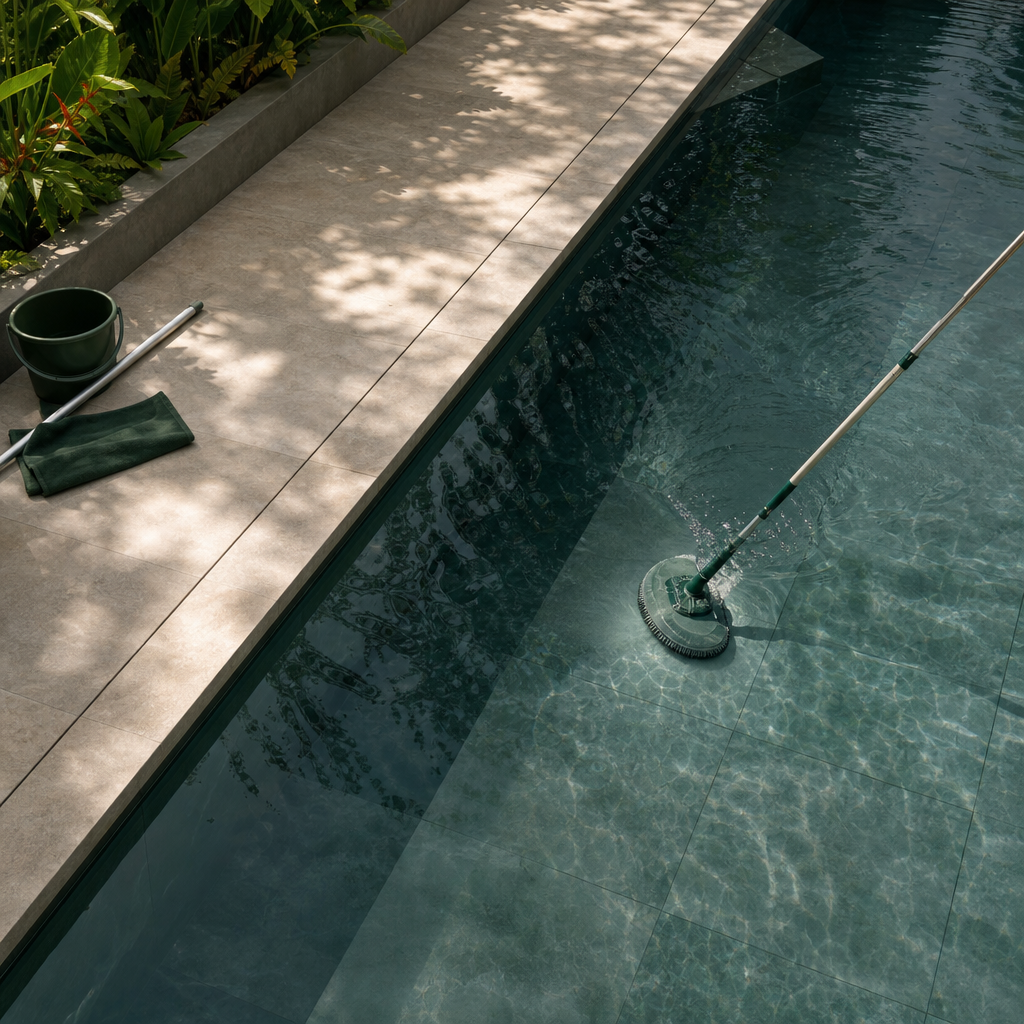
Wet rooms and sanitary units call for anti-slip surfaces; Iraqi work specifications widely require anti-slip ceramic or stony tiles in these areas and reference specific IQS testing standards. Combine that with supplier slip-resistance data so chosen slabs meet or exceed recommended values around showers, baths and pools. For accessibility, guidance favours monolithic, anti-slip flooring with correct slopes towards drains or exits, so specify textured slabs for ramps, entrances and any routes intended for people with mobility challenges. On the structural side, coordinate with your engineer and installer to place movement and expansion joints under and between slab fields and to use compatible adhesives and substrates, reducing the risk of cracking or debonding as the building moves.
5. Obtain quotations, lead times and logistics
Give your supplier a detailed schedule: room-by-room areas, preferred slab series, finishes and thicknesses. Ask for material pricing per square metre or per slab broken down by format and finish, a clear split between local stock and special-order items with delivery estimates, and recommended installation systems such as adhesives, leveling and joint profiles from partner brands. When you send us a schedule at this level of detail, we can respond with pricing, availability and technical support instead of rough guesses.
6. Order samples and run real-world mock-ups
Before committing, obtain samples of each shortlisted slab in the chosen finish and review them on site or under lighting similar to the finished villa, since appearance shifts significantly with light and viewing distance. For large-format slabs, a small mock-up of one wall, bathroom or entrance zone confirms installation feasibility, joint layout and aesthetic impact while changes are still cheap.
7. Final selection and contract
Confirm final choices by zone and build a material schedule listing product codes, format, finish and thickness. Purchase or construction contracts should reference the exact datasheets and standards the products comply with, require anti-slip finishes in wet and accessible spaces, and assign clear responsibility for transport, handling, site storage and protection during construction.
8. Coordinate installation with professionals
Work with the architect, designer and tiler to plan slab layouts around doors, windows, built-in furniture and fixtures, respecting manufacturer guidance on joint width and expansion joints to avoid stress cracking. Large-format porcelain slabs often need edge trimming before fabrication to relieve internal stresses, and precise cut-outs benefit from professional cutting equipment or CNC machining. Follow manufacturer recommendations for adhesive type, trowel size and back-buttering, since generic systems may not bond large panels reliably, and ensure substrates are level, compacted and properly prepared, because poor substrate conditions are a recurring cause of tile failure in Iraqi workspec documents.
9. Delivery, site storage and inspection
Store slabs vertically on suitable racks, protect edges and faces, and never bend or flex large panels during handling. On delivery, check colour consistency, batch codes, dimensions and thickness against the order, and reject units with visible warping, cracking or shade variation inconsistent with the approved sample. For critical or high-profile villas, spot-check dimensional tolerances and visual quality against contractual standards and IQS references before installation begins.
Common mistakes and how to avoid them
- Wrong thickness or format for the application. Installing thin wall panels on heavy-use floors or stairs invites failure. Follow manufacturer guidance on thickness by application, generally 3.5 to 6 mm for many walls and light floors and 8 to 20 mm for demanding floors and countertops.
- Ignoring slip resistance in wet and exterior areas. Polished slabs on bathroom floors or terraces become a hazard. Select textured, anti-slip slabs and verify slip-resistance values in line with Iraqi sanitary and accessibility guidance.
- Buying without documentation or recognised standards. Choosing on appearance and price alone, from suppliers who cannot provide datasheets or certification, removes any recourse. Insist on documentation showing ISO or EN compliance and Iraqi testing references.
- Underestimating access and handling. Ordering very large slabs without checking stairwells, door widths and elevator dimensions can strand them at the door. Confirm site access and a handling strategy before ordering, because large slabs reduce seams but increase transport complexity.
- Skipping professional installation for large slabs. Treating large panels like regular tiles with generic adhesive and layout practices is a frequent cause of cracking and debonding. Use installers trained in gauged porcelain who follow manufacturer instructions on adhesives, joint planning and edge trimming.
Where your team stops and professionals begin
Some decisions genuinely belong to homeowners, architects and designers. Defining aesthetics and functional priorities, deciding which rooms deserve premium slabs, visiting showrooms and shortlisting collections, and comparing samples at home under real lighting are all judgement calls best made by the people who will live in or design the villa.
Other work should sit firmly with professionals. Structural assessment of substrates, movement joints and load-bearing capacity must follow Iraqi engineering and seismic requirements. Technical selection of thickness, slip resistance and wear ratings for high-traffic floors, stairs and outdoor areas depends on reading detailed datasheets against standards. Layout, cutting plans, fabrication and edge finishing around fixtures usually require specialist equipment. And installation itself, including adhesives, leveling systems, waterproofing and sealing, has to follow manufacturer and project specifications precisely.
For premium slabs in a villa, engaging professionals for technical selection and installation is strongly advisable. Correcting failures such as cracked panels, slippery floors or water ingress almost always costs far more than any saving a do-it-yourself approach seems to offer.
The fastest way to move from planning to a firm slab schedule is to bring us your zone-by-zone areas and design direction. From there we can shortlist series, arrange samples and prepare a specification you can build against.
Frequently asked questions
What qualifies as a premium slab for a villa in Iraq?
Premium slabs usually combine design-led aesthetics in stone, concrete or marble looks, larger formats, high-density porcelain or engineered stone, and documented compliance with international and Iraqi standards for durability and safety, supplied through curated showrooms and brand catalogues.
Are large-format porcelain slabs suitable for villa floors?
Yes, provided the slabs have suitable thickness, slip resistance and wear rating for the intended traffic. Correctly specified and installed, large-format slabs turn rooms into continuous shells with far fewer joints.
How do Iraqi regulations affect my slab choices?
Project specifications and Iraqi standards call for first-grade tiles and reference testing norms for quality. Wet and sanitary areas must use anti-slip surfaces, accessible routes favour monolithic anti-slip flooring with proper slopes, and coordination with engineers keeps seismic and structural requirements satisfied.
When should I order slabs during construction?
Order once structural works and detailed design are advanced enough to give accurate quantities and layouts, but early enough to absorb lead times for special formats. In practice this falls in the finishes planning stage, after bathroom, kitchen and floor plans are frozen.
How can I verify the authenticity and quality of slabs?
Use established suppliers with brand catalogues, request original datasheets and certifications, check batch codes on delivered slabs, and be wary of products lacking documentation or priced unusually low, which are common warning signs.