No products in the cart.


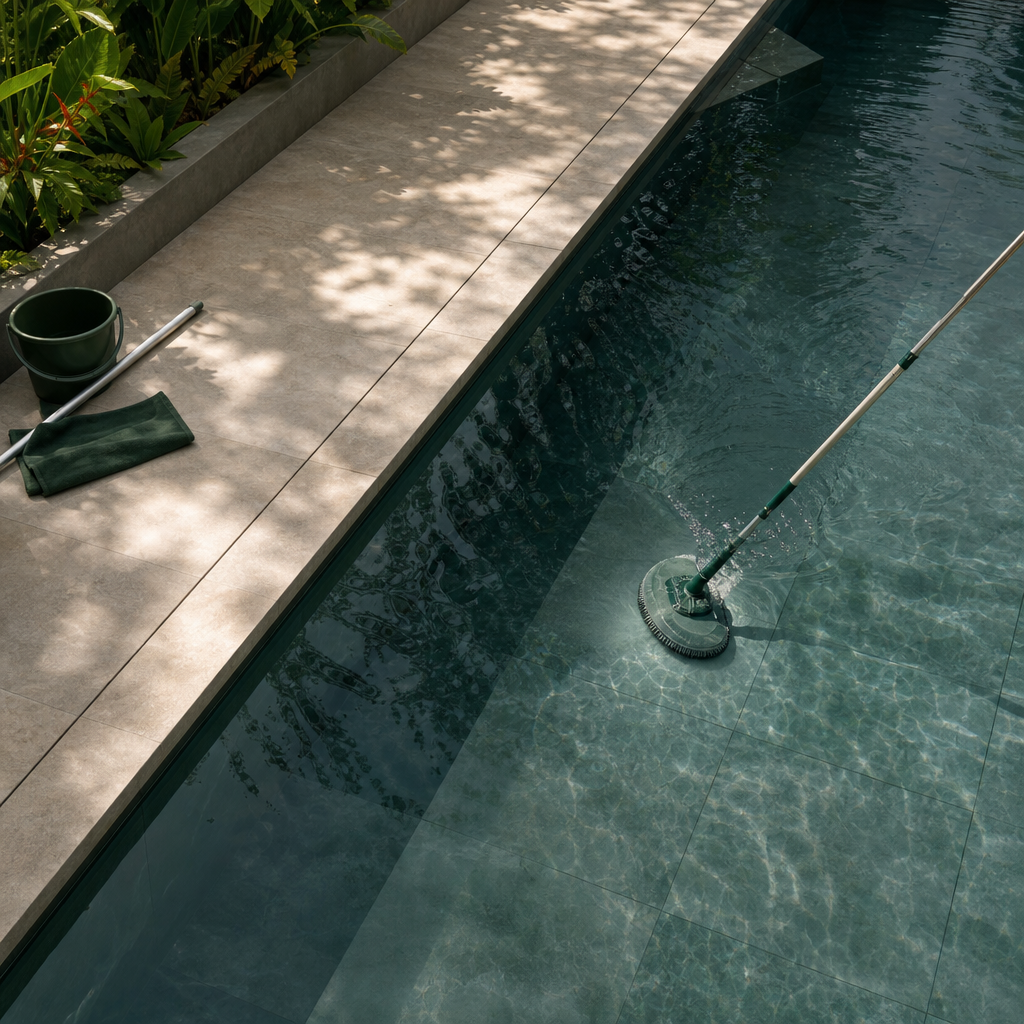
Porcelain tiles stay looking new when you treat them as a dense, low-porosity surface that needs regular dust removal, gentle detergents, and thorough rinsing and drying rather than harsh chemicals or abrasive pads. If you want to know how to clean porcelain tiles without dulling the finish or wearing out the grout, the short answer is that cleaning is mostly about lifting films off the top of a surface that barely absorbs anything. Dirt, grease and soap scum sit on porcelain instead of soaking in, so the whole task becomes removing those films cleanly and leaving no residue behind. Below we explain the mechanisms, adapt the routine to kitchens, bathrooms and towers across Iraq, and show where the real risks sit.
Table of contents
What makes porcelain different, and why it changes your cleaning
Porcelain is fired at higher temperatures than ordinary ceramic, producing a very dense, vitrified, low-absorption body that resists most stains and moisture. That single property changes everything about maintenance: because almost nothing penetrates the tile, effective cleaning is about removing surface films without scratching the finish or leaving sticky residue that pulls in more dirt.
Three variables decide how gentle or firm your routine should be. The first is finish: unpolished or unglazed, matte, structured, or polished and glazed. The second is location, from a low-traffic bedroom to a kitchen, a shower, or a tower lobby. The third is grout, which can be cementitious or epoxy and set in narrow or wide joints.
Finish is the variable that trips people up most often. Unpolished and unglazed porcelain tolerates a soft brush and a mildly acidic solution for deeper cleaning, while polished and glazed porcelain should be treated more gently, with diluted tile-specific cleaners that protect the shine. Whatever product you reach for, it has to be correctly diluted, given an appropriate dwell time on the surface, and then rinsed thoroughly so it never dries into a film.
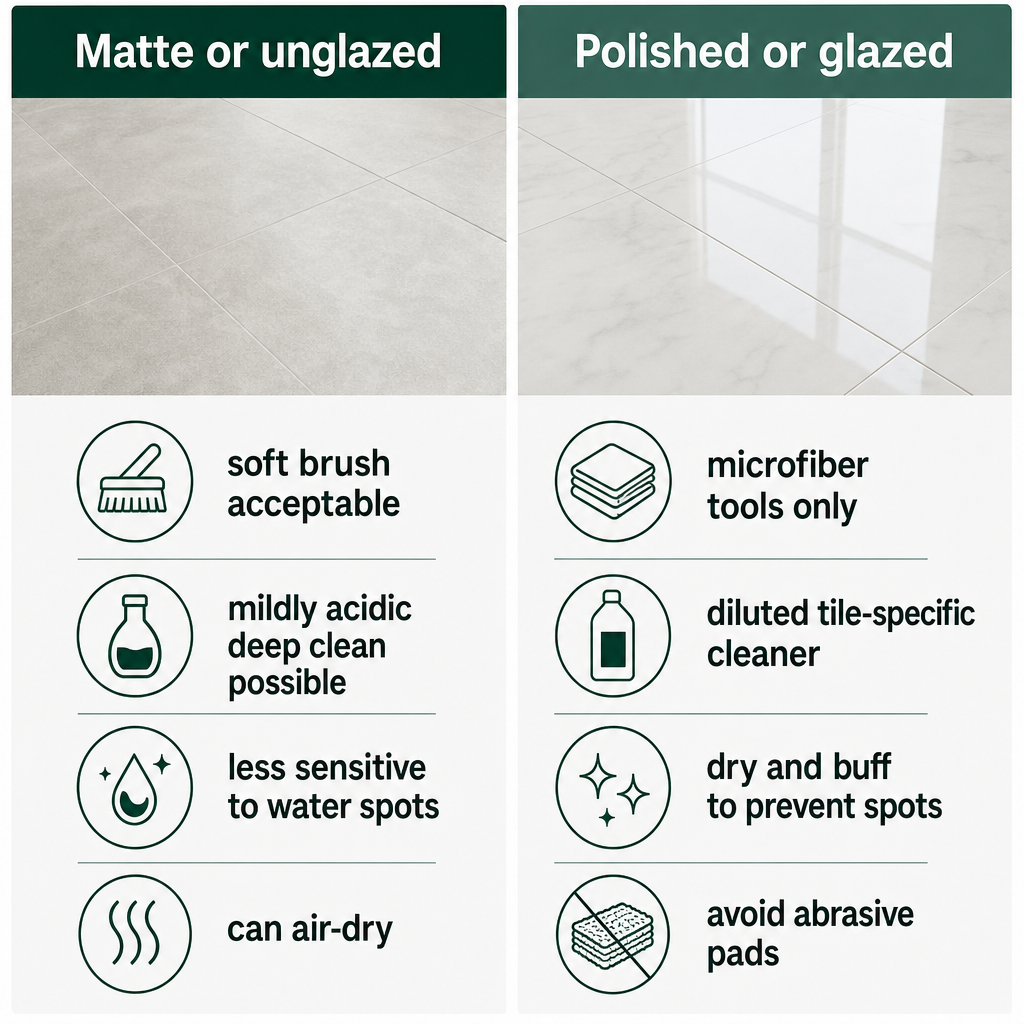
The three mechanisms behind a clean porcelain floor
Understanding the mechanism saves you from buying products you do not need. Cleaning porcelain relies on three actions working in order.
The first is mechanical removal of grit. Sweeping or vacuuming lifts sand, dust and small stones before they act like sandpaper under shoes and slowly dull the surface. This is why nearly every reliable guide insists on dry cleaning first, before any water touches the floor; washing over loose grit spreads it and raises the risk of micro-scratches, which matters most on high-gloss finishes.
The second is chemical action on films. Mild detergents or properly diluted vinegar solutions break down grease, soap scum and general soil so a mop or cloth can lift them away. The key word is mild: the chemistry only needs to loosen a thin film, not dissolve a hard deposit.
The third is rinsing and drying. Clean water carries away loosened dirt and spent detergent, and drying prevents the water spots and streaks that glazed tiles show so readily. For routine wet cleaning, warm water with a small dose of a pH-balanced detergent or diluted tile cleaner, applied with a microfiber or flat mop, does the job far better than a string mop or sponge that leaves excess water sitting on the surface.
Everyday maintenance for Iraqi homes and villas
For living rooms, corridors and bedrooms with porcelain floors, the goal is a simple routine that fits Iraq’s dusty climate and mixed shoe habits. Dry cleaning frequency scales with traffic: high-traffic areas and entry zones are best swept or vacuumed daily or every few days, while quieter rooms usually need only a weekly pass. Wet cleaning is typically weekly in kitchens and bathrooms and every one to two weeks in lower-traffic zones, adjusted upward whenever dust or spills demand it.
A dependable floor routine runs in four moves. Start with a soft-bristle broom or a vacuum on a hard-floor setting to clear dust and grit, including under sofas and tables. Prepare warm water with a small amount of mild detergent or a porcelain-safe cleaner at the dilution the product specifies. Mop with a microfiber or flat mop wrung out so the floor is damp rather than flooded, and change the water as soon as it looks dirty so you are not redepositing soil. Finish by drying or buffing glazed and polished tiles with a clean microfiber cloth; unglazed tiles can usually air-dry.
Two habits pay off in Iraqi apartments with dusty balconies or courtyards. Keep shoes on a tray by the entrance, and run a quick soft-broom pass across porcelain floors in the evening so grit never gets a chance to build up between full cleans. Those small routines protect the finish more than any single deep clean.
Kitchens, bathrooms and showers: grease, soap and limescale
Wet and greasy rooms change the chemistry you need, not the underlying principle.
Kitchen floors and backsplashes
Kitchen porcelain meets cooking oils, food spills and outdoor dust tracked in from balconies and gardens, so the work is degreasing without stripping the finish. Everyday soil comes off with a mild multi-surface detergent diluted in warm water and a microfiber mop or cloth. For stuck-on grease, switch to a porcelain-specific cleaner at roughly half strength or as directed, and never let it dry on the tile. Rinse with clean water afterward and dry glossy tiles to keep the sheen and avoid a grey film settling over the floor.
Bathroom floors and walls
Bathrooms add soap, shampoo and hard-water minerals, so the task shifts to dislodging soap scum and limescale. For general care, rinse floor and wall tiles with warm water, then wipe with a soft cloth or non-abrasive sponge and a mild detergent, paying attention to corners and the areas around the toilet and vanity. For stubborn soap or mineral deposits, a vinegar-and-water solution works well: around a quarter cup of white vinegar in roughly two gallons of water, left to soak for five to ten minutes without drying, scrubbed with a soft-bristle brush, then rinsed thoroughly with hot water.
In Iraqi cities with hard water, especially where tanks and heaters are in use, limescale rings around floor drains and on lower wall tiles are common. A short vinegar soak, soft brushing, then a full rinse and dry keeps these marks in check without resorting to aggressive acid cleaners that could etch metal trims or attack grout.
Shower enclosures and wet rooms
Showers clad in porcelain tiles or slabs reward combining daily prevention with periodic deeper cleaning. After each use, rinse away soap residue, then squeegee the walls and floor or wipe them with a soft cloth to remove standing water. For periodic cleaning, apply a diluted bathroom cleaner or vinegar solution with a non-abrasive sponge, scrub gently, rinse thoroughly and dry. Drying or squeegeeing shower walls once a day is one of the most effective ways to keep porcelain clear of buildup. This matters for large-format porcelain slabs in walk-in showers, where continuous surfaces make squeegeeing easy and keep joints minimal, yet glossy finishes still need gentle tools to stay pristine.
Tough stains and grout lines: safe options and real risks
Even porcelain can show marks from coloured drinks, construction dust, rubber soles, or long-neglected soap scum. The real decision is how much chemical strength and scrubbing you can apply before you cross into damage.
The safer options cover most situations. A baking soda and water paste applied to a stained area, left a few minutes, then gently scrubbed with a soft brush or sponge, lifts many marks without scratching the glaze. Diluted vinegar handles organic stains and mineral deposits with a short soak and a soft-bristle brush, as long as you rinse and dry afterward. Tile-specific cleaners, usually neutral or slightly alkaline, work at their recommended dilution and should always be tested on a small area first.
The risks are worth stating plainly, because they tend to cause permanent harm:
- Steel wool, harsh scouring powders and abrasive pads can permanently scratch glazed surfaces and make them harder to clean afterward.
- Strong, undiluted acids or alkalis, such as heavy-duty bathroom or drain cleaners applied directly to the tile, may dull polished finishes and attack grout.
- Dirty mop water redistributes soil and leaves a dull film across the floor.
- Letting detergent or vinegar dry on the tile instead of rinsing leaves streaks and attracts more dirt.
Grout needs its own attention because it is more porous than porcelain. A weekly sweep or vacuum, then periodic cleaning with either a mild detergent and a soft brush or a grout-specific cleaner followed by a thorough rinse, keeps joints from darkening. Epoxy grout can need different products from cement-based grout, so it helps to confirm which grout was used in your installation before choosing a cleaner.
Matching tools, products and schedule to your surface
For homeowners, designers and developers, the cleaning routine falls out of four practical criteria. The table below maps each one to the decision it drives.
| Criterion | What it changes | Practical choice |
|---|---|---|
| Finish and sheen | Scratch risk and residue visibility | Soft brush acceptable on matte; microfiber only and careful drying on polished |
| Room and traffic | Cleaning frequency | Weekly wet mopping in kitchens and halls; longer intervals in bedrooms |
| Project scale | Method and equipment | Manual mopping for a villa; soft to medium autoscrub brushes for towers and hospitals |
| Local environment | Dust and hard-water response | Frequent gentle dry cleaning; regular light descaling over rare harsh acid cleans |
Finish and traffic usually settle the daily routine, while scale and environment shape the deeper cleans. In a single villa, manual mopping and soft brushes are enough. In towers, hotels and hospitals running hundreds of square metres of porcelain, manufacturer maintenance guidance points to autoscrub machines fitted with soft to medium brushes and correctly diluted detergents to keep results consistent. Clinical rooms and hospital corridors, which we often outfit with dense porcelain for hygiene, call for neutral, disinfectant-compatible routines agreed with the project’s infection-control team. Iraq’s dust and sand favour frequent gentle dry cleaning, and hard water argues for regular light descaling rather than occasional very strong acid cleans that risk both finishes and joints.
When you select finishes in our showroom, whether a travertine-look tile for a spa bathroom or a marble-look porcelain slab for a kitchen, ask how that specific product responds to different cleaners and note any brand recommendations so your routine matches the material from day one.
How we support porcelain tile care
We curate porcelain tiles and slabs specifically for durable, low-maintenance surfaces in homes, villas and towers, and our team can help align your cleaning routine with the product you have chosen. This explainer deliberately stays on day-to-day care; for selection and budgeting, our guide on porcelain tiles price in Iraq covers the cost thresholds, while the marble-look slab guide above covers performance trade-offs.
For collections such as Travertine Silver and our Abstra porcelain, we can confirm whether your chosen finish is matte or polished, advise on grout type, and provide brand-specific care sheets where needed, which matters most on large commercial or healthcare projects. If you are not sure which finish you have or which cleaner suits it, tell us the room, the finish and the grout, and we will point you to the right routine.
Frequently Asked Questions
How often should I clean porcelain floors in an Iraqi home?
Dry clean high-traffic zones daily or every few days and quieter rooms at least weekly to stop grit from dulling the surface. Wet mop kitchens and bathrooms weekly and lower-traffic rooms every one to two weeks, adjusting for dust and spills.
Can I use bleach or strong acid cleaners on porcelain tiles?
Occasional, properly diluted bleach may be acceptable on some porcelain, but strong undiluted acids and alkalis can damage finishes and grout. Neutral or mildly acidic cleaners with thorough rinsing are safer, and you should always test on a small hidden area first.
What kind of mop is best for porcelain?
Microfiber or flat mops beat sponge and traditional string mops because they hold less water, pick up fine dust better, and leave fewer streaks on glazed tiles.
How do I keep shower tiles free of soap scum and limescale?
Rinse the walls and floor after each use, then squeegee or wipe them dry; that daily habit greatly reduces buildup. For existing deposits, use a diluted vinegar solution, let it soak a few minutes, scrub with a soft brush, then rinse and dry thoroughly.
Do porcelain tiles need sealing?
The porcelain body is dense and non-porous enough that it typically does not need sealing, unlike many natural stones. Cement-based grout joints, however, often benefit from a suitable grout sealer to reduce staining, matched to the grout type and use.